
What is Binderless Tungsten Carbide?
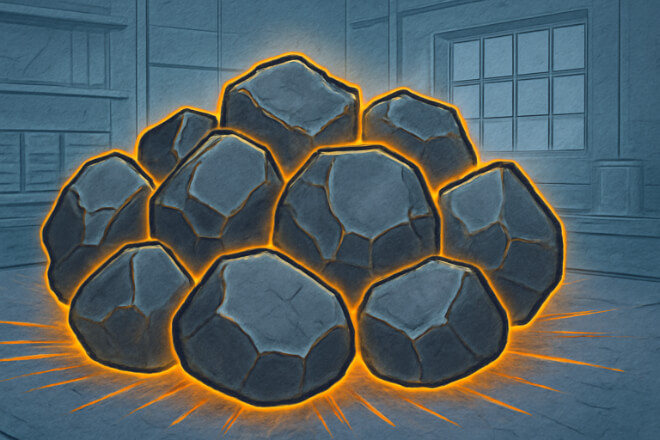
Binderless tungsten carbide refers to tungsten carbide that is produced without the use of metal binders like cobalt or nickel.
In traditional tungsten carbide, the metal binder helps hold the tungsten carbide grains together, providing some degree of ductility and toughness.
However, binderless tungsten carbide eliminates the need for these binders, resulting in a material that is 100% tungsten carbide.
1). How is Binderless Tungsten Carbide Made?
The process for creating binderless tungsten carbide involves the use of advanced sintering techniques that allow tungsten carbide to form a dense and uniform structure without the need for a binder.
High temperatures and pressures are applied to fuse the tungsten carbide grains together into a solid piece.
The absence of binders results in a material that has the following characteristics:
Improved wear resistance
Greater heat resistance
Enhanced chemical stability
Advantages of Binderless Tungsten Carbide for Bushings
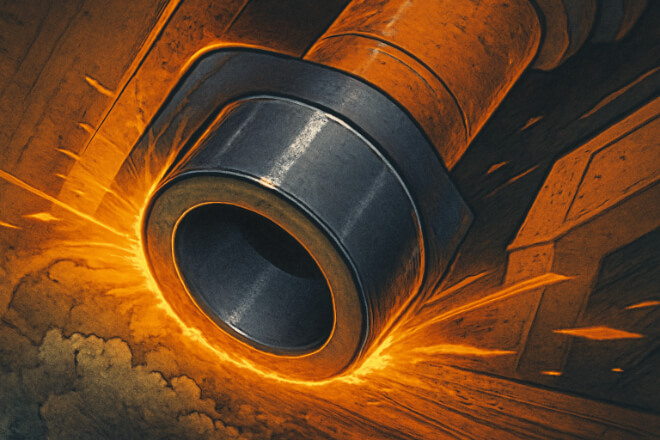
Binderless tungsten carbide offers several advantages over traditional tungsten carbide, particularly in applications that demand extreme hardness, wear resistance, and durability.
1). Increased Hardness and Wear Resistance
Without the binder material, binderless tungsten carbide is harder and more abrasion-resistant.
This makes it ideal for applications where wear resistance is crucial, such as in pumps, motors, and other high-friction environments.
1.1). Applications:
Mining and drilling
High-speed machining
Chemical pumps
1.2). Why Choose Binderless Tungsten Carbide?
Binderless tungsten carbide maintains its sharpness and dimensional stability even under extreme abrasive conditions, which means bushings last longer without needing to be replaced.
2). Higher Thermal Resistance
Binderless tungsten carbide can withstand higher temperatures than its bindered counterpart.
Without the binder, the material has a more uniform structure, making it more stable in high-temperature applications.
2.1). Applications:
High-speed turbines
Power generation
Aerospace components
2.2). Why Choose Binderless Tungsten Carbide?
This enhanced thermal stability helps prevent damage caused by temperature fluctuations, ensuring that bushings continue to perform at peak efficiency.
3). Improved Chemical Resistance
Traditional tungsten carbide can suffer from corrosion if exposed to harsh chemicals or extreme pH levels.
Binderless tungsten carbide, on the other hand, is more resistant to chemical attack because it does not contain binders that can degrade over time in aggressive environments.
3.1). Applications:
Chemical processing pumps
Pharmaceutical manufacturing
Water treatment plants
3.2). Why Choose Binderless Tungsten Carbide?
The improved corrosion resistance makes binderless tungsten carbide a better option for industries that require materials to withstand exposure to corrosive fluids or gases.
When to Use Binderless Tungsten Carbide Bushings

While binderless tungsten carbide offers several performance advantages, it may not be suitable for all applications.
Understanding when to use binderless tungsten carbide bushings is key to maximizing its benefits.
1). High Wear and Abrasive Conditions
If your equipment is operating in an environment where there is heavy wear and abrasive forces at play, binderless tungsten carbide is an ideal choice.
1.1). Examples:
Mining operations with rock or sand exposure
Heavy-duty machinery with abrasive materials passing through
2). High-Temperature Environments
When bushings are exposed to temperatures above 500°C (932°F), binderless tungsten carbide can provide better performance because it resists thermal degradation and maintains its hardness and dimensional integrity under extreme heat.
2.1). Examples:
Turbomachinery
Gas turbines
High-speed bearings
3). Chemical and Corrosive Applications
If your machinery is exposed to highly acidic or alkaline environments, binderless tungsten carbide is highly resistant to chemical attacks, making it ideal for pump bushings and other equipment exposed to aggressive fluids.
3.1). Examples:
Chemical pumps
Desalination plants
Oil and gas applications in corrosive environments
4). When Maximum Hardness is Required
For applications where maximum hardness and wear resistance are required.
Such as in high-precision machining or cutting applications, binderless tungsten carbide provides the best performance.
4.1). Examples:
High-precision manufacturing
Mold and die inserts
How Advances in Binderless Tungsten Carbide Are Shaping the Future of Bushings

Recent advances in manufacturing techniques, such as high-pressure sintering and ultra-fine powder processing, have made the production of binderless tungsten carbide more cost-effective and efficient.
These advances allow for better control over material properties, ensuring that binderless tungsten carbide bushings can be produced with consistent density, hardness, and performance characteristics.
1). What Makes the Latest Binderless Tungsten Carbide Technology Better?
Improved Manufacturing Techniques: More efficient sintering techniques allow for higher-density materials without compromising on toughness.
Cost-Effectiveness: New production methods make binderless tungsten carbide more affordable and accessible, even for large-scale industrial applications.
Customization: The ability to customize binderless tungsten carbide with different particle sizes and sintering conditions allows manufacturers to tailor the material for specific applications.
Challenges and Considerations

While binderless tungsten carbide offers many advantages, it also comes with challenges.
For example, the absence of a binder makes the material more brittle, so it may not be suitable for applications where impact resistance is critical.
Additionally, cost is an important factor to consider, as binderless tungsten carbide is generally more expensive to produce than traditional tungsten carbide.
 English
  Español
  简体中文
简体中文  Français
  日本語
日本語  한국어
한국어  العربية
  Tiếng Việt