
Understanding the Role of Carbide Seal Rings
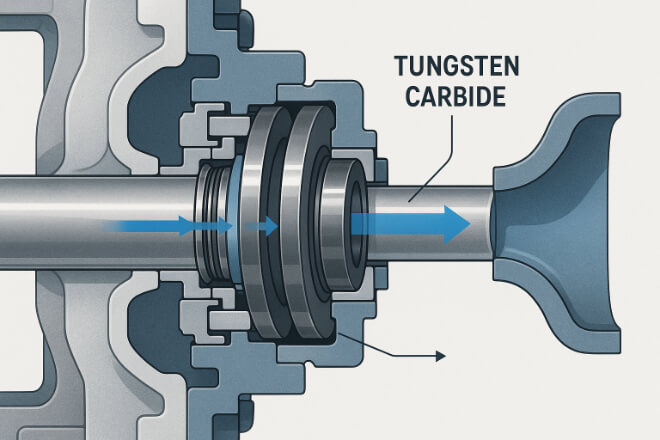
Anillos de sellado de carburo are used in mechanical seals to prevent leakage between rotating and stationary components.
The ring faces must withstand friction, corrosion, and pressure while maintaining a perfect sealing interface.
Among all materials, tungsten carbide (WC) stands out for its combination of dureza, chemical resistance, and thermal stability.
It can resist aggressive fluids, slurries, and corrosive gases far better than ceramic or stainless steel options.
Two main carbide materials are typically used:
Cobalt-bonded tungsten carbide (WC-Co): Provides excellent mechanical strength and tenacidad, suitable for clean fluids and moderate corrosion environments.
Nickel-bonded tungsten carbide (WC-Ni): Offers superior resistance to acids, alkalis, and oxidizing chemicals, making it ideal for aggressive media.
Choosing between them depends on what chemicals the ring will face and under what operating conditions.
Considering pH Range in Seal Ring Selection
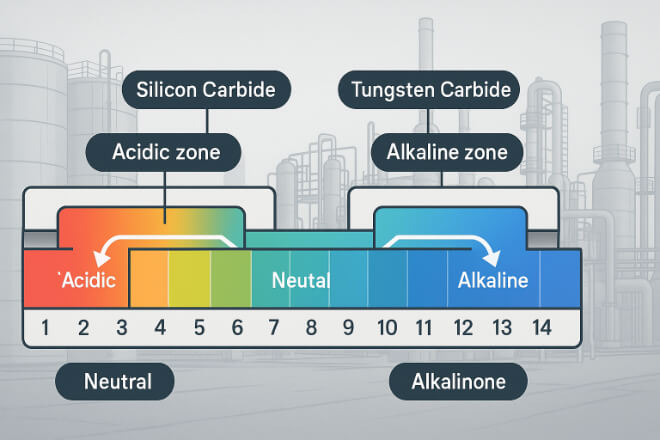
pH is one of the most important factors for corrosion performance.
Carbide materials react differently under acidic, neutral, or alkaline conditions.
pH < 4 (acidic): Nickel-bonded tungsten carbide is best suited. It resists acid corrosion where cobalt grades degrade rapidly.
pH 4–9 (neutral): Both WC-Co and WC-Ni grades can perform well depending on fluid purity.
pH > 9 (alkaline): Cobalt-bonded WC generally performs better, as nickel can be attacked by strong bases.
The challenge is that many industrial processes experience pH fluctuations.
When that happens, using a dual-face design (for example, WC-Ni vs. SiC) can provide extra protection.
Maintaining the correct pH compatibility ensures longer seal life and fewer shutdowns for replacement.
The Temperature Factor: Stability Under Stress
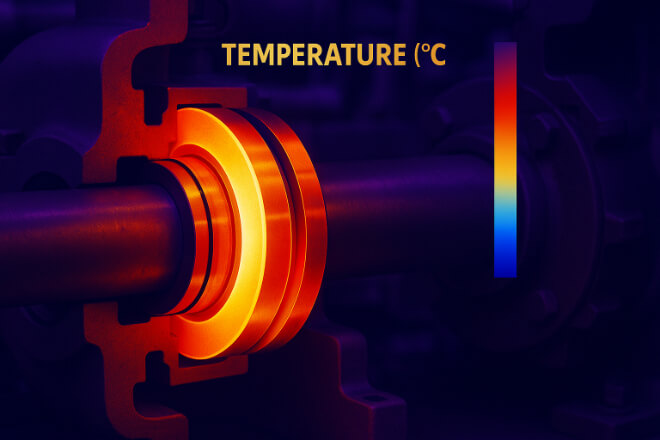
Temperature plays a dual role. It affects both the chemical reactivity and mechanical integrity of carbide seals.
At higher temperatures, binder leaching and thermal oxidation become serious risks.
In general:
Below 150°C: Most carbide grades perform well.
150–250°C: Nickel-bonded WC retains better Resistencia a la corrosión, but cobalt grades may soften slightly.
Above 250°C: Consider special grades or coatings (e.g., Cr3C2, TiC) for stability.
Selecting the correct carbide material for the working temperature ensures consistent surface hardness, prevents thermal cracking, and maintains tight sealing clearance.
Practical Tips for Specifying Carbide Seal Rings
Collect detailed process data: Chemical type, concentration, pH range, and temperature variations.
Consult with your carbide supplier early to determine the right grade and binder type.
Avoid cobalt grades if chloride or oxidizing acids are present.
Ensure compatible counter-face materials — pairing WC with carbon or SiC is often optimal.
Inspect sealing surfaces regularly for binder corrosion or micro-pitting.
Request test certificates or corrosion data for your specific process chemicals.
A good supplier should be able to offer custom-engineered carbide compositions based on your process environment.
 English
  Español
  简体中文
简体中文  Français
  日本語
日本語  한국어
한국어  العربية
  Tiếng Việt