
Why Seawater Pumps Need High-Performance Bushings
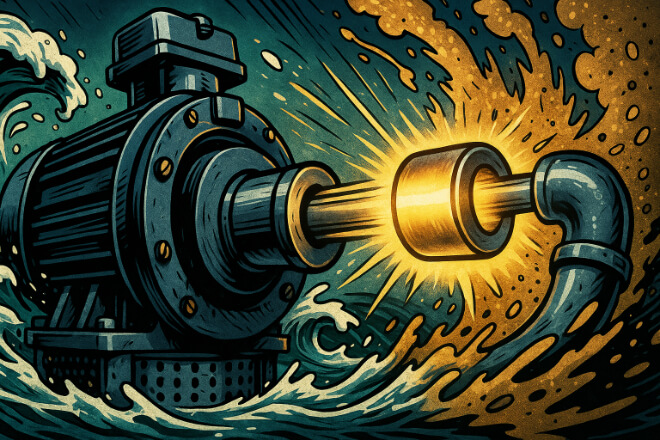
Desalination systems and seawater intake lines run at high load, high flow, and long operating hours. Pump bushings must survive:
Continuous saltwater exposure
Sand and silt abrasion
High rotational speed
Corrosion from chloride ions
Vibration and misalignment
Start-stop cycles
Traditional materials like bronze or stainless steel often fail early because seawater is aggressive. It contains:
Chlorides, which attack metals
Sand and debris, causing abrasive wear
Microorganisms, leading to bio-corrosion
High dissolved oxygen, accelerating pitting
Tungsten carbide bushings solve these challenges because they combine Resistencia a la corrosión, abrasion resistance, and high dureza.
Key Performance Benefits of Tungsten Carbide in Seawater Systems
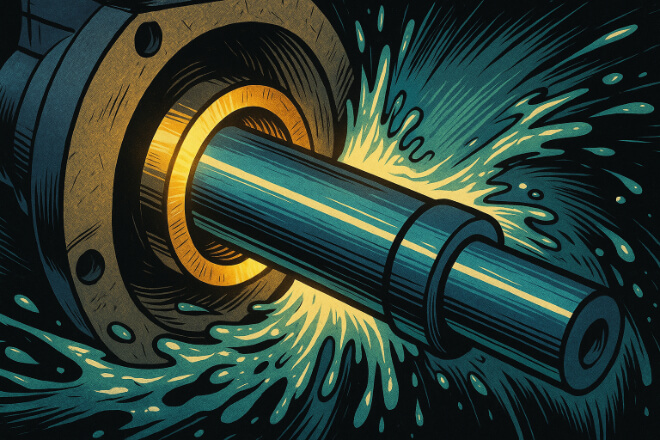
Tungsten carbide bushings offer unique advantages in desalination plants and seawater intake pumps.
Main benefits
Extremo resistencia al desgaste against sand, silt, and solids
Fuerte Resistencia a la corrosión, especialmente con grados de aglutinante de níquel
Dimensional stability even under temperature changes
Long operating life, reducing pump downtime
Lower maintenance cost for operators
High compressive strength, preventing deformation
These benefits are essential for seawater systems where pumps run 24/7.
How Tungsten Carbide Handles Saltwater Corrosion
Seawater corrosion is mainly caused by chloride ions, which attack metals and weaken them over time.
Tungsten carbide offers strong protection because:
WC grains are chemically inert
Nickel binder forms a more stable passive layer
Dense microstructure blocks water penetration
Bajo porosidad prevents pitting
High hardness protects against erosive wear
1). Corrosion Behavior Table
Where Tungsten Carbide Bushings Are Used in Desalination Plants
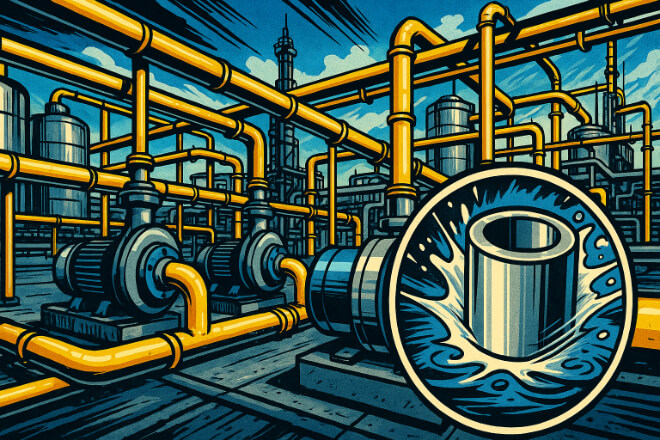
Desalination systems use several types of pumps. Tungsten carbide bushings are installed in:
1). Desalination pump types
High-pressure RO pumps
Booster pumps
Vertical sump seawater intake pumps
Brine recirculation pumps
Energy recovery pumps
Intake lift pumps
Pretreatment stage pumps
2). Functional roles of bushings
Shaft support
Reducing vibration
Preventing shaft run-out
Maintaining alignment
Minimizing wear on rotating parts
In all these roles, tungsten carbide provides long-term stability even with constant seawater exposure.
Common Failure Modes in Seawater Conditions
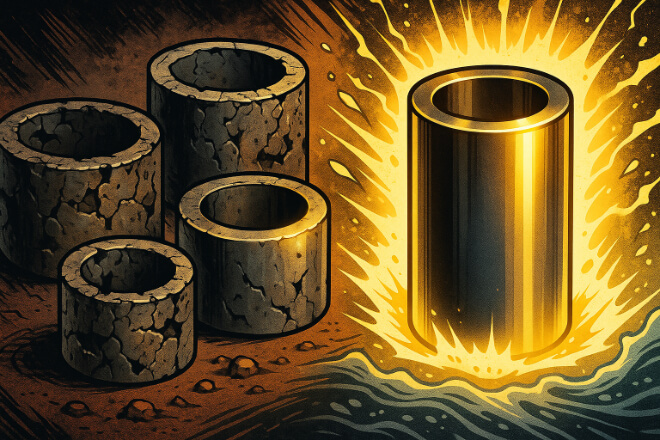
Even with strong materials, seawater can still cause failures.
1). Typical failure types
Lixiviación del aglutinante, especialmente en grados de cobalto.
Abrasive wear from sand and shells
Pitting corrosion when porosidad is high
Misalignment wear from pump vibration
Thermal shock cracking during rapid temperature changes
2). Simple ways to prevent failure
Choose WC-Ni for seawater
Ensure proper filtration to reduce sand
Maintain shaft alignment
Use high-densidad, HIP-sintered carbide
Inspect bushings during pump overhauls
Proper selection and maintenance can extend service life by years.
How to Choose the Right Supplier for Seawater Applications
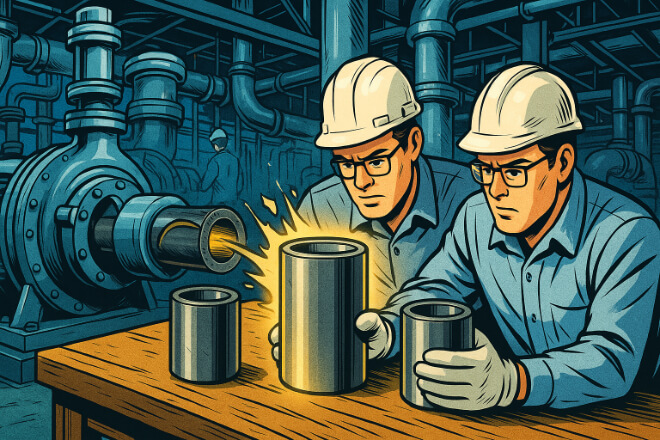
Choosing the right supplier is critical for seawater pump reliability.
Important supplier capabilities
Experience in desalination industry
Ability to supply WC-Ni grades
HIP sintering for highest density
Corrosion testing capability
Fast lead times for replacement parts
OEM customization
A strong supplier ensures stable performance and reduces equipment downtime.
 English
  Español
  简体中文
简体中文  Français
  日本語
日本語  한국어
한국어  العربية
  Tiếng Việt