
1. What Is Hardness in Tungsten Carbide Tips?
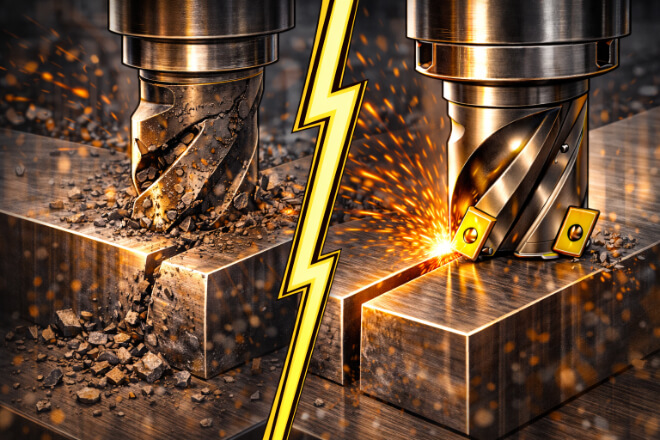
Hardness refers to a material’s ability to resist deformation, scratching, or abrasion.
When a tool is made from a material with high dureza, it can maintain its shape and cutting edge even under heavy wear and pressure.
How Hardness Affects Tungsten Carbide Tips:
Resistance to Abrasive Wear: Hard materials can withstand the friction caused by tough materials, such as metals or concrete, which makes tungsten carbide tips perfect for applications like cutting and drilling.
Maintaining Sharpness: Hard tips maintain a sharp cutting edge longer, improving cutting efficiency and reducing the need for frequent tool replacements.
For tungsten carbide tips, hardness is a critical factor in how well the tool performs in high-friction environments, where abrasion can quickly dull less durable materials.
2. What Is Toughness in Tungsten Carbide Tips?
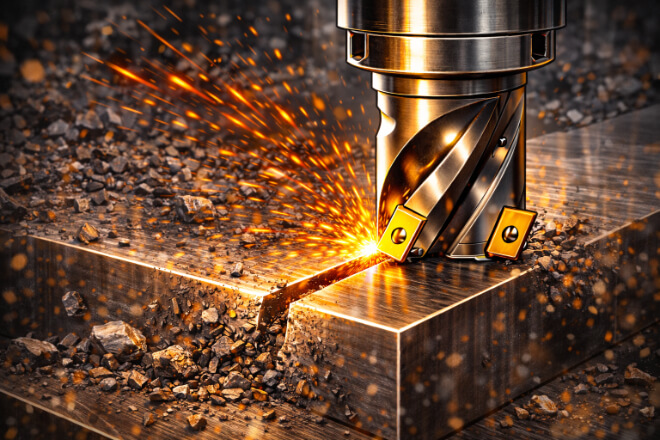
Toughness, on the other hand, refers to a material’s ability to absorb energy and resist cracking or breaking under stress.
A tough material can withstand impact and pressure without fracturing, which is important for tools subjected to sudden or repeated shock.
How Toughness Affects Tungsten Carbide Tips:
Resistencia al impacto: Tenacidad is essential for tools used in high-impact applications, such as minería or heavy construction, where the tool faces repeated shocks.
Resilience Under Stress: Tough materials are less likely to chip or break, making them more durable under challenging conditions like drilling through hard rock or cutting into abrasive materials.
Toughness in tungsten carbide tips is what prevents tools from breaking or chipping during heavy-duty operations, ensuring that the tool maintains its integrity over time.
3. Balancing Hardness and Toughness in Tungsten Carbide Tips
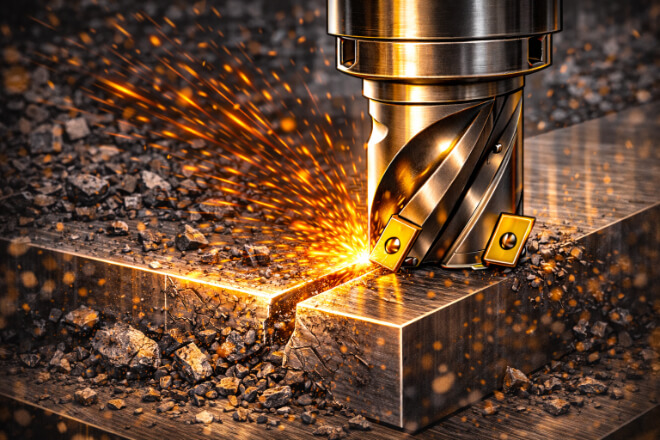
In cutting tool design, especially with tungsten carbide tips, achieving the right balance between hardness and toughness is crucial.
If a tool is too hard, it might be prone to cracking under impact, while a tool that is too tough may wear out quickly because it lacks the hardness needed to resist abrasion.
The Importance of Balance:
Too Much Dureza: Excessive hardness can make a tool more brittle, which increases the risk of cracking or chipping, especially when the tool faces sudden impacts.
Too Much Tenacidad: On the other hand, if a tool is too tough and lacks sufficient hardness, it may wear down quickly, leading to frequent replacements and reduced cutting efficiency.
The ideal tungsten carbide tip combines the right amount of hardness to resist abrasion and toughness to endure impact, resulting in a tool that can handle both extreme wear and high-stress conditions.
4. How Tungsten Carbide Tips Are Designed for Long Tool Life
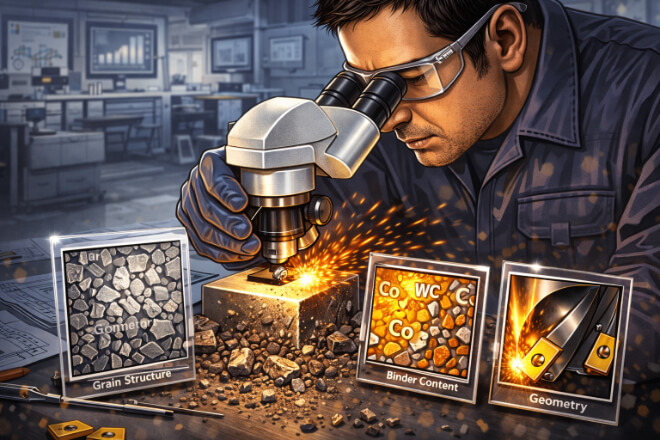
To design tungsten carbide tips that provide long tool life, manufacturers must focus on achieving a specific balance between hardness and toughness, along with considering the application for which the tool will be used.
Design Factors for Long Tool Life:
Tamaño del grano: The size of the carbide grains affects the material’s dureza y tenacidad. Finer grains generally provide greater hardness, while larger grains may improve toughness.
Material aglutinante: The binder in tungsten carbide tips (usually cobalt) helps enhance the toughness of the material while maintaining hardness. The right binder content is key for achieving durability.
Coatings: Some tungsten carbide tips are coated with materials such as titanium or chromium to improve resistencia al desgaste and add toughness without sacrificing the cutting edge.
These design factors ensure that the tips can perform at high speeds, withstand high-pressure environments, and last longer under heavy use.
5. Applications of Tungsten Carbide Tips in Heavy-Duty Cutting Jobs
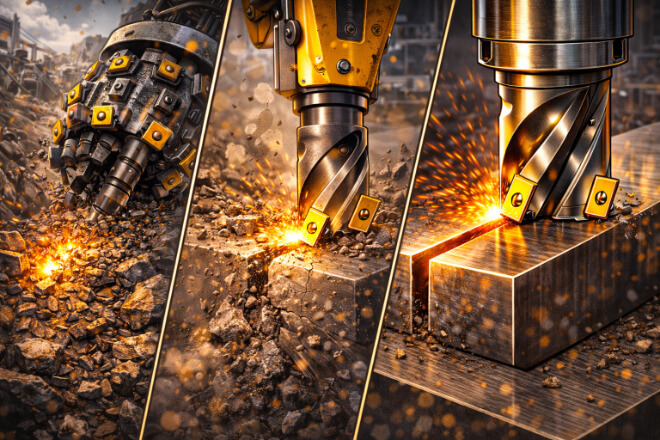
Tungsten carbide tips are widely used in industries where both hardness and toughness are required.
These industries include mining, construction, metal cutting, and machining.
Each of these applications demands a different balance of hardness and toughness depending on the type of material being cut.
Common Applications Include:
Minería: Tungsten carbide tips are used in drill bits and mining tools that need to resist both high impact and abrasion while cutting through rock and mineral deposits.
Construcción: In concrete cutting, carbide-tipped tools can withstand both heat and impact from dense materials like asphalt and stone.
Corte de metales: In machining, tungsten carbide tips maintain a sharp cutting edge when working with tough metals, reducing downtime and improving efficiency.
The versatility of tungsten carbide tips, along with their balance of hardness and toughness, makes them ideal for these heavy-duty applications.
6. How Tungsten Carbide Tips Extend Tool Life in Challenging Conditions
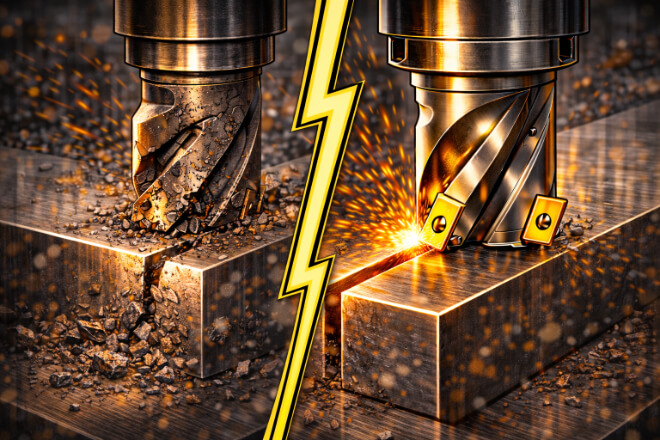
Tool life is one of the most important factors for decision-makers in industries that rely on cutting tools.
Tungsten carbide tips can significantly extend the lifespan of tools by reducing the need for frequent replacements, improving performance, and reducing downtime.
How Tungsten Carbide Tips Extend Tool Life:
Reduced Wear and Tear: By combining high dureza with tenacidad, tungsten carbide tips resist both abrasive wear and impact, allowing the tool to stay effective longer.
Menos cambios de herramientas: The durability of tungsten carbide tips means fewer tool changes, leading to reduced downtime and increased productivity.
Longer Cutting Efficiency: Tools with tungsten carbide tips maintain their cutting performance over longer periods, ensuring smoother, more efficient cuts without frequent re-sharpening.
These benefits make tungsten carbide tips the best choice for applications where tool longevity and cost-effectiveness are crucial.
7. Cost Benefits of Using Tungsten Carbide Tips
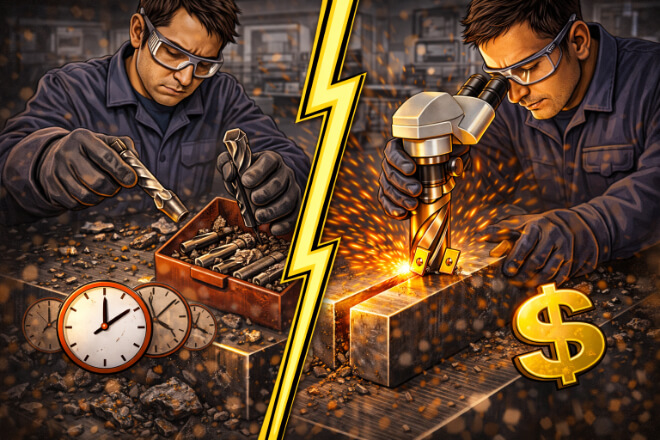
While puntas de carburo de tungsteno have a higher upfront cost compared to standard tool materials, their long tool life and superior performance lead to significant cost savings in the long run.
Entre los beneficios económicos se incluyen:
Lower Total Cost of Ownership: Tungsten carbide tips reduce the need for frequent tool replacements and maintenance, leading to lower operating costs.
Mayor productividad: With longer-lasting tools and fewer tool changes, workers can focus on production rather than maintenance.
Tiempo de inactividad reducido: Carbide tips’ durability leads to fewer disruptions in work, increasing the overall productivity of the operation.
These factors make tungsten carbide tips a cost-effective choice in industries that rely on high-performance cutting tools.
 English
  Español
  简体中文
简体中文  Français
  日本語
日本語  한국어
한국어  العربية
  Tiếng Việt