
1. What Is a Single Cut Carbide Burr?
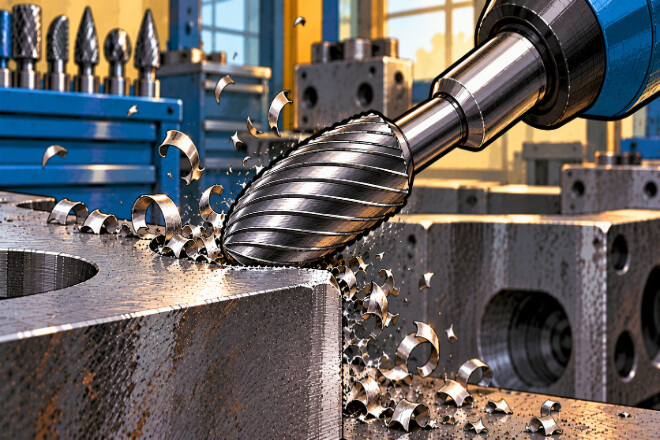
A single cut carbide burr has one main set of cutting flutes running across the carbide head.
Those flutes create a direct cutting action. As the burr rotates, the cutting edges remove metal in a clear, strong path and usually produce larger chips than a double cut design.
This type of burr is often used when material removal is the main goal.
Think about a heavy steel part with extra metal that needs to come off quickly. In that kind of job, a single cut burr can feel direct and powerful.
It is commonly used for:
shaping metal
removing stock
cleaning larger areas
working on cast iron and some steels
general fabrication work
The cutting action is simple and effective, but it can also feel more aggressive.
That is useful when speed matters. It is less useful when the operator needs a very controlled surface and small, broken chips.
2. What Is a Double Cut Carbide Burr?
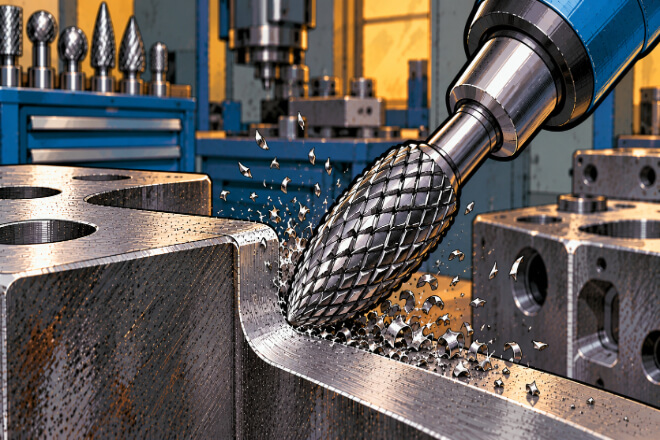
A double cut carbide burr has two sets of cutting flutes that cross each other.
That second flute pattern changes the way the burr attacks the material.
Instead of producing larger chips in one main cutting direction, the crossed teeth break the material into smaller pieces. This often gives the operator more control and makes the cutting action feel smoother.
Double cut burrs are widely used for:
deburring
weld cleaning
surface shaping
blending
general metal fabrication
jobs where better control matters
For many workshop users, double cut burrs feel easier to handle because they do not pull through the material in the same way as a more direct single cut pattern.
That does not mean they are always better. It simply means they solve a different problem.
3. How Do the Cutting Patterns Look Different?
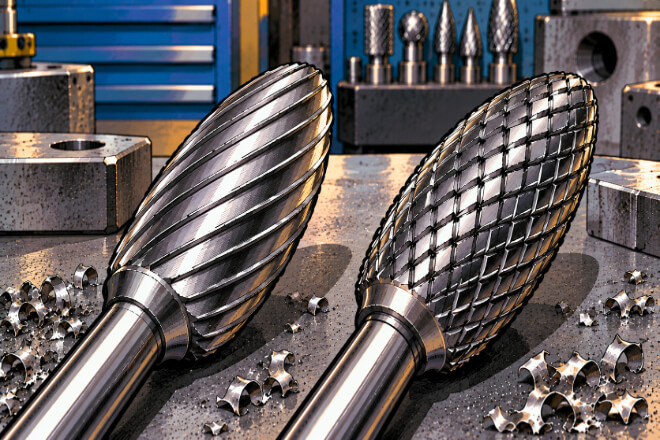
The easiest way to understand the difference is to look closely at the burr head.
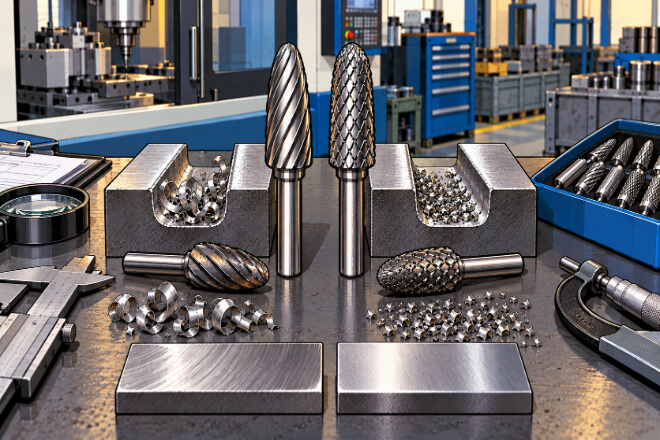
A single cut burr has flutes running in one main direction. A double cut burr has another set crossing the first, creating a pattern that looks much more complex.
That extra pattern creates more cutting edges.
More cutting edges means each tooth can take a smaller bite. This changes chip size, cutting feel, and surface behavior.
Here is a simple comparison:
4. Which One Removes Material Faster?
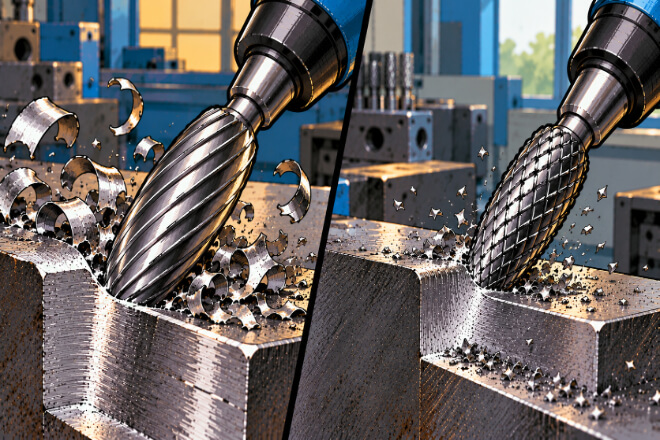
This is where the answer gets interesting.
A single cut burr can often feel faster because its cutting edges take a stronger bite into the material. This can make it useful when the main goal is removing stock.
But “faster” depends on what happens after the cutting.
Suppose a single cut burr removes metal very quickly but leaves a rougher surface that needs extra finishing.
Now suppose a double cut burr removes material a little more gently but leaves the workpiece closer to the final condition.
Which one is really faster? That depends on the whole process. For heavy shaping, single cut may make sense.
For work where control and finish are important, double cut may reduce the time needed later.
Production managers should look at total processing time, not just how quickly chips come off the part. Fast cutting is great. Fast cutting plus extra rework? Less exciting.
5. Which One Gives Better Control?
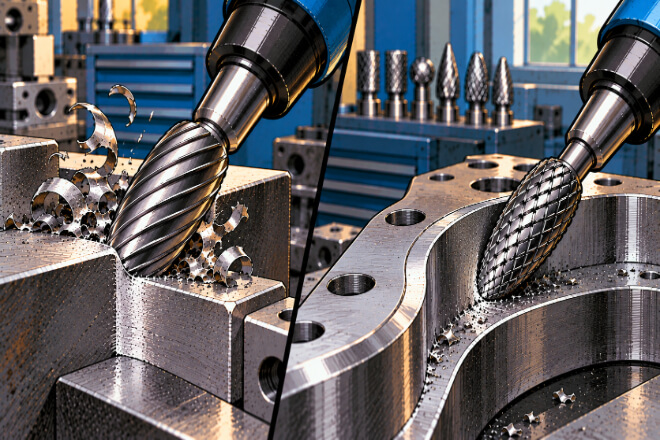
In many cases, double cut burrs offer better control. The crossed flute pattern breaks the material into smaller chips and spreads the cutting action across more edges.
This can reduce the feeling that the burr is trying to pull itself through the workpiece.
That matters when working near finished edges or important surfaces. Imagine deburring a precision machined part. You only need to remove a thin sharp edge.
A very aggressive cutting action can make the operator nervous because one small movement may remove too much material. A double cut burr can feel easier to guide in this kind of work.
Single cut burrs can still be controlled well with the right technique, but their stronger cutting action may require more attention.
For repeated manual work, operator control is not a small issue. Better control can reduce mistakes, rework, and damaged parts.
6. Which Cut Produces Smaller Chips?
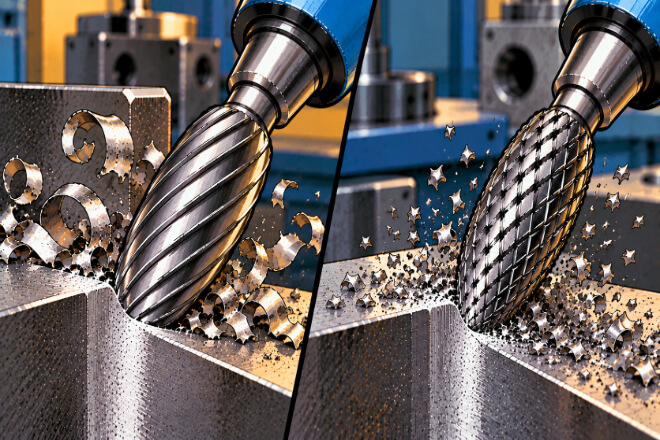
Double cut burrs generally produce smaller chips. That is one of their most obvious differences.
The second set of flutes breaks the removed metal into shorter pieces instead of allowing larger chips to form.
This can be useful in workshops where chip control matters. Smaller chips can be easier to manage around the cutting area and may make the process feel cleaner.
Single cut burrs usually create larger chips because the cutting action is more direct. That does not make larger chips bad.
In heavy material removal, larger chips can simply be a sign that the burr is taking stronger cuts. The important point is matching the chip behavior to the job.
If fine control is the goal, smaller chips can help. If aggressive stock removal is more important, larger chips may be perfectly acceptable.
7. Which One Leaves a Better Surface Finish?
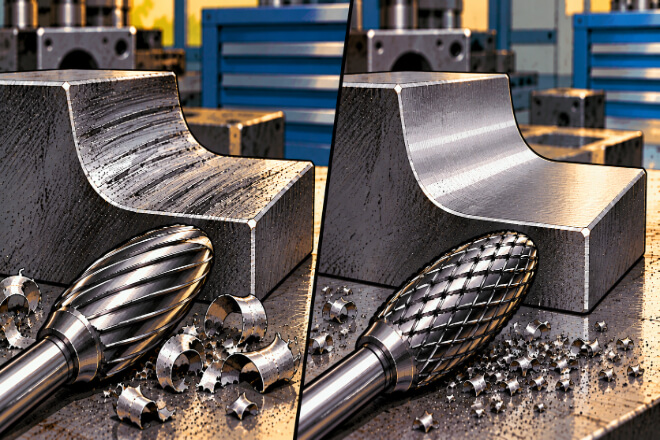
Double cut burrs are often chosen when a smoother and more controlled finish is wanted.
Because the cutting edges take smaller bites, the surface can look more even after machining.
This is useful for deburring, weld blending, and areas that will not receive much extra finishing afterward.
Single cut burrs can leave a more visible cutting pattern because they remove material more aggressively.
That may not matter at all in some jobs. If the surface will later be ground, polished, coated, or hidden inside an assembly, a perfect finish may not be necessary.
The trick is not to chase the smoothest possible finish every time. It is to produce the finish that the job actually needs.
A company can waste a surprising amount of time making hidden surfaces look beautiful. Sometimes “good enough” really is the smarter production decision.
8. Which Cut Works Better for Weld Removal?
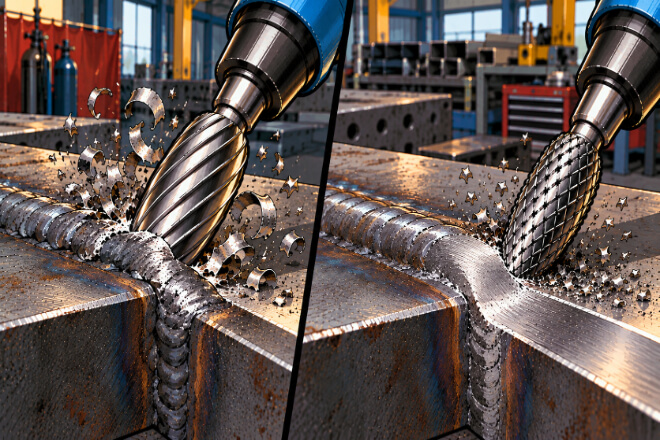
Both can work, but they behave differently.
For heavier weld removal where a large amount of metal needs to come off, a single cut burr can be useful because of its stronger stock-removal action.
For blending the weld area and controlling the final surface, a double cut burr may be easier to use.
Many weld jobs actually involve both stages. First, remove the larger high spots. Then smooth the area. This is why some workshops use different carbide burrs during the same operation.
It may seem slower to change tools, but the opposite can be true. Using one burr to do everything can force the operator to spend more time fighting the tool.
The best setup is the one that makes each step easier.
9. Which Cut Is Better for Deburring?
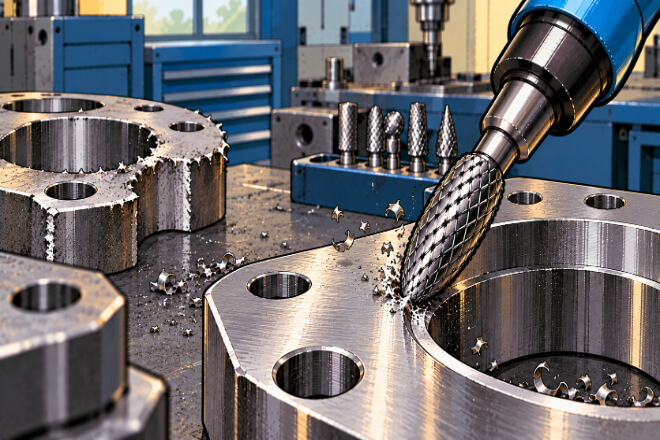
For many deburring jobs, double cut is a popular choice.
Deburring usually involves removing a small amount of unwanted metal without changing the main shape of the part.
That calls for control.
A double cut burr produces smaller chips and gives the operator a smoother cutting feel, which can be helpful around machined holes, edges, slots, and detailed parts.
Single cut can still be used, especially when the burr is larger or the unwanted material is heavier.
But for fine edge cleanup, double cut often feels more natural.
Think of it this way: Stock removal is about taking metal away. Deburring is about taking away only the metal that should not be there. Those are not quite the same job.
10. Does the Workpiece Material Change the Choice?
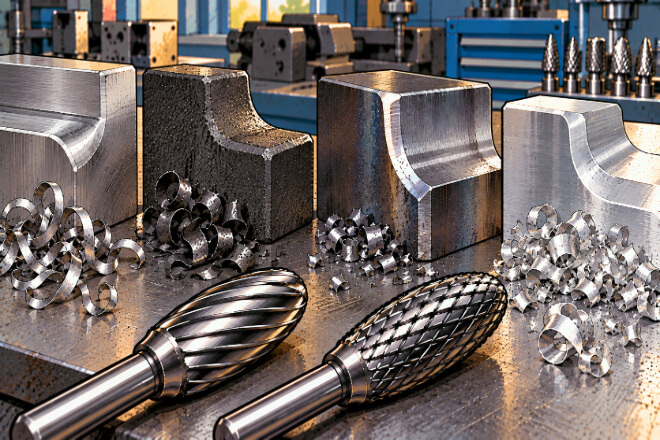
Yes.
The same carbide burr can behave very differently on cast iron, stainless steel, hardened steel, or aluminum.
Harder materials place more demand on the cutting edges. Sticky materials can create chip-loading problems. Brittle materials may produce short chips very easily.
For steels and other hard metals, both single and double cut burrs may work well depending on the task.
For softer metals such as aluminum, a more open tooth design is often preferred because tightly spaced cutting edges can load with chips.
That means the decision is not always simply single cut versus double cut. Material behavior matters too.
Before choosing a burr, ask:
What kind of chip does this material produce?
How much stock needs to be removed?
How important is the final surface?
Those questions are more useful than choosing a cut style only by habit.
11. Does Operator Skill Affect the Choice?
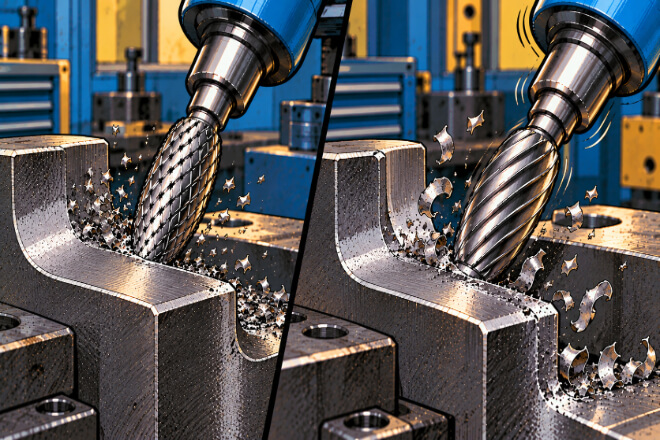
Absolutely.
An experienced operator may control a more aggressive single cut burr with no problem. A less experienced operator may feel much more comfortable with a double cut design.
This is important for companies with large production teams.
The “best” tool in the hands of one expert may not be the best tool for twenty operators working across different shifts.
Consistency matters. A burr that is easier to control may help different workers achieve more similar results.
That can reduce variation between parts. Tool choice should therefore reflect the real production environment, not just the preference of the most skilled person in the workshop.
If the process depends on one operator having superhero-level control, the process probably needs another look.
12. Should You Keep Both Single and Double Cut Burrs?
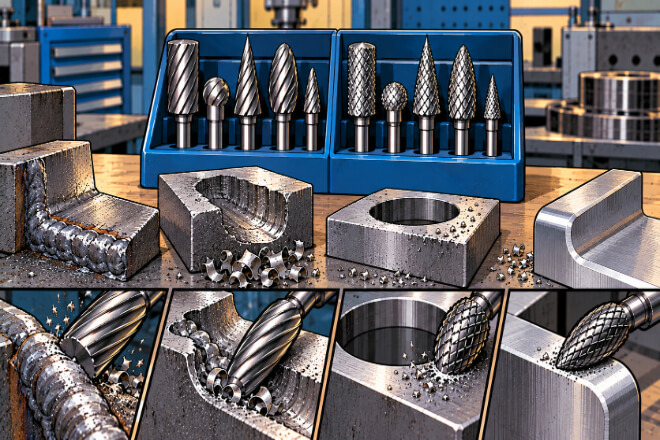
For many industrial users, yes. Single cut and double cut burrs are not enemies. They are different tools.
A fabrication shop may use single cut burrs for heavier shaping and double cut burrs for deburring and finishing.
A maintenance team may keep both because repair jobs can change every day. A mold and die shop may use more double cut burrs because control and surface quality are often important.
The right mix depends on your actual work. Instead of filling the tool cabinet with every possible burr, look at the jobs that appear most often.
Which operations need fast removal?
Which ones need control?
Where are operators spending too much time?
That information can help build a smarter tool inventory.
13. How Should Buyers Compare Single Cut and Double Cut Burrs?
If your company buys carbide burrs in volume, test them under real working conditions.
Catalog descriptions can tell you the flute pattern.
They cannot tell you exactly how the burr will behave in your process.
Use the same workpiece material, the same rotary equipment, and similar operating conditions. Then compare:
processing time
amount of material removed
operator control
Acabado superficial
burr life
tool-change frequency
need for secondary finishing
This makes the comparison much more useful. One burr may remove metal faster but wear sooner. Another may feel slower but reduce finishing time.
A third may simply be easier for operators to control. The best choice is the one that gives the lowest total process cost while still producing acceptable parts.
For decision-makers, that is a much better measure than purchase price alone.
 English
  Español
  简体中文
简体中文  Français
  日本語
日本語  한국어
한국어  العربية
  Tiếng Việt