
1. Which Molded Plastics Can Carbide Trimming Tools Finish?
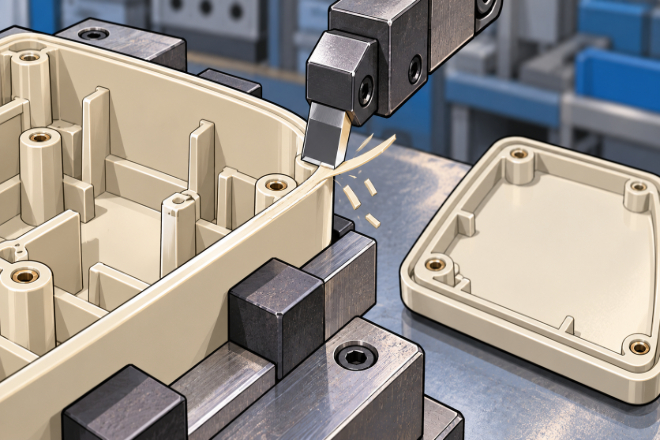
Many molded thermoplastics are candidates for precision trimming with suitable herramientas de carburo de tungsteno.
Examples include ABS, polycarbonate, acetal, and selected nylon grades. The exact grade still needs checking, because two plastics with similar names can behave differently.
On these parts, the job is usually small and specific: remove flash around an opening, clean a parting line, or finish an edge beside a locating feature.
The cutter must take away the unwanted material while leaving the useful shape alone.
Picture a molded cover with a thin plastic lip around its rim. That lip may be barely visible, yet it can stop the cover from seating correctly.
A small trimming cutter can follow the accessible edge and remove the interference.
The challenge is getting the plastic to cut instead of bend or smear. Sharp cutting edges and enough chip space help.
If chips collect around the tool, heat can build and the clean edge may turn into a melted one.
Softer grades, including some polypropylene and polyethylene parts, need particular care because thin flash can flex away from the cutter. They should be tested rather than grouped with more rigid plastics.
For production teams, success means the housing fits and the edge stays clean after the part leaves its fixture.
2. Can They Trim Glass-Filled Engineering Plastics?
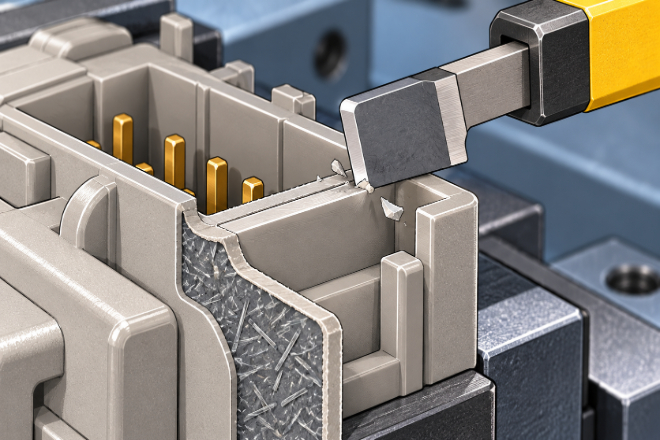
Yes, suitable herramientas de recorte de carburo can finish glass-filled engineering plastics, including selected reinforced nylon and PBT grades.
These materials appear in parts that need more stiffness or heat resistance, such as connector housings and automotive electrical components.
However, adding glass fibers changes more than the strength of the molded part. It also changes what the cutting edge meets.
The tool cuts through resin and hard reinforcing fibers. Those fibers can wear the edge, while the resin still needs controlled heat and clean chip removal.
A cutter that performs well on unfilled nylon may lose its edge sooner on a reinforced version.
The filler percentage matters too. “Glass-filled plastic” is a starting description, not a complete material specification. Share the grade and reinforcement content when discussing tooling.
During trimming, watch for exposed fibers, rough corners, and small chips breaking from the edge. The part may pass a quick visual check while still having a poor surface around a narrow opening.
For buyers, useful tool life is the period during which the finished edge remains acceptable. Waiting until the cutter breaks gives a much less helpful answer.
On filled plastics, gradual edge wear may affect quality long before a dramatic failure occurs.
3. What Aluminum Features Can These Tools Trim?
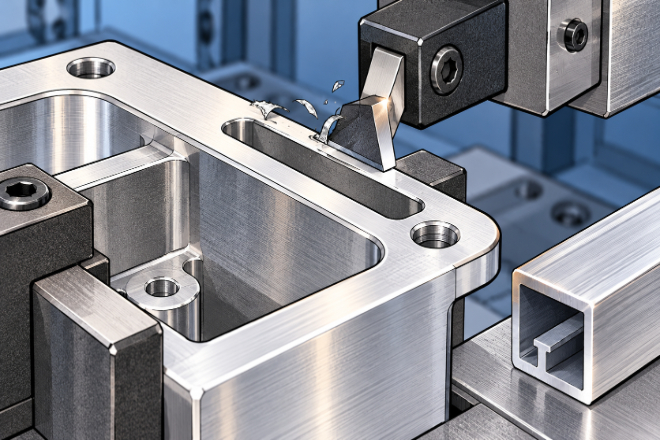
Aluminum is a useful application for correctly matched tungsten carbide trimming tools.
Typical tasks include cleaning small openings in housings, removing light burrs from machined edges, and finishing accessible details on aluminum profiles.
These are precision finishing jobs. A small-diameter cutter removes a limited amount of excess material while protecting nearby faces and dimensions.
Imagine an aluminum housing that has just been machined. The main features are correct, but a fine burr remains around a slot.
That burr can scratch a mating component or make assembly harder. A suitable trimming tool can clean the edge without changing the slot’s useful shape.
Aluminum can stick to the cutting edge, so geometry and surface condition matter.
Suitable polished surfaces and effective chip clearance can help control buildup. Increasing spindle speed alone does not solve a sticky cutting problem.
Alloy differences also deserve attention. A wrought aluminum component and an aluminum casting may not produce the same chips or wear the tool in the same way.
After trimming, check for marks on surrounding surfaces and a new lip on the opposite edge. The aim is a part ready for its next operation, rather than a burr that has simply changed address.
4. Can Copper and Brass Parts Be Precision-Trimmed?
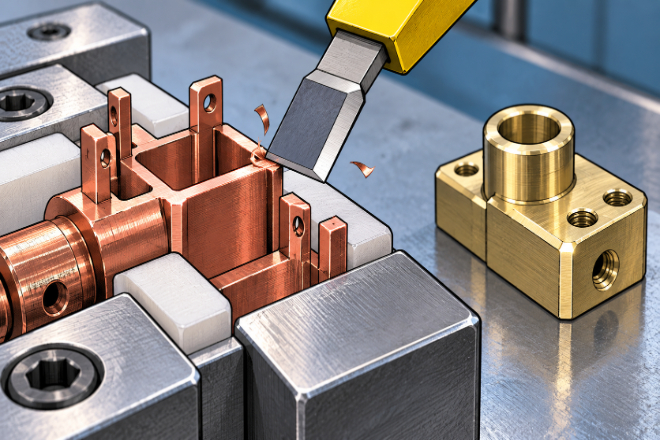
Copper and brass components can be candidates for precision carbide trimming when the tool is designed for the alloy and feature.
This is especially relevant to small parts where an edge defect can interfere with fit or handling.
Possible operations include cleaning a machined opening, removing a light burr, and finishing an accessible edge on a small connector-related component.
The cutting task and available support decide whether a rotary trimming process is practical.
Copper can be sticky, and thin burrs may bend instead of separating cleanly. A dull cutter can leave a smeared edge that looks smaller but still causes trouble.
Brass behaves differently depending on its composition. Free-machining grades and some lead-free grades should not automatically share the same tool settings or expected tool life.
Small features need protection from cutting forces. If the useful section bends during deburring, removing the original burr has not improved the part.
Where electrical contact or plated surfaces are involved, confirm which areas may be cut and how detached chips will be removed.
Trimming is a controlled manufacturing step; it should not accidentally damage a contact surface or leave fragments in a narrow space.
5. Which Precision Castings and Metal Parts Are Suitable?
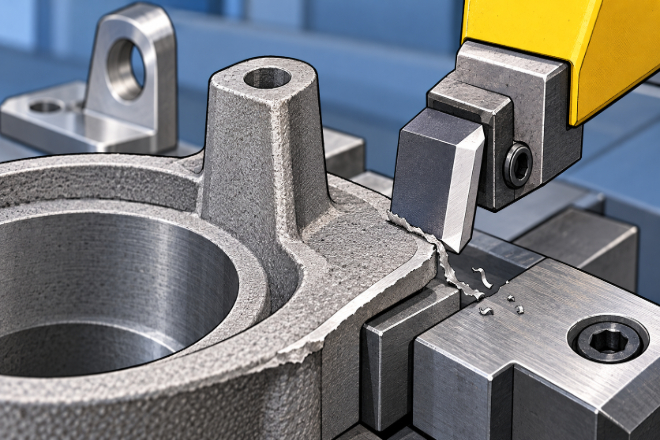
Precision castings and small metal parts often have accessible edges that need light cleanup.
Suitable herramientas de recorte de carburo can remove minor flash or burrs where the alloy, hardness, and amount of excess match the cutter’s capability.
“Casting” describes how a part was made, not what it is made from. An aluminum casting and a harder metal casting can present very different cutting loads. Always identify the actual alloy and condition.
The shape of the excess matters as well. A thin, regular flash line is different from a thick ridge or a casting gate.
Small precision trimming tools should not be expected to handle heavy removal simply because the cutting edge is tungsten carbide.
For steel or stainless-steel components, confirm a suitable tool design for the specific grade and hardness.
A cutter approved for a plastic housing is not automatically approved for a metal part of the same shape.
Look at the surrounding geometry during trials. A burr beside a thin wall may require a different approach from one on a solid flange.
The most useful application is one where the tool removes the defect consistently and preserves the drawing requirements. Material removal by itself is only half the job.
6. Can They Trim Reinforced Composite Components?
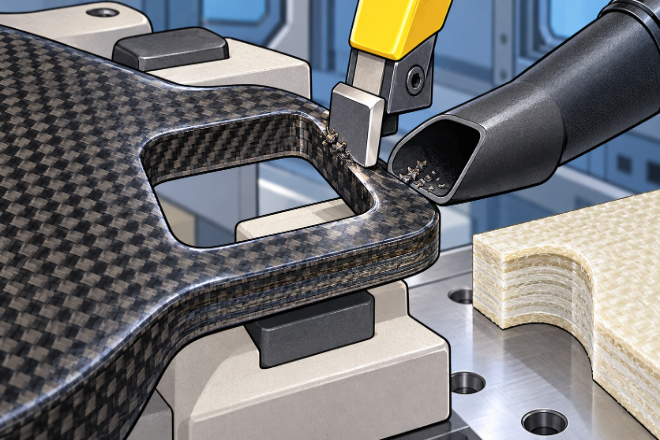
Selected carbon fiber and glass fiber composites can be trimmed with carbide tools designed for their structure.
Small edge details, cutouts, and accessible molded features may need this kind of finishing.
These materials deserve their own discussion because the cutter meets a combination of resin, fibers, and sometimes several bonded layers.
The challenge is cutting the reinforcement without pulling it away from the useful part.
Loose fibers, fraying, and layer separation can remain even when the edge looks roughly the right shape.
A standard cutter used for solid plastic should not be assumed suitable.
Composite applications may need dedicated cutting geometry and, where justified, a suitable wear-resistant treatment such as a diamond coating.
The fiber system matters. Carbon fiber, glass fiber, and aramid reinforcement do not respond identically, and short-fiber molded parts differ from layered fabric composites.
Inspect both faces and the finished edge. Also arrange appropriate dust extraction and keep debris away from fixtures and moving machine parts.
For a decision-maker, the acceptance question is practical: does the tool produce the required edge without loose reinforcement or damage that calls for repair?
Faster trimming is useful only when the component remains acceptable.
7. Can One Carbide Trimming Tool Handle Every Material?
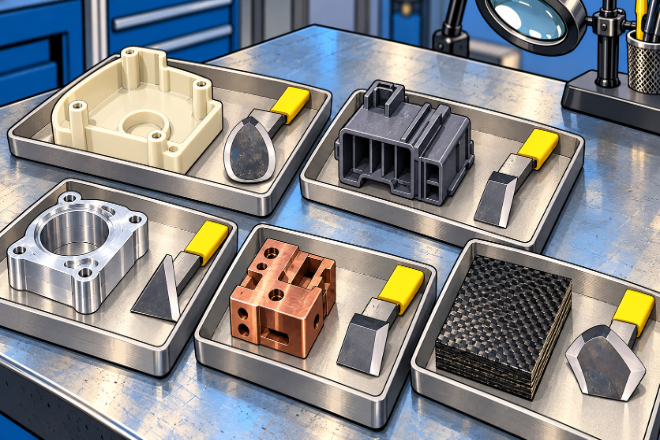
Usually, sharing the same basic tool material does not mean sharing the same best cutting design.
Precisión herramientas de recorte de carburo use tungsten carbide with a metal binder, commonly cobalt.
Their small cutting sections can be shaped for fine edge work, but flute count, cutting angles, tip profile, and surface treatment still influence material suitability.
The product range considered here includes small-diameter tools for trimming, deburring, and edge finishing.
These tools serve detailed finishing tasks on parts such as molded housings, connectors, and aluminum components.
When reviewing, connect the material to an actual operation. “Remove a thin flash line from this glass-filled connector housing” provides a much better starting point than “cut plastic.”
Supply representative parts and agree on the required finish. Then observe what changes as the edge wears.
A plastic lip, exposed fibers, or a secondary metal burr may signal that acceptable tool life has ended.
Some materials also call for another process. Flexible films, very soft rubber, glass, and fully fired ceramics should not be added to the compatibility list without a separate assessment.
For a factory processing several materials, separate approved cutters may give better results than forcing one design into every job.
A slightly longer tool list can be worthwhile if it reduces cleanup, scrap, and unexpected adjustments.
 English
 Español
 简体中文
 Français
 日本語
 한국어
 العربية
 Tiếng Việt