
Qu'est-ce que le pressage isostatique à chaud (HIP) ?
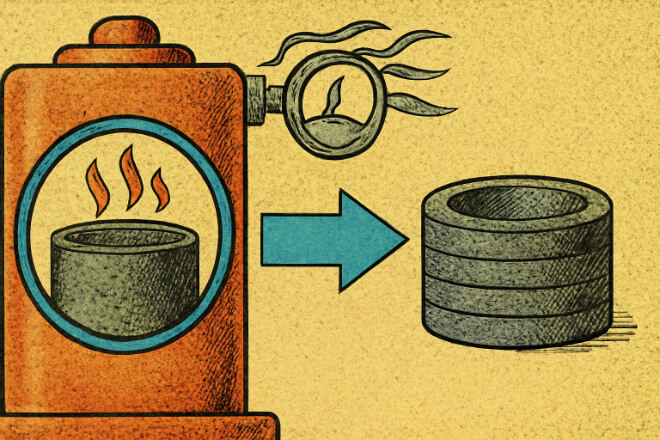
Le pressage isostatique à chaud (PIC) est un procédé de fabrication qui consiste à appliquer une température et une pression élevées à des matériaux, généralement dans une chambre remplie de gaz, afin d'éliminer les pores internes et d'améliorer les propriétés du matériau. densité, et obtenir une uniformité dans la structure du matériau.
Ce procédé est particulièrement précieux pour des matériaux comme le carbure de tungstène, couramment utilisé dans les bagues en raison de ses propriétés dureté et résistance à l'usure.
Comment fonctionne le HIP
Pression et chaleur : Dans le HIP, poudre de carbure de tungstène est placé dans une chambre scellée et soumis à la fois à une température élevée et à une pression isostatique (uniforme).
Élimination de la porosité : La chaleur et la pression permettent aux particules de fusionner plus efficacement, fermant ainsi tous les pores susceptibles d'affaiblir le matériau.
Uniformité : Ce procédé garantit que le matériau possède une densité uniforme, éliminant ainsi les incohérences susceptibles d'affecter ses performances.
Importance de la densité dans les bagues en carbure de tungstène
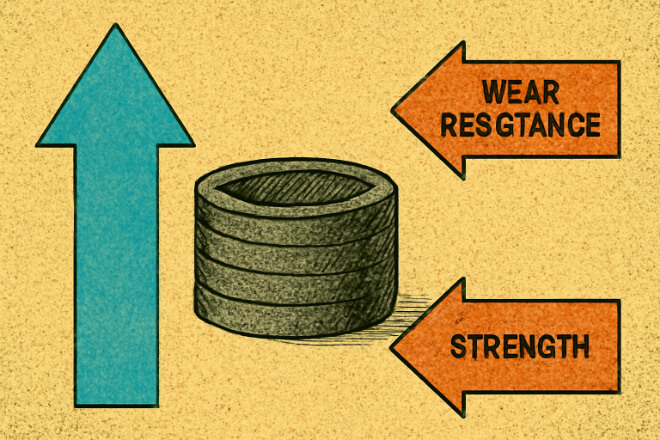
La densité des bagues en carbure de tungstène joue un rôle crucial dans leurs performances, notamment dans les applications exigeantes comme les pompes et les machines lourdes.
Une densité plus élevée se traduit par de meilleures propriétés mécaniques, ce qui influe directement sur la capacité de la bague à résister à des conditions difficiles.
1) Impact de Densité sur la performance
DuretéLes bagues en carbure de tungstène plus denses sont plus dures, ce qui améliore la résistance à l'usure et prolonge leur durée de vie.
Résistance : Les matériaux à densité plus élevée sont plus résistants et moins sujets à la rupture sous des charges élevées.
Résistance aux chocs : Grâce à une densité améliorée, les bagues en carbure de tungstène sont plus résistantes aux chocs, ce qui est particulièrement important dans les environnements à haute pression et abrasifs.
2) Effet sur Résistance à l'usure
L'amélioration de la densité obtenue grâce au procédé HIP se traduit par une meilleure résistance à l'usure.
Ceci est essentiel pour les applications où la bague est soumise à un frottement continu, comme dans les pompes et les compresseurs.
Plus le matériau est dense, mieux il résiste aux forces abrasives qui peuvent dégrader sa surface au fil du temps.
Comment le procédé HIP améliore la densité des bagues en carbure de tungstène
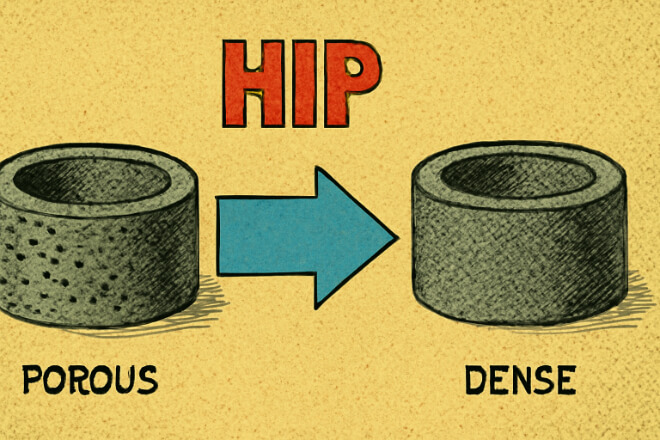
Le procédé HIP est spécifiquement conçu pour augmenter la densité des matériaux, ce qui en fait un procédé idéal pour les bagues en carbure de tungstène.
En soumettant le matériau à la fois à la chaleur et à la pression, le traitement HIP permet aux particules de carbure de tungstène de se lier plus étroitement, réduisant ainsi la porosité et augmentant la résistance globale. densité.
1) Réduction des pores et des vides
L'un des principaux avantages du traitement HIP est la réduction des pores et des vides au sein du matériau.
Ces imperfections internes peuvent fragiliser le matériau et réduire ses performances globales. En les éliminant, le procédé HIP garantit une bague plus uniforme et plus résistante.
2) Obtention de propriétés matérielles homogènes
L'uniformité obtenue lors du procédé HIP garantit que la bague en carbure de tungstène possède des propriétés matérielles constantes dans toute sa structure.
Ceci est essentiel pour des performances fiables et prévisibles, notamment dans les applications à fortes contraintes où une défaillance due à des incohérences de matériaux pourrait être catastrophique.
3) Amélioration de l'efficacité du frittage
Le procédé HIP est souvent utilisé conjointement avec le frittage pour améliorer la densité et les propriétés finales de la bague en carbure de tungstène.
Le frittage consiste à chauffer le poudre de carbure de tungstène à une température légèrement inférieure à son point de fusion pour fusionner les particules.
Le procédé HIP améliore ce processus en assurant une fusion uniforme des particules, ce qui conduit à une meilleure densité et à de meilleures propriétés du matériau.
Avantages de l'utilisation du procédé HIP pour les bagues en carbure de tungstène

Le procédé HIP offre plusieurs avantages en matière de fabrication de bagues en carbure de tungstène haute performance.
Ces avantages en font un procédé privilégié pour les industries exigeant des bagues de haute qualité aux propriétés mécaniques améliorées.
1) Durabilité et longévité améliorées
En augmentant la densité de la bague en carbure de tungstène, le procédé HIP garantit que la bague peut résister à des conditions de fonctionnement extrêmes, notamment à des pressions élevées, à des fluctuations de température et à des forces abrasives.
Cela prolonge considérablement la durée de vie de la bague, réduisant ainsi la fréquence des remplacements et de l'entretien.
2) Performances améliorées en environnements difficiles
Les bagues en carbure de tungstène traitées par HIP peuvent offrir de meilleures performances dans des environnements difficiles, tels que ceux que l'on trouve dans exploitation minière, l'énergie et les industries de transformation chimique.
La version améliorée densité Leur robustesse permet aux bagues de conserver leur intégrité même dans des conditions extrêmes.
3) Production rentable
Bien que le procédé HIP puisse être plus coûteux que les méthodes traditionnelles, ses avantages à long terme — tels que la réduction de l'usure et la diminution du nombre de remplacements — en font une solution rentable.
La durabilité des bagues traitées HIP permet de réduire les coûts d'exploitation au fil du temps, ce qui en fait un investissement judicieux pour les industries où la performance est essentielle.
Applications des bagues en carbure de tungstène traitées par HIP
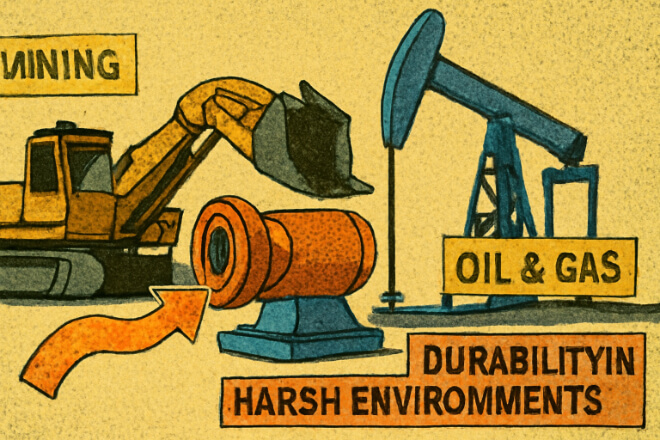
Les bagues en carbure de tungstène traitées par HIP sont utilisées dans de nombreux secteurs industriels en raison de leurs propriétés supérieures. Voici quelques-unes des applications les plus courantes :
1) Systèmes de pompes et de compresseurs
Dans les pompes et les compresseurs, les bagues en carbure de tungstène sont utilisées pour réduire la friction et l'usure entre les pièces mobiles.
Les bagues traitées HIP sont idéales pour ces applications, car elles offrent des performances supérieures. résistance à l'usure et peut résister aux pressions et températures élevées généralement rencontrées dans ces systèmes.
2) Industrie pétrolière et gazière
Le pétrole et gaz L'industrie a souvent besoin d'équipements capables de résister à des conditions extrêmes, notamment aux environnements abrasifs et aux systèmes à haute pression.
Les bagues en carbure de tungstène traitées par HIP offrent la résistance et la durabilité nécessaires à une performance à long terme dans ces environnements.
3) Exploitation minière et machinerie lourde
Les opérations minières et les machines lourdes utilisent des bagues en carbure de tungstène pour réduire l'usure des équipements soumis à des forces abrasives.
Le traitement HIP augmente la résistance à l'usure des bagues, garantissant ainsi leur fonctionnement optimal même dans des conditions difficiles.
 English
  Español
  简体中文
简体中文  Français
  日本語
日本語  한국어
한국어  العربية
  Tiếng Việt