
1. What Makes a Single Cut Carbide Burr Different?
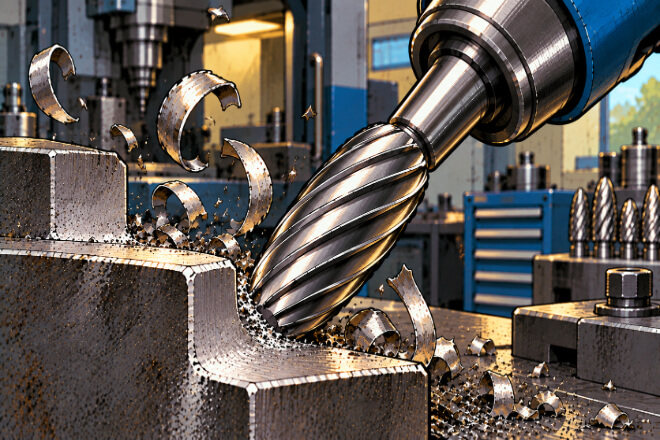
A single cut fraise en carbure de tungstène has one main set of cutting flutes running across the carbide head. That design looks simple, but it changes how the burr behaves on metal.
Each flute cuts in one main direction, so the tool tends to take a more direct bite into the workpiece. Compared with a double cut burr, it usually creates larger chips and feels more aggressive.
That can be useful when the goal is clear: remove unwanted metal.
Picture a thick steel part with extra material left after welding or casting. The operator does not need a delicate finishing tool yet. They need something that can start cutting quickly and keep moving.
This is where a single cut burr makes sense. It is less about finesse and more about getting the bulk of the work done.
That said, “aggressive” does not mean “push as hard as possible.” A sharp burr should still be allowed to cut freely. Too much pressure can create vibration, heat, and unnecessary stress on the tool.
2. When Is Fast Stock Removal the Main Goal?
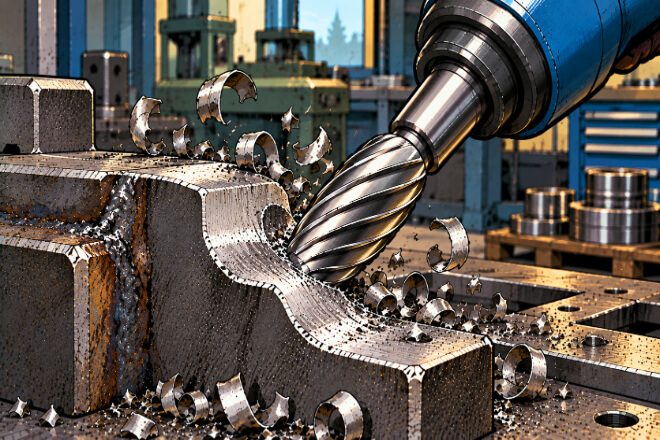
Single cut burrs are a good choice when you need to remove a noticeable amount of metal.
This can include:
reducing raised weld material
shaping thick steel sections
removing excess material from castings
opening or correcting larger areas
rough shaping before a finishing step
In these jobs, surface finish may not be the first priority. The main goal is to get the part closer to the required shape. A single cut burr can help because its cutting edges take stronger bites and remove larger chips.
Think of it as the “first pass” tool in many metalworking jobs. You remove the bulk first. Then, if needed, you switch to a more controlled burr or another finishing process.
For production managers, this can be more efficient than asking one tool to do both heavy removal and fine finishing.
3. Why Can Single Cut Burrs Work Well on Cast Iron?
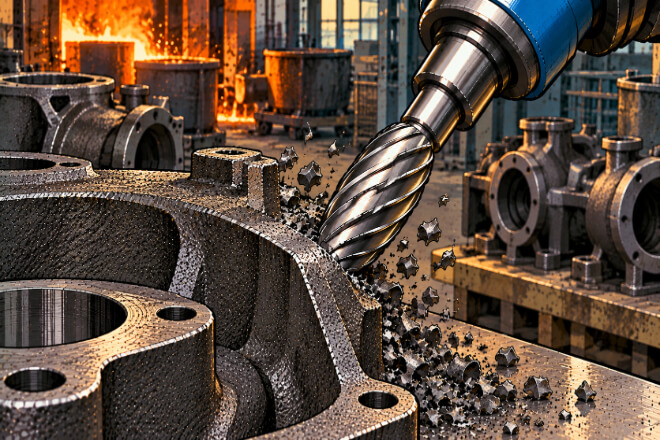
Cast iron is often a good match for a single cut carbide burr. One reason is chip behavior.
Cast iron tends to break into shorter, more brittle chips instead of producing long, sticky material. That helps keep the cutting flutes clear.
A single cut burr can then use its direct cutting action effectively without becoming packed with chips too quickly.
This makes it useful for cleaning cast surfaces, removing flash, correcting edges, and shaping cast components.
Foundries and repair shops often deal with rough surfaces where appearance is not the first concern. What matters is removing unwanted material quickly and keeping the process moving.
That is a very natural job for a single cut carbide burr. It is not magic. It is simply a good match between the burr’s flute style and the way cast iron behaves during cutting.
4. When Does a Single Cut Burr Make Sense for Steel?
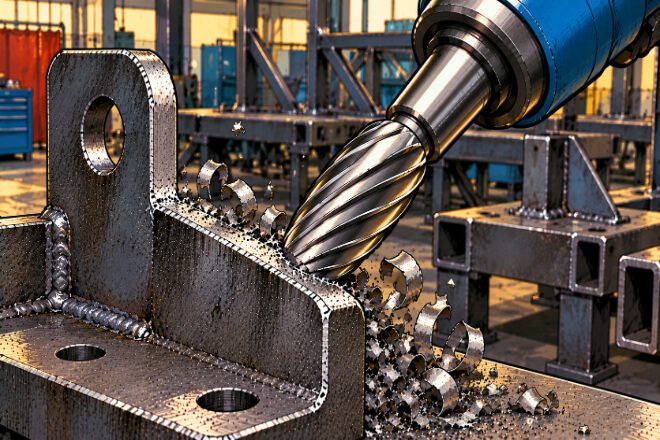
Steel is another common application. A single cut burr can work well when the job involves heavier stock removal, edge shaping, weld cleanup, or general fabrication.
For example, imagine a welded frame with several joints that need extra metal removed before final finishing.
Using a very fine, controlled burr from the beginning may take longer. A single cut burr can quickly knock down the high spots first.
Once the main material is gone, the operator can decide whether the surface is already acceptable or needs another finishing step.
This is where process planning matters. If the part will later be ground, polished, painted, or coated, there may be little value in creating a very fine finish during the first burr operation.
Sometimes faster rough removal is the smarter choice. Not every surface needs to look ready for a showroom.
5. Is Single Cut Better for Weld Removal?
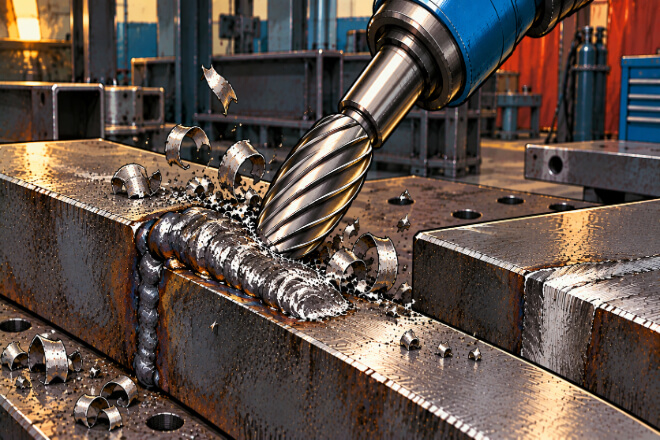
For heavy weld removal, it can be. Single cut burrs are useful when a raised weld bead or extra metal needs to be reduced quickly.
Their cutting action is direct, so they can remove larger amounts of material with fewer passes. This is especially useful in fabrication, maintenance, and repair work. But there is an important distinction.
Removing the bulk of a weld and blending the final surface are not exactly the same job.
A single cut burr may be excellent for the first part. A double cut burr or another finishing tool may be better for the second.
That means a two-tool process can sometimes be faster than forcing one burr to do everything.
Here is a simple way to think about it:
6. When Is Surface Finish Less Important Than Speed?
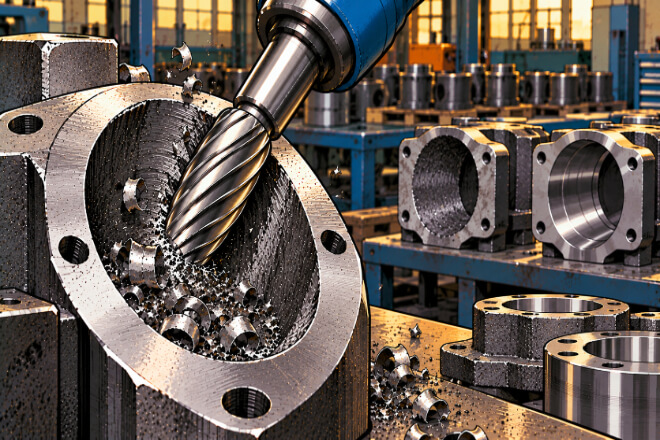
This is one of the clearest reasons to use a single cut burr. Some components need a smooth visible finish. Others do not.
If the burr is removing metal from an internal area that will never be seen, or if the part will go through grinding, coating, or another finishing process later, a slightly rougher burr pattern may not matter.
In that case, spending extra time chasing a perfect finish during rough material removal can be wasteful.
A single cut burr can help finish the roughing stage quickly. This is especially useful in high-volume production where small time savings repeat over hundreds of parts.
A few seconds saved on one component sounds small. Multiply it across a large production run and suddenly it is not small at all.
For decision-makers, this is why burr choice should be tied to the final part requirement. Do not pay for finish quality that the process does not actually need.
7. Why Do Larger Chips Sometimes Help?
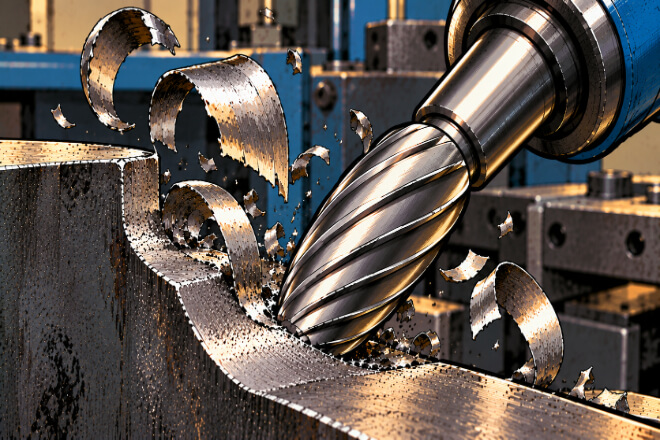
Larger chips are not automatically a problem. In fact, they can be useful.
When a single cut burr removes metal in larger pieces, the material is being cut rather than rubbed away slowly.
That can help make stock removal more efficient. The larger chip size also gives the operator a clear feel for how the burr is cutting.
If the tool starts producing poor chips or feels like it is rubbing, that may be a sign that the cutting edges are wearing, the speed is wrong, or the pressure is too high.
Chip shape can tell you a lot about what is happening at the cutting edge. It is a small detail, but experienced operators often notice it quickly.
For production teams, paying attention to chip behavior can help identify a poor setup before it becomes a larger problem.
8. When Should You Avoid a Single Cut Burr?
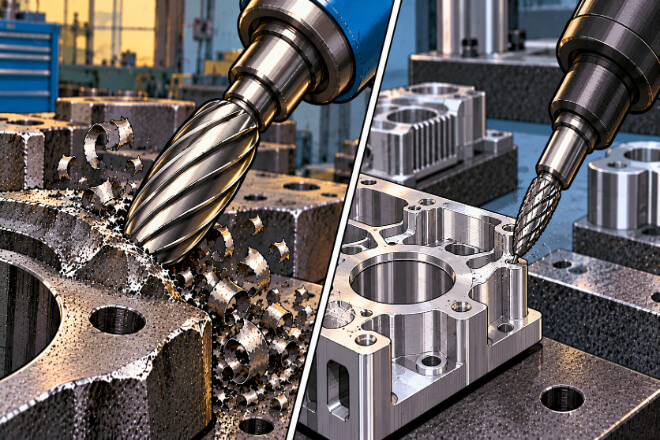
A single cut burr is useful, but it has limits. If the job needs very fine control, delicate edge work, or a smoother finish, another cut style may be easier to use.
Fine deburring is one example. Imagine removing a tiny sharp edge from a precision machined part. The goal is not “remove as much metal as possible.”
The goal is “remove only this tiny piece and leave everything else alone.” A more controlled burr can be a better fit.
Softer metals can also need special attention. Materials such as aluminum may produce chips that can load tightly spaced cutting flutes. In these cases, an open flute design made for non-ferrous materials may work better.
The lesson is simple: Single cut is strong when direct material removal is the goal. It becomes less attractive when control, fine finish, or chip loading becomes the bigger issue.
9. Does Burr Shape Still Matter?
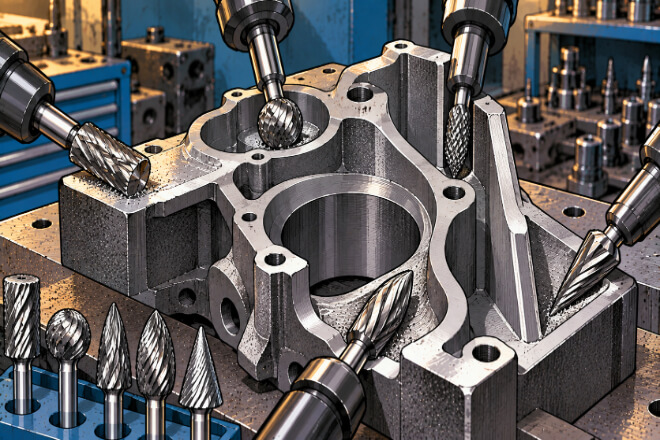
Yes. A lot. Choosing single cut does not finish the selection process. You still need the correct burr shape.
A cylindrical single cut burr may be useful on flat surfaces. A ball-shaped version can work inside rounded areas.
Tree and flame shapes can reach angled or curved sections. Cone and pointed burrs can reach tighter spaces.
The cut style controls how the burr removes material. The shape controls where it can remove that material. Both choices need to match the workpiece.
A powerful single cut burr with the wrong shape can still waste time because the operator cannot get good contact with the surface. In real production, shape and cut style should always be selected together.
10. What Operating Habits Help Single Cut Burrs Work Better?
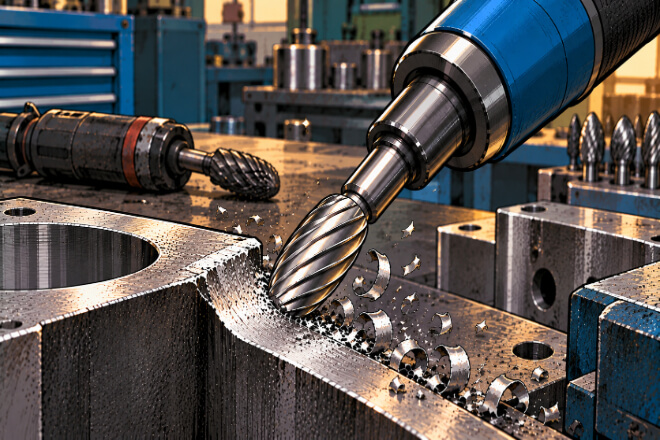
The tool does not do everything by itself. Good technique matters.
First, use the correct operating speed for the burr diameter, material, and rotary tool. Do not assume one speed fits every burr.
Second, avoid excessive pressure. A sharp carbide burr should cut without being forced deeply into the workpiece. Heavy pressure can reduce speed, increase vibration, and create more heat.
Third, keep the burr moving. Holding it in one spot for too long can create grooves, local heat, and uneven surfaces.
Finally, make sure the rotary tool is in good condition. Worn bearings, poor collets, and excessive runout can create vibration.
That makes an aggressive single cut burr even harder to control. A good burr on a bad machine is still a bad setup.
11. How Can Single Cut Burrs Improve Production Efficiency?
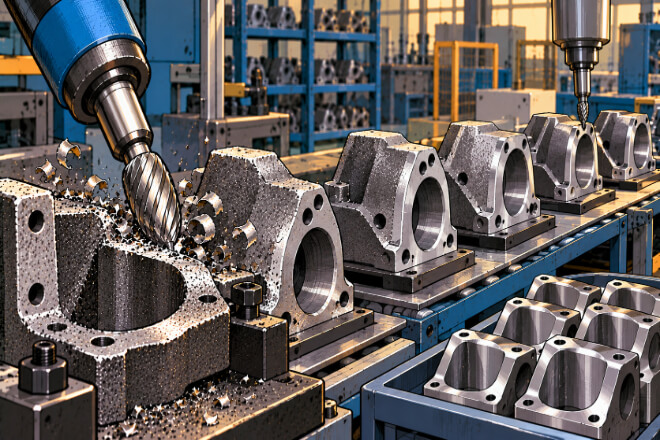
The biggest advantage appears when the burr is used where it fits best.
If a single cut burr removes rough stock faster, operators spend less time on the first stage of the job.
If it keeps cutting well over many parts, tool changes may also be reduced. The real benefit comes from the whole process. Imagine two production setups.
One uses a controlled burr from start to finish, even for heavy removal. The other uses a single cut burr for roughing, then a second tool only where finishing is needed.
The second setup may use more than one burr, but total production time can still be lower. That is what decision-makers should measure. Not just burr price. Not just tool life.
Look at:
time per part
parts completed per burr
finishing time
operator effort
tool-change frequency
part quality
Those numbers give a much better picture of whether a single cut tungsten carbide burr is adding value.
12. What Should Buyers Check Before Ordering in Volume?
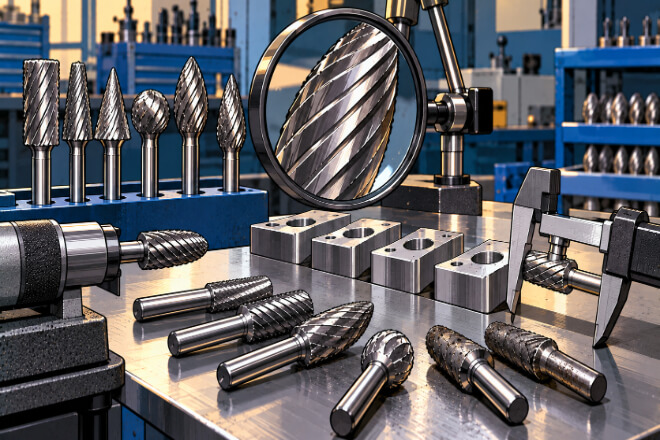
If your company buys burrs in quantity, do not judge them only by appearance. Two burrs can look almost identical and perform very differently.
Check the consistency of the flute grinding. Cutting edges should be clean and even. Look at the connection between the carbide head and the shank. High-speed rotary tools need stable construction and good balance.
Check dimensional consistency as well. A burr that runs smoothly is easier to control and can produce more stable results. Then test the tool on the actual material used in production.
This matters because a burr that performs well in a catalog test may behave differently on your steel grade, casting, weld, or machine setup.
Try a small production batch first. Measure cutting time, tool life, surface condition, and operator feedback.
A low purchase price is nice. A burr that keeps production moving is better.
13. When Does Single Cut Make the Most Business Sense?
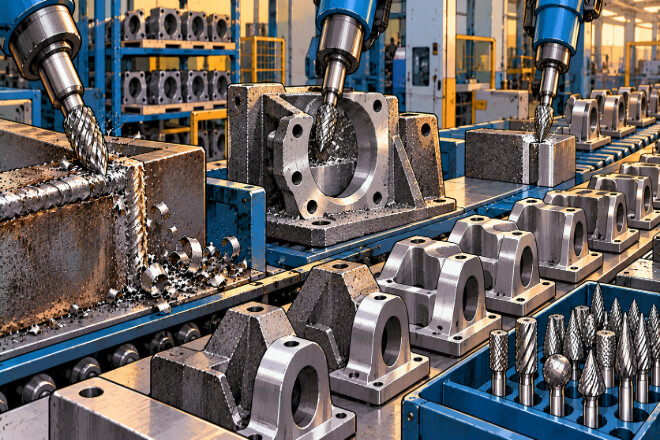
Single cut burrs make the most sense when their aggressive cutting action matches the job.
That usually means work where material must come off quickly and a very fine finish is not the first requirement.
Heavy fabrication, casting cleanup, rough shaping, and weld reduction are good examples.
For companies with repeat production, the best approach is to identify which operations need rough stock removal and standardize the right burrs for those jobs.
This can make training easier and reduce random tool choices on the shop floor.
Operators know what to reach for. Purchasing knows what to stock. Production gets a more predictable process. That is when a small cutting tool starts becoming part of a bigger efficiency plan.
 English
  Español
  简体中文
简体中文  Français
  日本語
日本語  한국어
한국어  العربية
  Tiếng Việt