
1. Why Does Processing Time Matter in Manufacturing?
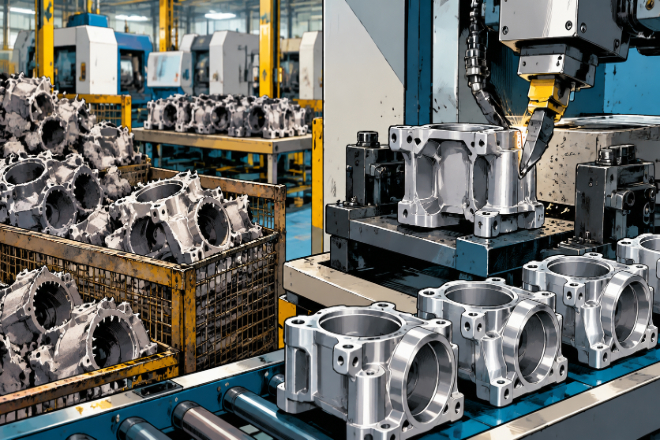
Processing time affects how many parts a factory can produce, how well delivery targets are met, and how much each finished component costs.
Even when the main machining process is fast, edge finishing can become a bottleneck.
After milling, drilling, cutting, or molding, a part may still have burrs, sharp edges, excess material, or uneven contours.
These defects need to be removed before the part moves to assembly or the next production stage.
If finishing takes too long, the factory may face several problems:
Machines spend more time on each part.
Workers need to carry out extra manual finishing.
Production schedules become harder to maintain.
More time is spent checking and correcting finished parts.
Labor and operating costs increase.
For example, a manufacturer producing hundreds of metal components each day may only need a short finishing operation on each part.
However, if that operation takes an extra minute per component, the total delay can become significant.
C'est ici outils de coupe en carbure can help. Their cutting performance and résistance à l'usure can support a faster, more stable finishing process when the tool is matched to the material and machining task.
The goal is not simply to cut faster. It is to complete each part correctly with fewer delays and less unnecessary work.
2. How Do Carbide Trimming Tools Remove Material More Efficiently?
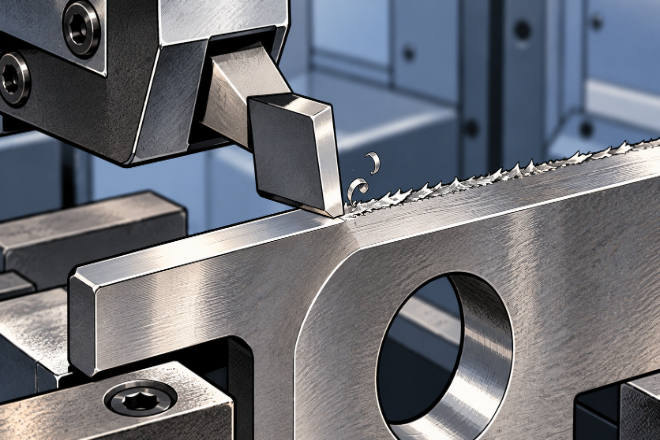
One key advantage of outils de coupe en carbure is their ability to cut away unwanted material through a controlled cutting action.
Instead of relying only on friction, the tool’s cutting edges remove small amounts of material as they move across the workpiece.
This is useful when manufacturers need to remove burrs, trim edges, or finish small features without changing the main shape of a component.
Faster Burr Removal
Burrs can form during milling, drilling, cutting, and other machining processes.
If they are left untreated, they may affect assembly, surface contact, or product safety.
A suitable carbide trimming tool can remove these unwanted edges in a controlled way.
Its cutting geometry helps the tool reach the target area and remove material without spending too much time on repeated passes.
The actual speed depends on the material, burr size, tool design, and machine settings.
A large burr may require more than one pass, while a small burr may be removed in a single finishing operation.
More Direct Edge Finishing
Some parts have corners, narrow edges, or complex contours that are difficult to finish with a general-purpose tool. A tool designed for the required shape can reach these areas more directly.
This may reduce the need to change tools or move the workpiece between different finishing stations.
For manufacturers, the benefit is straightforward: less time spent correcting edges and more time spent producing finished parts.
3. How Does Longer Tool Life Reduce Processing Time?
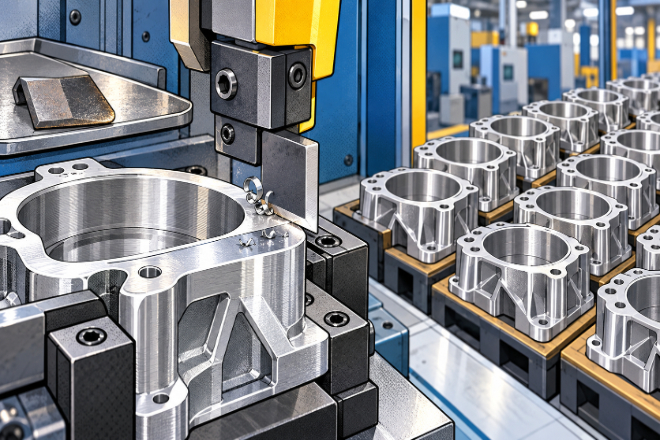
Tool changes take time, even when the replacement itself is simple. The machine may need to stop, the worn tool must be removed, a new tool installed, and the setup checked before production can continue.
When a tool wears quickly, these interruptions occur more often.
Tungsten carbide is known for its high dureté et résistance à l'usure. When a outil de coupe en carbure is correctly selected and used within suitable operating conditions.
It can maintain its cutting edge for longer than many conventional steel tools in demanding trimming applications.
A longer-lasting cutting edge can help reduce:
Tool replacement frequency
Machine downtime
Tool setting and inspection time
Production delays caused by poor cutting quality
The need for repeated finishing passes caused by tool wear
There is another benefit. As a tool becomes dull, it may cut less cleanly and require adjustments to maintain the required finish.
A tool that keeps its cutting performance stable can make the production process easier to control.
However, carbide is not unbreakable. Excessive cutting force, vibration, poor tool holding, or unsuitable feed and speed settings can cause chipping or early failure.
Proper tool selection and setup are essential if manufacturers want to gain the full benefit of longer tool life.
4. Can Carbide Trimming Tools Improve CNC Machining Efficiency?
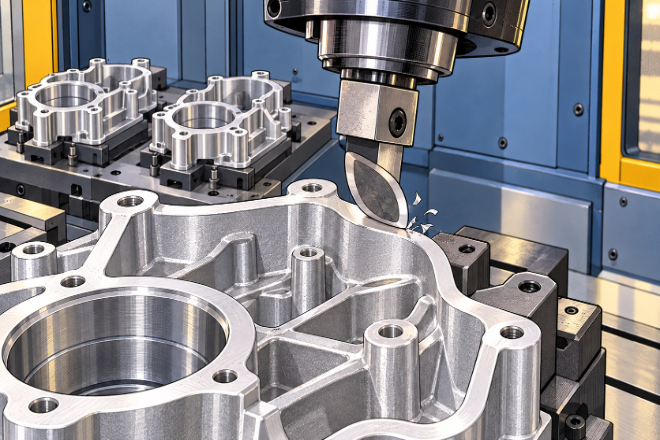
Yes. Outils de coupe en carbure can support more efficient CNC machining by helping reduce finishing time, tool changes, and extra handling.
In CNC production, the tool follows a programmed path to remove material from selected areas.
When the correct tool geometry is used, the machine can finish edges with repeatable movements rather than relying on extensive manual work.
Several factors affect the result.
Fewer Finishing Passes
A suitable tool can remove the required material in fewer passes, provided the cutting conditions allow it. This reduces the time spent on each part.
The aim is not to remove as much material as possible in one pass.
Too much cutting pressure can damage the edge, increase heat, or shorten tool life. A balanced approach often gives better results over a full production run.
More Stable Production
Consistent tool performance helps CNC operators use more predictable programs and process settings.
If the tool wears unevenly or loses its cutting ability quickly, operators may need to inspect parts more often or adjust the process.
A well-matched carbide trimming tool can reduce these interruptions and help maintain steady output.
Less Manual Finishing
When a CNC process removes burrs and finishes edges effectively, workers may spend less time correcting parts by hand.
This can be especially valuable for repeated production of similar components.
Manual finishing may still be needed for some complex shapes or hard-to-reach areas, but reducing unnecessary handwork can improve overall workflow.
5. Which Factors Affect the Processing Speed of Carbide Trimming Tools?
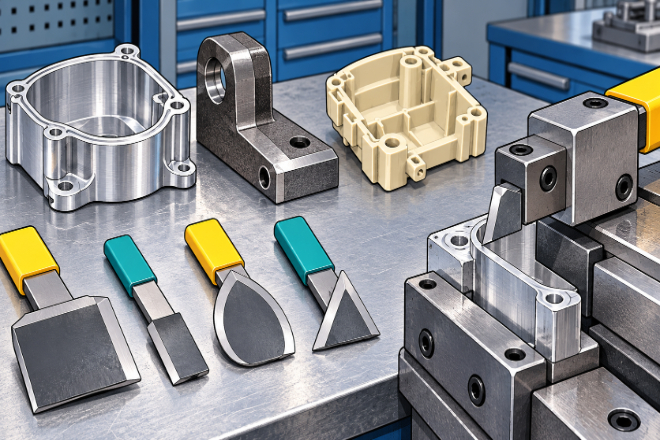
Choisir un outil de coupe en carbure does not automatically guarantee shorter processing time. The tool must match the workpiece, machine, and required finish.
6. How Do Carbide Trimming Tools Reduce Rework and Manual Labor?
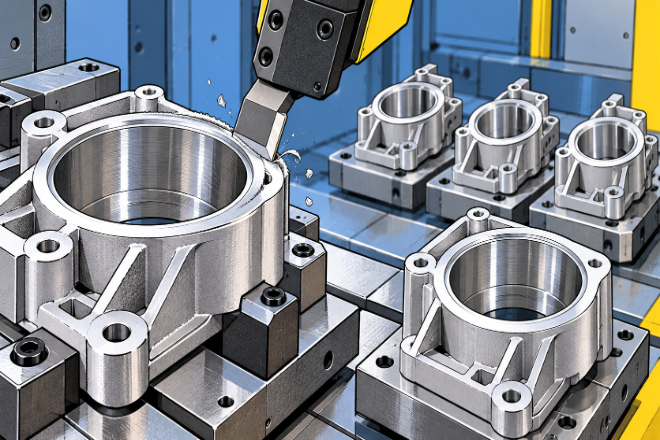
Processing time includes more than the time a machine spends cutting. It also includes inspection, handling, correction, and rework.
If an edge is not finished correctly, the part may need another pass or additional manual work. In some cases, the defect may only be found during assembly or final inspection, when correction becomes more expensive.
Outils de coupe en carbure can help reduce these problems when they are selected for the required finishing task and used under stable conditions.
For example, a manufacturer producing precision metal housings may need to remove burrs from several edges before assembly.
A suitable trimming tool, combined with a repeatable CNC path, can help create consistent edges across the batch.
This can reduce the need for workers to inspect and correct every edge manually.
The same principle applies to molded plastic components, where excess material around the parting line may need careful removal.
A tool with suitable geometry can trim the unwanted material while protecting the finished surface.
Still, tool choice is only part of the solution. Fixture design, machining programs, inspection methods, and operator training also affect the final result.
7. How Can Manufacturers Choose Carbide Trimming Tools for Faster Production?
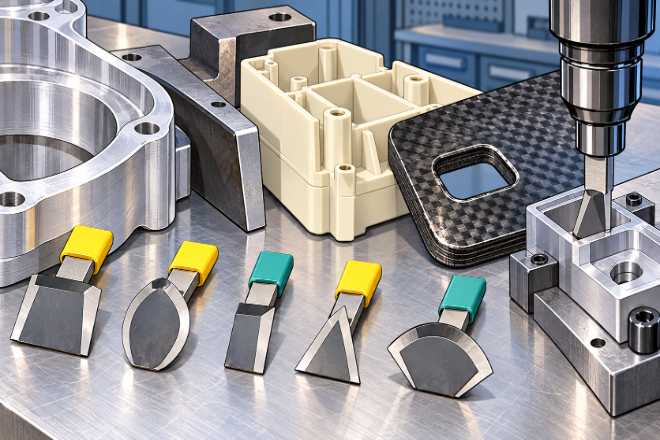
The best tool is not always the one with the highest cutting speed or the lowest purchase price.
It is the one that meets the required quality standard while keeping the full production process efficient.
Before selecting carbide trimming tools, manufacturers should review the following points.
1). Identify the Main Finishing Task
Start by defining what the tool needs to do. Removing small burrs is different from trimming excess material or finishing a complex contour.
A clear task helps narrow down the tool shape and cutting design.
2). Match the Tool to the Material
Aluminum, steel, plastic, and composite materials behave differently during cutting. The tool’s geometry and carbide grade should suit the workpiece and the expected cutting conditions.
A tool that works well on one material may not deliver the same results on another.
3). Check Machine Compatibility
The tool must fit the machine and work safely at the intended speed. Tool size, holding method, runout, and machine rigidity can all affect finishing time.
Poor setup can cancel out the benefits of a high-quality tool.
4). Test the Full Production Cycle
A useful test should measure more than the time needed to finish one part.
Manufacturers should also record tool life, replacement time, surface quality, rejected parts, and any manual work still required.
These results give a clearer picture of whether a tool improves total production efficiency.
8. How Should Manufacturers Measure Time Savings?
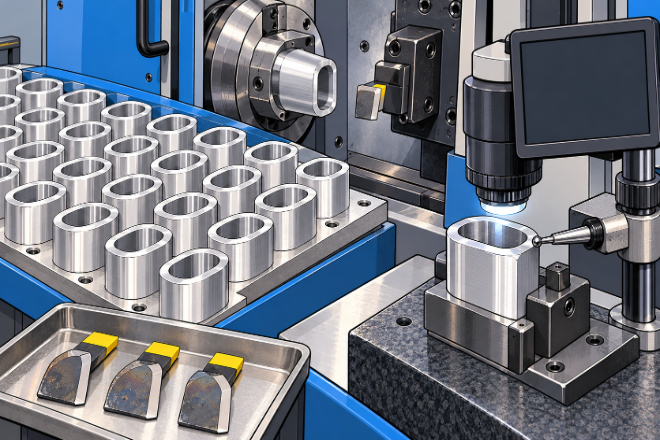
To understand the value of carbide trimming tools, manufacturers should compare the full finishing process before and after a tool change.
Useful measures include:
Cycle time per part: How long does each finishing operation take?
Tool life: How many parts can be completed before replacement?
Changeover time: How long does it take to replace and set a tool?
Rework rate: How many parts need extra finishing?
Labor time: How much manual work is still required?
Good parts per shift: How many acceptable components are produced in a working shift?
A simple example shows why these measures matter. A tool may finish each part slightly faster but wear out more often.
Another tool may take a little longer per part but last much longer and produce fewer defects.
The better choice depends on the total result, not one measurement alone.
For purchasing and engineering teams, these figures also make supplier comparisons more useful.
Instead of comparing only tool prices, they can compare the expected cost and time required to produce an acceptable part.
 English
 Español
 简体中文
 Français
 日本語
 한국어
 العربية
 Tiếng Việt