
Surface Roughness Values That Extend Bushing Lifespan

Surface roughness plays a crucial role in the performance and lifespan of bushings, particularly in demanding industrial applications. Tungsten carbide bushings, known for their exceptional wear resistance and hardness, require specific surface roughness values to ensure optimal functioning over time. In this blog, we will discuss how surface roughness affects the lifespan of bushings, the ideal values for different applications, and how to optimize surface finishing techniques for long-lasting performance. What is Surface Roughness? Surface roughness refers to the small, closely spaced deviations on a material’s surface, which are typically measured in terms of height and spacing. These irregularities can be caused by various factors during the manufacturing process, such […]
Coefficient of Friction in Tungsten Carbide Bushings Explained
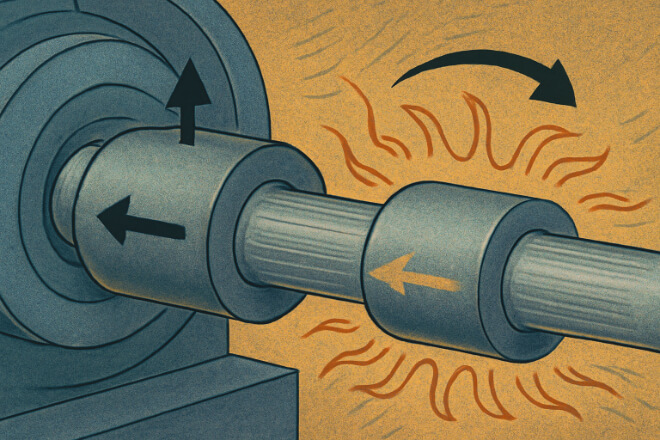
Tungsten carbide bushings are known for their exceptional hardness and wear resistance. However, one of the critical factors that determine their performance in various industrial applications is the coefficient of friction (CoF). The CoF is an important measure of how much frictional resistance occurs when two materials interact, and it directly affects the efficiency, lifespan, and operation of tungsten carbide bushings. In this blog, we will explore what the coefficient of friction is, how it impacts tungsten carbide bushings, and how to optimize it for different applications. What is the Coefficient of Friction (CoF)? The coefficient of friction is a number that represents the frictional force between two surfaces in […]
The Effect of Binder Percentage on Tungsten Carbide Bushings

Tungsten carbide bushings are widely used in industries requiring high wear resistance, durability, and toughness. The performance and longevity of these bushings depend heavily on their composition, particularly the binder percentage. The binder, typically cobalt or nickel, plays a crucial role in the mechanical properties and performance of the bushing. In this blog, we will explore how different binder percentages affect the properties of tungsten carbide bushings, and how manufacturers can optimize the binder content to meet specific operational requirements. What is the Binder in Tungsten Carbide Bushings? In tungsten carbide bushings, tungsten carbide particles are held together by a binder material, which is typically cobalt (Co) or nickel (Ni). […]
Recommended Shaft Hardness for Tungsten Carbide Bushings
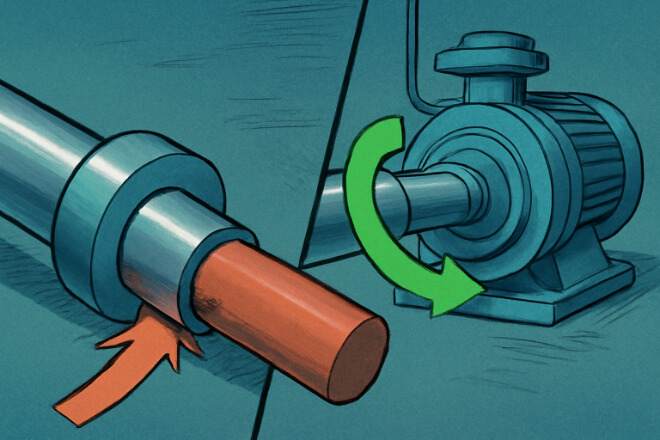
Tungsten carbide bushings are renowned for their wear resistance and durability, making them ideal for high-performance applications. However, to ensure optimal performance and lifespan, the hardness of the shaft that interacts with the bushing plays a critical role. In this blog, we will discuss the recommended shaft hardness for tungsten carbide bushings, the factors influencing this choice, and how to select the right hardness for various industrial applications. Why Shaft Hardness Matters for Tungsten Carbide Bushings Shaft hardness refers to the ability of the shaft material to resist indentation, scratching, or deformation under load. When a tungsten carbide bushing is installed on a shaft, both the bushing and the shaft […]
How to Control Thermal Expansion in Tungsten Carbide Bushings

Tungsten carbide bushings are known for their durability and resistance to wear, but one challenge in high-performance applications is controlling thermal expansion. When exposed to varying temperatures, materials expand and contract, which can affect the fit, function, and longevity of components like bushings. In this blog, we will explore why thermal expansion matters in tungsten carbide bushings and how to manage it effectively to ensure optimal performance in industrial settings. What is Thermal Expansion and Why Does It Matter for Tungsten Carbide Bushings? Thermal expansion refers to the change in size or volume of a material when it is subjected to a temperature change. All materials, including tungsten carbide, expand […]
 English
  Español
  简体中文
简体中文  Français
  日本語
日本語  한국어
한국어  العربية
  Tiếng Việt