
Which Tungsten Carbide Burr Is Best for Weld Removal?
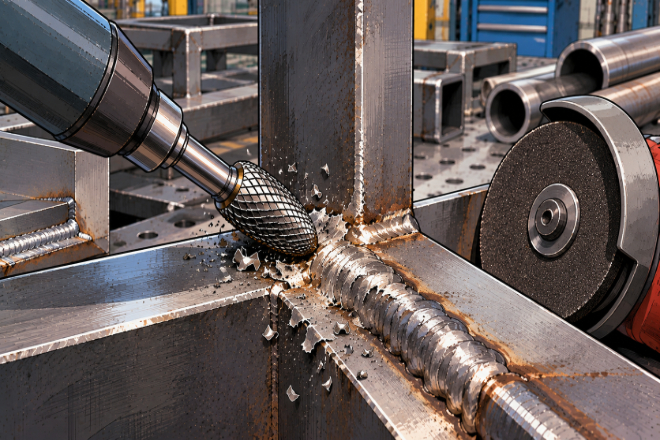
Removing a weld sounds easy until the weld sits in a corner, wraps around a pipe, or needs to disappear without damaging the metal beside it. So, which tungsten carbide burr is best for weld removal? For many steel jobs, an aggressive steel-cut burr is a strong starting point. But cut style is only half the decision. Shape, material, access, and the amount of weld metal matter just as much. 1. What Makes a Carbide Burr Good for Weld Removal? Weld removal is not one single operation. Sometimes a fabricator needs to remove a heavy raised weld from a steel component. Sometimes the job is only to blend a small […]
Why Use Tungsten Carbide Burrs for Flange Repair?
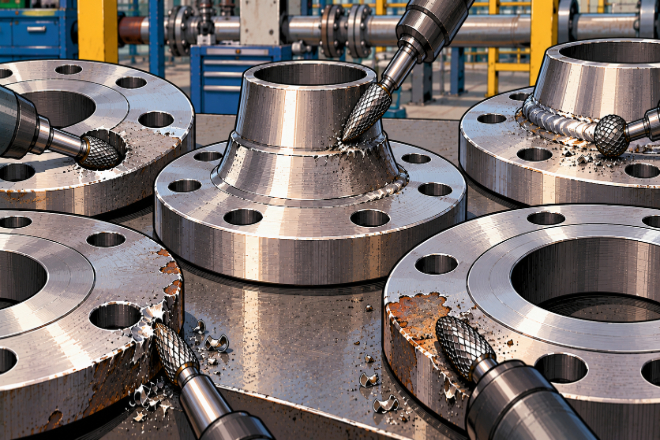
A flange may look like a simple steel ring, but a small damaged area can create a much bigger maintenance problem. During repair, technicians may need to remove burrs, clean damaged edges, work around bolt holes, prepare weld areas, or correct local metal defects. Tungsten carbide burrs for flange repair are useful because they provide fast, controlled metal removal in these small and difficult areas. 1. Where Are Carbide Burrs Useful in Flange Repair? Flanges work in some unfriendly places. Pipelines, pumps, valves, pressure equipment, chemical plants, refineries, power systems, and marine equipment can expose them to moisture, corrosion, heat, vibration, chemicals, and repeated maintenance. When a flange is taken […]
How Are Tungsten Carbide Burrs Used in Tube Fabrication?
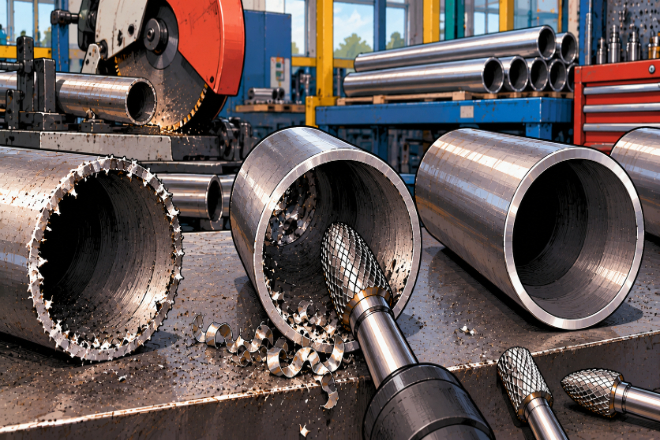
A tube can be cut in seconds. Getting it ready for the next production step can take much longer. Sharp edges, imperfect notches, rough holes, and small weld areas all need attention. This is where tungsten carbide burrs in tube fabrication become useful. They give fabricators a fast and controlled way to remove unwanted metal from places where larger tools may be awkward. 1. Why Are Carbide Burrs Useful After Tube Cutting? Tube fabrication often starts with cutting. A saw, laser, or another cutting system separates the tube to the required length. The cut may be fast, but the edge is not always ready for welding, assembly, coating, or handling. […]
 English
  Español
  简体中文
简体中文  Français
  日本語
日本語  한국어
한국어  العربية
  Tiếng Việt