
What RPM Should You Use with Tungsten Carbide Burrs?
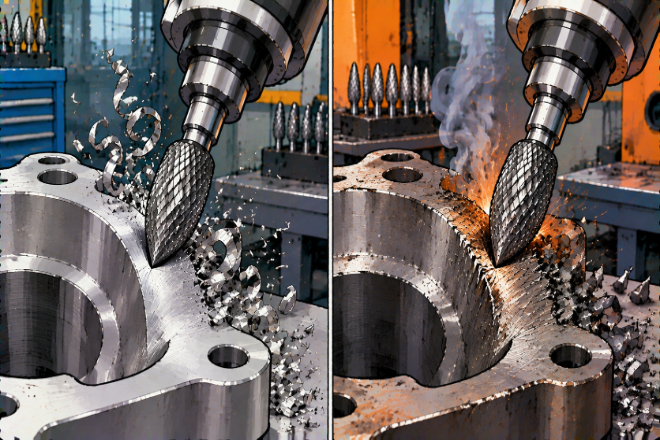
The speed of a tungsten carbide burr can decide whether a job goes smoothly or becomes a frustrating repair. Too slow, and the burr may not cut properly. Too fast, and heat, vibration, and tool wear can increase. Choosing the correct RPM for tungsten carbide burrs helps companies improve cutting performance, tool life, and finishing quality. 1. Why Does RPM Matter When Using Tungsten Carbide Burrs? Many users focus on the burr material first. They look at tungsten carbide because it is hard, wear-resistant, and suitable for demanding metalworking applications. However, even the best carbide burr cannot perform well if it runs at the wrong speed. RPM, or revolutions per […]
How Do You Choose Carbide Burrs for Automated Deburring?
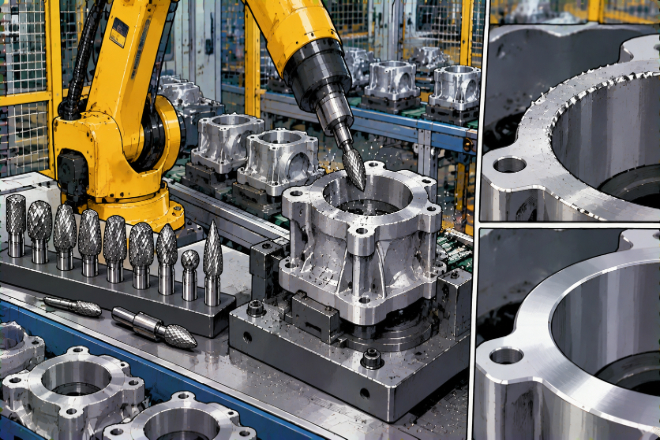
Automated deburring helps manufacturers improve consistency, reduce manual work, and keep production moving. However, choosing the wrong carbide burr can create problems such as poor edge quality, short tool life, and unstable results. The right carbide burrs for automated deburring should match the material, machine system, and required finishing result. 1. Why Is Carbide Burr Selection Important for Automated Deburring? Automated deburring is becoming more common in industries that require stable quality and high production speed. Factories producing automotive parts, aerospace components, hydraulic parts, molds, and industrial equipment often need to remove sharp edges, burrs, and unwanted material after machining. At first glance, deburring may look like a simple finishing […]
How Can Tungsten Carbide Burrs Help Repair Pump Components?
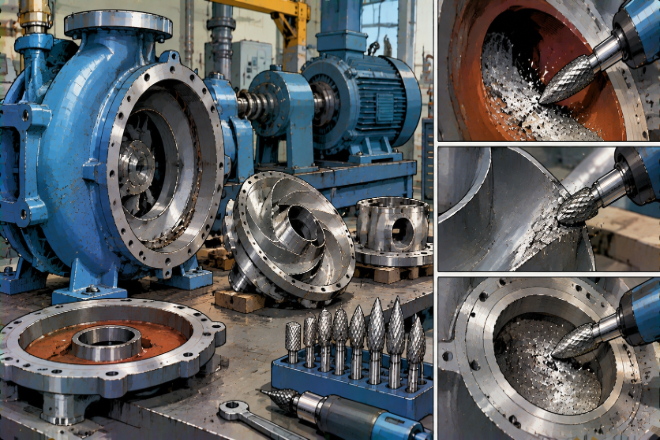
Pump failures can lead to costly downtime, so repair speed and accuracy are important. Tungsten carbide burrs help maintenance teams remove damaged metal, clean repair areas, and handle difficult surfaces on pump components. This article explains how carbide burrs support pump repair work and what companies should consider when selecting them. 1. Why Are Carbide Burrs Useful in Pump Repair? Industrial pumps are built to handle demanding conditions. Depending on the application, pumps may transport water, chemicals, oil, slurry, wastewater, or other fluids. Over time, components can experience wear, corrosion, erosion, cavitation damage, or mechanical damage. Common pump parts that may require maintenance include: Pump housings Impellers Valve parts Shafts […]
 English
  Español
  简体中文
简体中文  Français
  日本語
日本語  한국어
한국어  العربية
  Tiếng Việt