
Why Do Tungsten Carbide Burrs Chatter During Grinding?
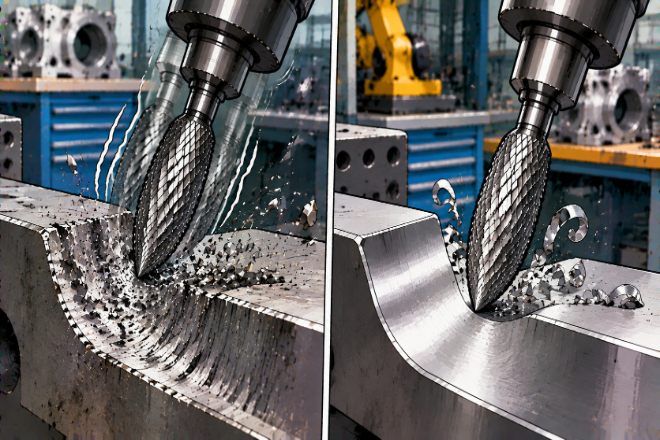
Chatter is one of the most common problems when using tungsten carbide burrs. It creates vibration, poor surface finish, extra noise, and faster tool wear. Understanding why tungsten carbide burrs chatter during grinding helps manufacturers improve cutting stability, protect tools, and achieve better machining results. 1. What Causes Tungsten Carbide Burrs to Chatter During Grinding? When a tungsten carbide burr starts to chatter, the problem is usually not the carbide material itself. The issue often comes from the relationship between the burr, the machine, the workpiece, and the cutting conditions. Chatter is a vibration problem. During grinding or rotary cutting, the burr contacts the material at high speed. If the […]
How Can You Reduce Vibration When Using Tungsten Carbide Burrs?
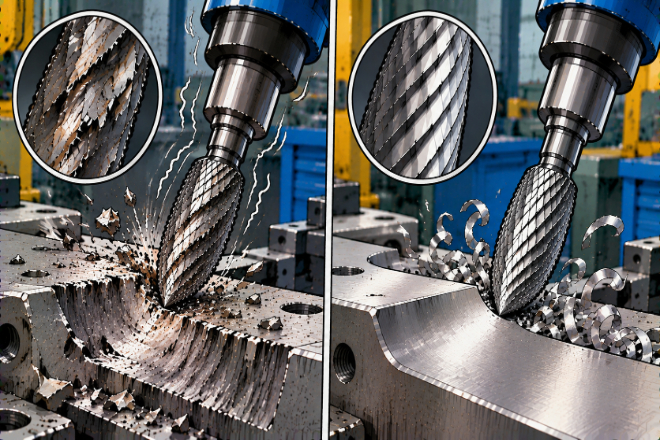
Vibration is a common problem when using tungsten carbide burrs. It can reduce tool life, damage surface quality, and make machining less stable. The good news is that most vibration problems come from controllable factors such as speed, tool setup, pressure, and burr selection. 1. Why Do Tungsten Carbide Burrs Vibrate During Use? Tungsten carbide burrs are popular because they can remove metal quickly and work on many difficult materials. They are used in industries such as automotive, aerospace, mold making, welding repair, and general manufacturing. However, even a high-quality carbide burr can vibrate if the cutting conditions are not correct. Vibration happens when the cutting force is not stable. […]
Why Do Tungsten Carbide Burrs Leave a Rough Surface?
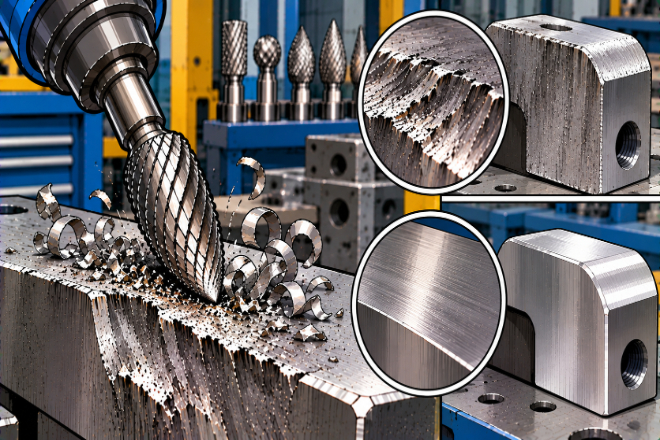
Tungsten carbide burrs are widely used for metal removal, shaping, and deburring. However, some users find that the finished surface is rough instead of smooth. The reason is usually related to tool selection, cutting conditions, material properties, or operation methods. 1. Why Do Tungsten Carbide Burrs Create Rough Surfaces? Tungsten carbide burrs are designed to cut metal quickly. They are often used in industries where fast material removal is needed, including automotive manufacturing, aerospace, mold repair, welding fabrication, and general machining. However, fast cutting does not always mean a smooth finish. A rough surface usually means that the cutting process is not balanced. The burr may remove material too aggressively, […]
 English
  Español
  简体中文
简体中文  Français
  日本語
日本語  한국어
한국어  العربية
  Tiếng Việt