
How Are Tungsten Carbide Burrs Used to Enlarge Holes?
A drilled hole is not always the final hole. Sometimes it needs more clearance, a different shape, a larger opening, or local correction during assembly. Tungsten carbide burrs for enlarging holes give fabricators a fast way to remove metal from an existing opening, especially when perfect roundness is not the main requirement. 1. When Should You Use a Carbide Burr to Enlarge a Hole? A tungsten carbide burr is useful when a hole already exists but needs additional material removed from its edge or internal wall. This is common in fabrication, maintenance, casting work, automotive repair, shipbuilding, structural steel work, and equipment assembly. Imagine two steel plates that need to […]
Which Tungsten Carbide Burrs Are Best for Weld Removal?
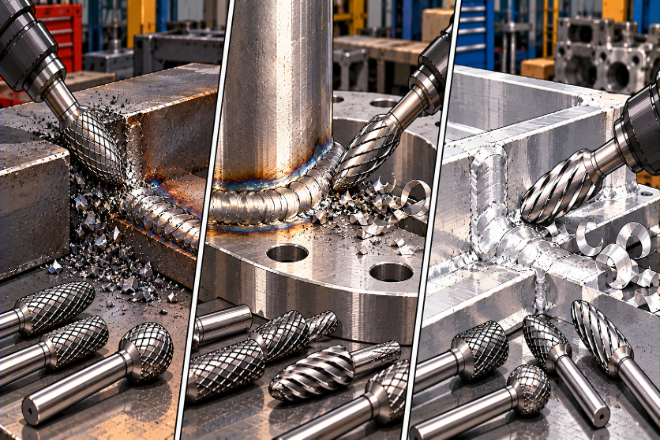
Weld removal can mean taking down a heavy bead, cleaning a failed weld, blending a repaired joint, or reaching a weld hidden inside a corner. These jobs do not need exactly the same tool. The best tungsten carbide burrs for weld removal depend on the metal, weld size, access, and how much material must come off. 1. Which Carbide Burr Cut Should You Choose for the Weld Material? Start with the metal. This sounds simple, but it is one of the most useful rules when choosing carbide burrs for weld removal. A fabrication shop may work with carbon steel in the morning, stainless steel after lunch, and aluminum before the […]
How Can Tungsten Carbide Burrs Repair Casting Defects?
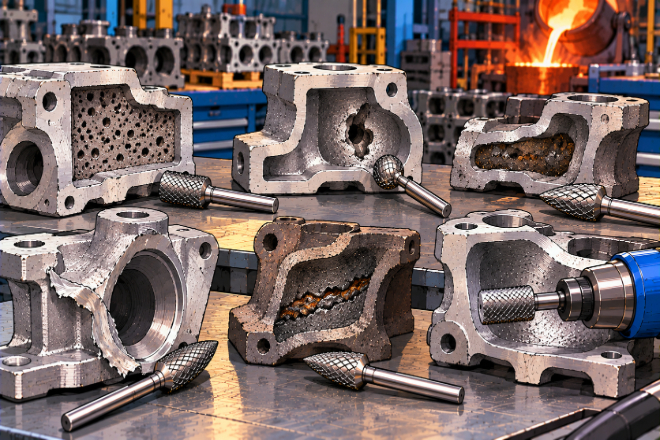
Not every casting defect means the whole part must become scrap. Some surface defects can be cleaned, opened, prepared, and repaired when the engineering requirements allow it. Tungsten carbide burrs for casting repair are useful because they give workers controlled access to small and irregular areas without removing more metal than necessary. 1. What Casting Defects Can Carbide Burrs Help Repair? A casting can look solid from the outside while hiding small problems just below the surface. Porosity, sand inclusions, slag, shrinkage cavities, flash, local surface defects, and cracks can appear during casting. Some are cosmetic. Others may affect strength, sealing, machining, or later assembly. The first job is therefore […]
 English
  Español
  简体中文
简体中文  Français
  日本語
日本語  한국어
한국어  العربية
  Tiếng Việt