
How Are Tungsten Carbide Burrs Used on Carbon Fiber Composites?
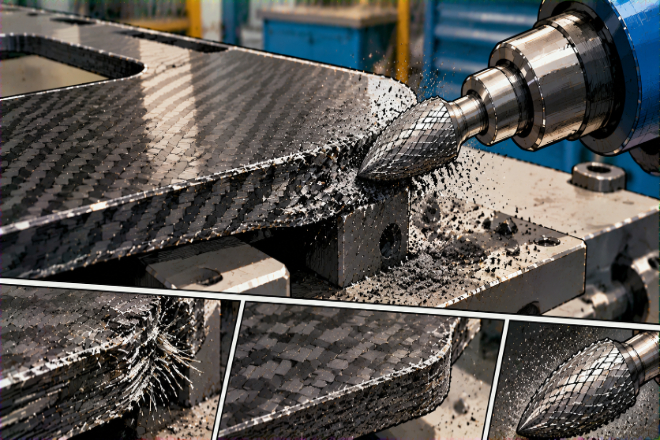
Carbon fiber composites are known for their high strength, low weight, and excellent performance. However, finishing these materials can be challenging because the layered structure can easily create rough edges, fiber damage, and surface defects. Tungsten carbide burrs for carbon fiber composites provide a practical way to trim edges, remove excess material, and improve surface quality when the correct tool and method are used. 1. Why Is Carbon Fiber Composite Finishing Difficult? Carbon fiber composites are widely used because they offer a strong combination of light weight and high strength. Unlike traditional metals, carbon fiber materials are made from multiple layers of carbon fibers combined with a resin matrix. This […]
How Do Tungsten Carbide Burrs Remove Broken Bolts?
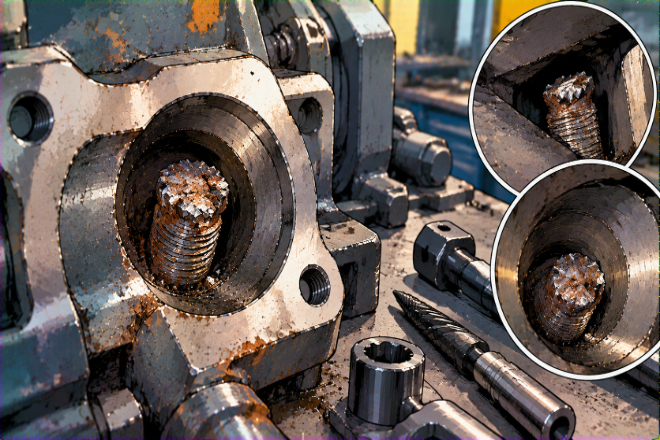
Broken bolts are a common problem in equipment repair and maintenance. When a bolt breaks inside a machine, removing it can be difficult because the remaining piece is often stuck, damaged, or located in a tight area. Tungsten carbide burrs for broken bolt removal provide a useful method for cutting, shaping, and removing damaged fastener material. Their hardness and cutting ability allow technicians to work on difficult metal parts with better control. Choosing the correct burr and using the right technique can reduce repair time and protect the surrounding component. 1. Why Are Broken Bolts Difficult to Remove? A broken bolt may look like a small problem, but it can […]
Which Tungsten Carbide Burrs Work Best on Concave Surfaces?
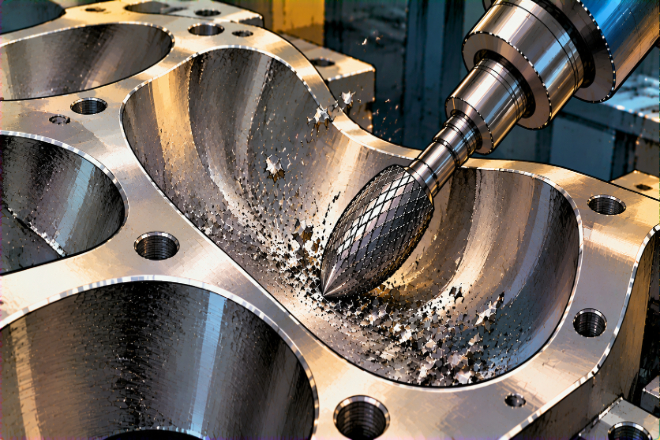
Concave surfaces are common in many industrial parts, but finishing these curved areas is often more difficult than working on flat surfaces. The tool must follow the inside curve while removing material evenly and protecting the original shape. Tungsten carbide burrs for concave surface finishing provide a flexible solution for removing excess material, smoothing curves, and improving surface quality. Choosing the correct burr shape is the key to achieving better results. 1. Why Are Concave Surfaces Difficult to Finish? Concave surfaces have inward curves that create special finishing challenges. Unlike flat areas, where a tool can move in a straight line, concave areas require the cutting tool to follow a […]
 English
  Español
  简体中文
简体中文  Français
  日本語
日本語  한국어
한국어  العربية
  Tiếng Việt