
What “Total Cost” Really Means for Bushings

Many buyers focus only on the purchase price. But for critical rotating equipment, the real cost includes:
Purchase cost
Installation and labor
ダウンタイム
Repair cost
交換頻度
Energy consumption
Long-term reliability
When all these factors are included, tungsten carbide often delivers lower overall cost—especially in pumps, compressors, mixers, and high-load systems.
Total Cost Components Table
Comparing Material Performance
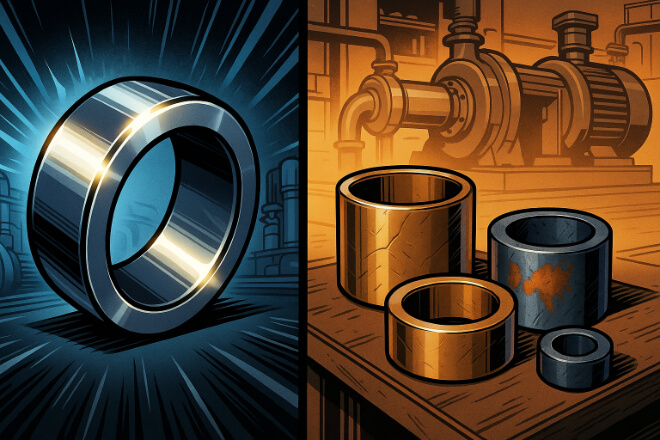
Material performance directly shapes life cycle cost. Tungsten carbide is extremely hard and 耐摩耗性, while conventional bushings use softer materials.
1). Common material types
Tungsten carbide (WC-Co or WC-Ni) – very hard, excellent 耐摩耗性
Bronze – soft, low cost, easy to machine
Stainless steel – strong but not highly wear resistant
Ceramic – hard but brittle
Polymer composite – low friction but limited load capacity
2). Performance Comparison Table
Cost of Maintenance and Downtime
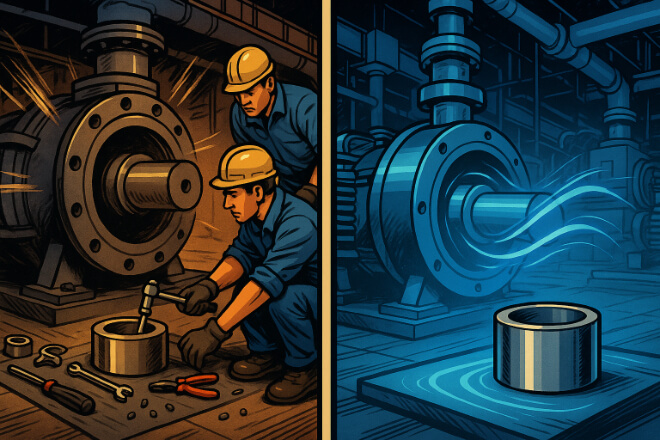
Maintenance cost is often the biggest hidden expense for equipment using conventional bushings.
1). For conventional bushings:
Wear fast
Cause shaft scratches
Require frequent replacement
Increase pump vibration
Can cause unexpected shutdown
2). For tungsten carbide bushings:
Long wear life
Stable performance in harsh fluids
Lower lubrication demand
Less shaft wear
Longer service interval
OEMs often discover that the higher purchase price of carbide bushings is small compared to the downtime reduction they achieve.
Energy Efficiency and Performance Stability
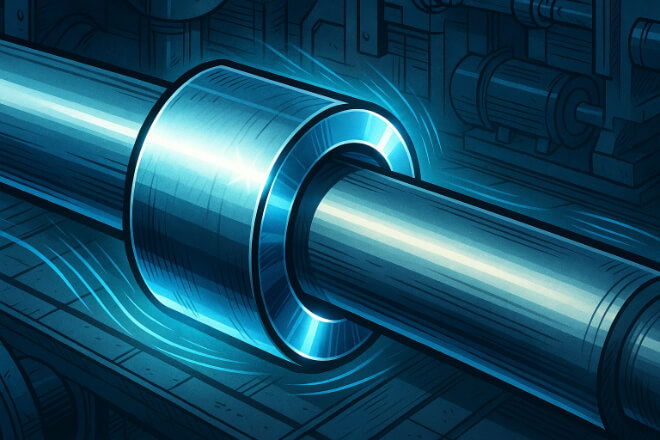
Worn bushings cause friction. Friction increases energy use.
Benefits of tungsten carbide for energy savings
Lower friction coefficient
Smoother surface finish (Ra ≤ 0.2 µm)
Less shaft drag
More stable shaft rotation
Reduced heat build-up
Over years of operation, these improvements can create meaningful energy savings.
Application Suitability: Where Each Type Makes Sense
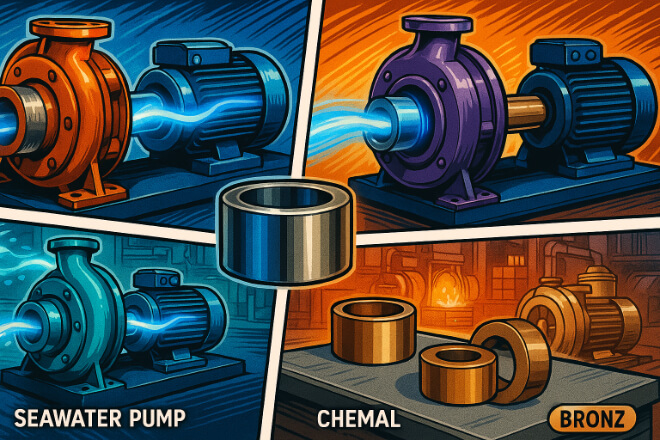
While tungsten carbide has many advantages, there are still cases where conventional bushings work well.
1). Tungsten carbide is best for:
High-speed pumps
Deepwell pumps
Chemical and seawater systems
Abrasive fluids (sand, slurry)
High load or high-pressure machines
2). Conventional bushings are suitable for:
Low-speed equipment
Non-abrasive fluids
Cost-sensitive temporary equipment
Applications with low running hours
Choosing the right type depends on your operational priorities—performance, lifetime, cost, or risk control.
 English
  Español
  简体中文
简体中文  Français
  日本語
日本語  한국어
한국어  العربية
  Tiếng Việt