
Initial Costs of Tungsten Carbide Tips
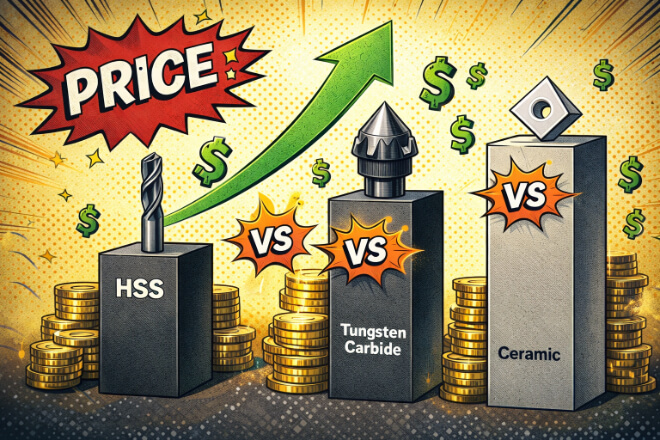
Tungsten carbide tips are generally more expensive upfront compared to tools made from other materials such as high-speed steel (HSS) or ceramics.
These costs are primarily due to the raw material itself—tungsten carbide is a dense, hard material that requires specialized manufacturing processes.
The price of tungsten carbide tips varies depending on the type, size, and coating, but they are typically positioned at the higher end of the tool market.
Factors Affecting Initial Costs
素材の品質: Higher-quality tungsten carbide tips, particularly those with finer 粒度 or specific binder ratios, will come at a higher initial cost.
Coatings: Coated tungsten carbide tips, such as those with titanium nitride (TiN) or chromium nitride (CrN), offer enhanced wear resistance but also increase the initial investment.
Size and Complexity: Larger or more complex tips, designed for heavy-duty applications, come at a higher price.
Despite their higher initial costs, tungsten carbide tips offer significant advantages in terms of their hardness and resistance to wear, which can offset the expense in the long run.
Long-Term Costs of Tungsten Carbide Tips
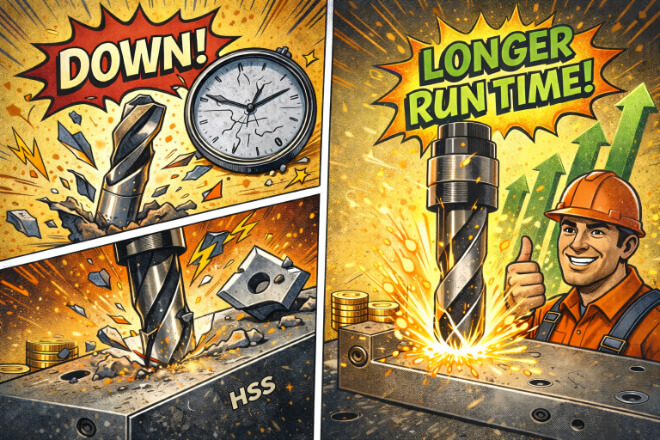
While the initial investment in tungsten carbide tips can be significant, the long-term costs are often lower compared to other tool materials. Here’s why:
Durability and Longevity
Tungsten carbide tips are known for their exceptional 耐摩耗性, meaning they last much longer than tools made from softer materials.
In high-demand industries such as mining and manufacturing, this translates into fewer tool replacements and reduced downtime.
Over time, these savings add up, making tungsten carbide tips more cost-effective.
Reduced Maintenance Costs
Due to their 強靭さ and resistance to abrasion, tungsten carbide tips require less maintenance.
Tools that wear down quickly need frequent servicing and sharpening, which can lead to increased labor costs and downtime.
Tungsten carbide tips, on the other hand, stay sharp for much longer, reducing the frequency of maintenance work and the associated costs.
Lower Replacement Frequency
In addition to requiring less maintenance, tungsten carbide tips are less likely to need replacement due to wear.
In industries where high-quality performance is essential, tools that wear out quickly can cause delays and increase costs due to frequent replacements.
Tungsten carbide’s resilience ensures that it maintains its functionality over a long period, reducing the frequency of replacements.
生産性の向上
The durability of tungsten carbide tips contributes directly to improved productivity.
Since these tips can handle tougher materials and perform in harsh conditions without frequent replacement, businesses can expect less downtime, faster production times, and lower costs associated with machine shutdowns and repairs.
Factors That Influence Long-Term Savings

To fully understand the financial benefits of タングステンカーバイドチップ, several factors need to be taken into account:
アプリケーションの種類
Tungsten carbide tips are ideal for industries that deal with high-impact, high-abrasion tasks.
The more demanding the application, the more beneficial tungsten carbide tips become, as they significantly outlast cheaper alternatives.
Tool Usage
The more frequently a tool is used, the more advantageous tungsten carbide becomes.
In applications where tools are subjected to continuous wear, the upfront cost will quickly be offset by the reduced need for replacements and maintenance.
Machine Downtime
In industrial settings, downtime can be incredibly costly.
Tungsten carbide tips reduce downtime due to their durability, which means less disruption in production and fewer delays. This contributes to overall operational savings.
 English
  Español
  简体中文
简体中文  Français
  日本語
日本語  한국어
한국어  العربية
  Tiếng Việt