
1. What Are Tungsten Carbide Tip Grades?
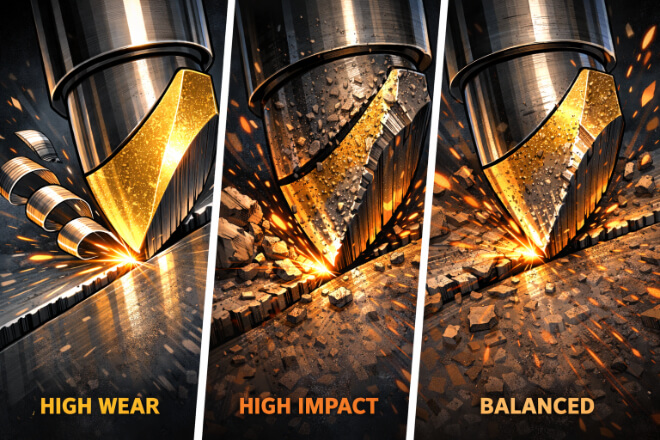
Tungsten carbide tips are made from a combination of tungsten and carbon, but the properties of these tips can vary significantly depending on the manufacturing process, binder material, and grain size.
These variations create different “grades” of tungsten carbide, each with distinct characteristics suitable for different applications.
Factors Influencing Carbide Tip Grades:
粒度: Finer grains typically provide higher 硬度 そして 耐摩耗性, while larger grains offer better toughness and impact resistance.
バインダーの内容: The type and amount of binder material (usually cobalt) affect the 強靭さ and durability of the carbide tip.
焼結プロセス: The sintering process—where the carbide is heated and fused—can influence the density and hardness of the carbide tips.
These factors determine the specific grade of tungsten carbide, which will affect how the tip performs in extreme wear environments.
2. High Wear-Resistance Grades of Tungsten Carbide
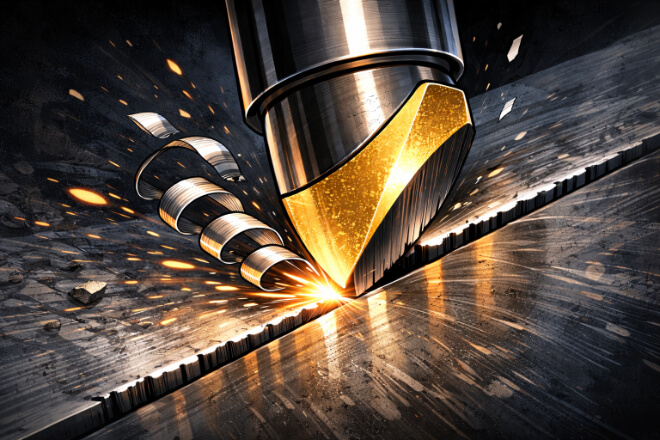
In extreme wear applications, such as when cutting hard materials or in high-abrasion environments, 耐摩耗性 is the most important factor.
Tungsten carbide tips with high wear resistance are designed to withstand continuous exposure to friction and abrasive forces without losing their cutting edge.
Characteristics of High Wear-Resistance Grades:
大丈夫 粒度: These grades typically feature a finer grain structure, which increases the 硬度 and ability to resist abrasion.
バインダー含有量が低い: A lower binder content leads to harder carbide, but it may reduce 強靭さ, so it’s best used in applications where impact is not a significant concern.
Ideal for Hard Materials: High wear-resistance grades are perfect for cutting and machining hard metals, rock, and other abrasive materials.
These grades are best suited for applications like drilling into rock, cutting through reinforced concrete, or machining hardened steel.
3. Impact-Resistant Grades for Extreme Applications
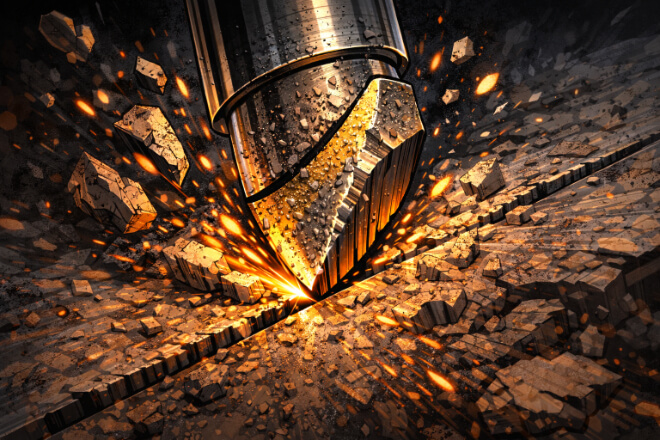
While wear resistance is critical, some applications require tools that can also withstand high impact or shock.
Tungsten carbide tips that are designed for toughness and impact resistance are better suited for these environments.
Characteristics of Impact-Resistant Grades:
Larger 粒度: These carbide grades have larger grains, which provide better toughness and allow the tool to absorb impact without cracking or chipping.
Higher Binder Content: More binder material helps improve the 強靭さ and resistance to impact, making it suitable for heavy-duty applications.
Durability Under Stress: Impact-resistant grades excel in applications where the tool is exposed to sudden forces or irregular stresses, such as in mining, construction, or heavy equipment maintenance.
These grades are ideal for tools used in rock drilling, mining machinery, and other high-impact cutting tasks.
4. Balancing Wear Resistance and Impact Resistance
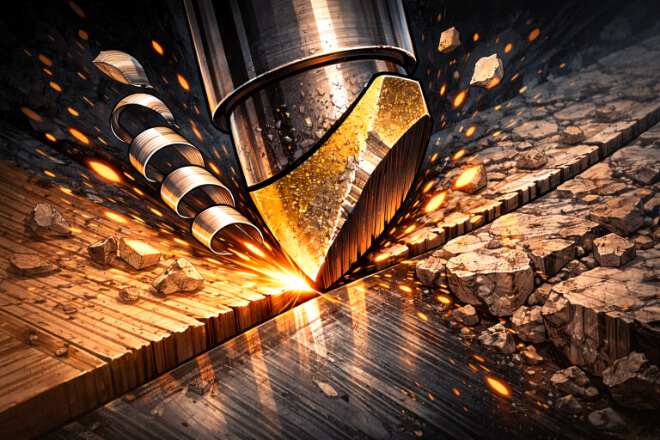
In some extreme wear applications, both 耐摩耗性 and impact resistance are required. Achieving the right balance between the two is essential for maximizing tool life and performance.
Factors for Balancing Wear and Impact Resistance:
中くらい 粒度: A medium grain size offers a good compromise between 硬度 そして 強靭さ, providing both wear resistance and the ability to withstand impact.
Optimized Binder Content: The right amount of binder material provides durability while maintaining the necessary toughness to handle high-impact forces.
Hybrid Carbide Grades: Some carbide grades are specifically designed to offer both high wear resistance and high impact resistance, making them suitable for demanding applications in mining, construction, and heavy manufacturing.
These balanced grades are ideal for applications like saw blades used in mining, or cutting tools that need to endure both friction and impact forces.
5. Applications of Tungsten Carbide Tips with Different Grades
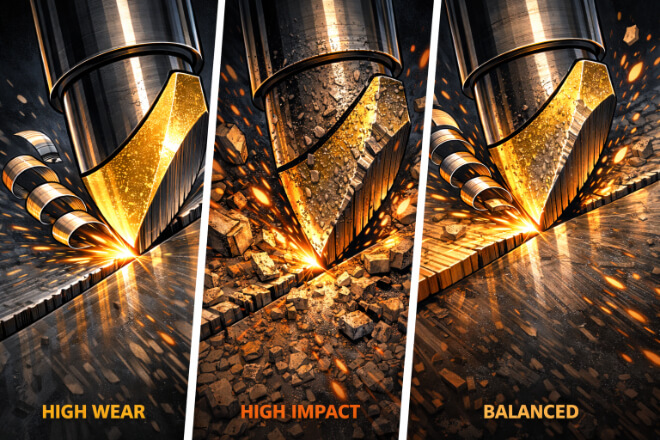
Understanding which tungsten carbide grade to use for a specific job is crucial for optimizing performance.
Here are some of the most common applications for different tungsten carbide grades:
Common Applications for Tungsten Carbide Tip Grades:
High Wear-Resistance Grades: Used in cutting hard metals, rock, concrete, and abrasive materials, including drill bits, saw blades, and milling cutters.
Impact-Resistant Grades: Used in heavy-duty machinery tools that are exposed to high-impact conditions, such as mining drills, hammers, and construction equipment.
Balanced Grades: Used in applications that require a combination of 耐摩耗性 and impact resistance, such as industrial saw blades, trenching tools, and heavy-duty CNC tools.
Each grade of tungsten carbide is designed to handle specific wear conditions, ensuring that the tool performs efficiently and has a long life span.
6. Cost Considerations for Choosing Tungsten Carbide Grades

Selecting the right tungsten carbide grade can be an important cost consideration.
While high-performance grades might come at a higher initial cost, they can ultimately save money by extending tool life and reducing downtime.
Cost Benefits of Selecting the Right Grade:
より長い工具寿命: High 耐摩耗性 grades last longer, reducing the frequency of tool replacements and the associated costs.
ダウンタイムの短縮: Impact-resistant grades prevent cracks and breakage, keeping equipment operational for longer periods.
Optimal Performance: Balanced grades offer both wear and impact resistance, reducing the need for multiple tools for different applications.
By selecting the right grade of tungsten carbide for the application, companies can ensure that they are getting the best performance and the lowest total cost of ownership.
7. Maintaining Tungsten Carbide Tip Performance in Extreme Wear Applications
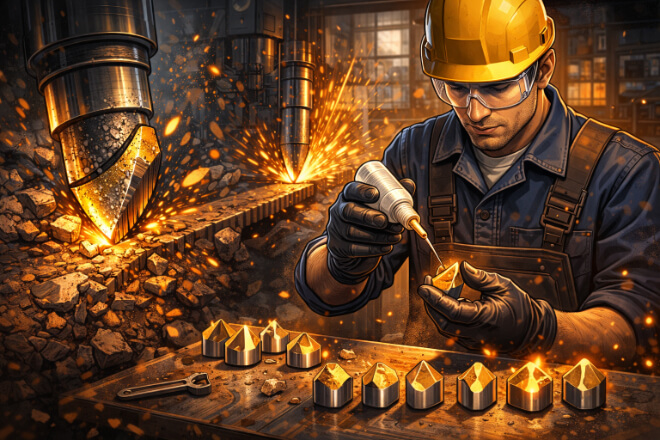
Once the right tungsten carbide grade is chosen, proper maintenance is key to ensuring the longevity and performance of the tools.
Regular inspection, cleaning, and proper handling can prevent premature wear and ensure optimal performance.
Tips for Maintaining Carbide Tips:
定期検査: Check for signs of wear, cracks, or damage, especially in high-impact applications.
Proper Cooling: Use appropriate cooling methods to prevent heat buildup that can cause wear and tip degradation.
Proper Storage: Store carbide tools properly to avoid damage or corrosion that can affect performance.
By maintaining carbide tips, companies can maximize tool life and reduce the need for frequent replacements.
8. Cost Benefits of Using Tungsten Carbide Tips with the Right Grade
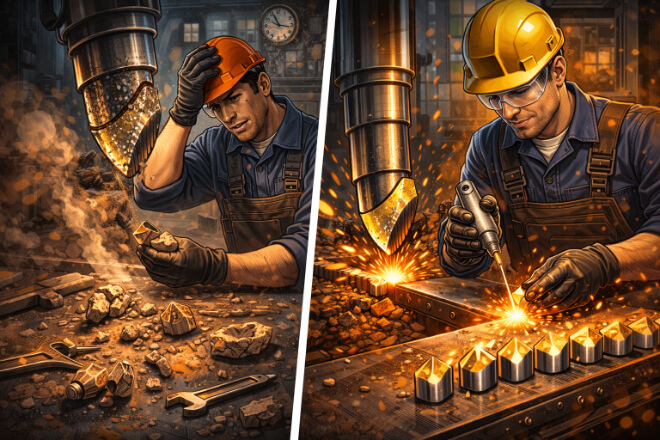
While selecting the right tungsten carbide grade may involve higher upfront costs, the long-term savings from reduced tool wear, fewer replacements, and higher productivity can outweigh the initial investment.
Long-Term Cost Savings:
ツール交換の削減: Choosing the right carbide grade leads to longer tool life, reducing the frequency of tool replacements.
生産性の向上: Tools that last longer and perform better reduce downtime, which increases overall productivity.
メンテナンスコストの削減: With proper maintenance and the right grade, carbide tips require less frequent repairs, leading to lower maintenance costs.
In the long run, investing in the right tungsten carbide grades ensures cost-effectiveness for businesses in extreme wear applications.
 English
  Español
  简体中文
简体中文  Français
  日本語
日本語  한국어
한국어  العربية
  Tiếng Việt