
1. Why Is Accuracy So Important in Aerospace Component Manufacturing?
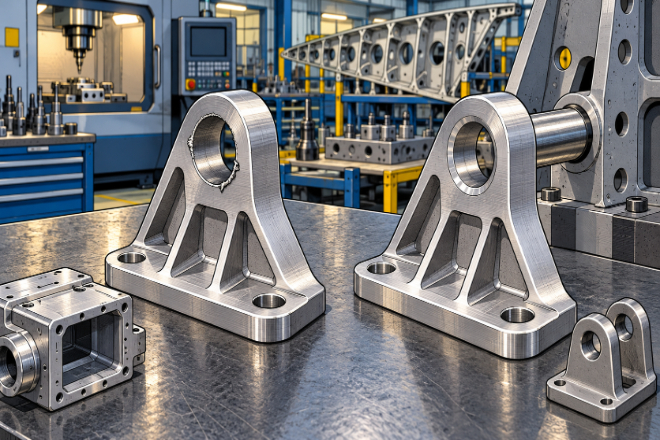
航空宇宙 components must fit together as designed and meet defined engineering requirements.
Parts such as mounting brackets, housings, fittings, and structural components may contain small holes, narrow slots, and complex edges that require careful finishing.
During milling, drilling, cutting, or forming, unwanted material can remain around these features. Common problems include burrs, sharp edges, uneven contours, and excess material.
These defects can affect the next manufacturing step. For example, a burr around a mounting hole may prevent two surfaces from sitting together correctly.
An uneven edge may also require extra work before a component can pass inspection.
For aerospace manufacturers, accuracy involves more than producing the correct overall shape. It also means controlling the small details that affect assembly and function.
A reliable edge-finishing process helps manufacturers:
Keep finished edges within specified limits.
Remove burrs without damaging nearby surfaces.
Reduce manual correction and repeated machining.
Maintain consistent results across production batches.
Improve the chance of passing final inspection the first time.
ここは 超硬トリミングツール can make a difference. They are designed to remove small amounts of unwanted material, making them useful for finishing tasks where control matters more than aggressive cutting.
However, the tool is only one part of the process. Machine accuracy, tool holding, workpiece support, cutting settings, and inspection all contribute to the final result.
2. How Do Carbide Trimming Tools Improve Edge Accuracy?
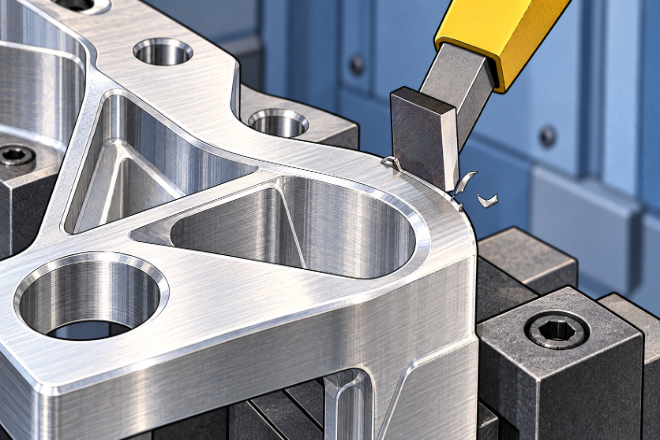
The main job of a carbide trimming tool is to remove unwanted material while preserving the intended shape of the workpiece.
Tungsten carbide provides a hard, 耐摩耗性 cutting edge. When the tool geometry matches the task, it can remove burrs and excess material with good control.
1). Removing Burrs Without Damaging Nearby Features
Burrs often form around drilled holes, milled edges, and narrow slots. If they remain, they may interfere with assembly or make inspection more difficult.
A suitable 超硬トリミングツール can cut away the unwanted material while limiting contact with nearby surfaces.
This is especially useful when the burr is close to a finished face or a feature with a tight size limit.
The tool must remove enough material to clear the defect without changing the part beyond its allowed limits.
2). Keeping Edge Shapes Consistent
Some aerospace components require a defined chamfer, rounded edge, or specific contour.
If the finishing process varies from one part to another, assembly and inspection can become more difficult.
Carbide trimming tools can be made with different cutting profiles to suit these needs. A suitable tool, combined with a stable machining path, helps produce more repeatable edge shapes.
3). Reducing Variation Caused by Tool Wear
As a cutting edge wears, its ability to remove material can change. The tool may begin to leave rougher edges or require different cutting forces.
Tungsten carbide’s 耐摩耗性 helps a well-selected tool retain its cutting geometry over repeated operations. This can reduce variation caused by rapid tool wear.
It does not remove the need for inspection, but it can make the finishing process more predictable.
3. How Does Tungsten Carbide Help Maintain Dimensional Accuracy?
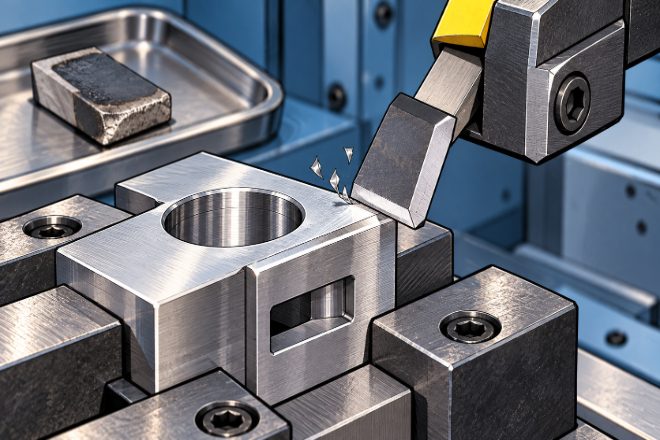
Dimensional accuracy depends on how closely the finished part matches its engineering drawing.
In edge finishing, this means removing the unwanted material without changing important dimensions.
Tungsten carbide is useful because it combines high 硬度 with good 耐摩耗性. These properties help the cutting edge retain its shape during repeated use.
Several factors explain its value.
Stable cutting geometry: A cutting edge that resists wear can maintain more consistent contact with the workpiece.
Controlled material removal: A properly designed trimming tool can remove small amounts of material from selected areas.
Longer useful tool life: Reduced wear may help maintain the process for more parts before tool replacement is needed.
Support for fine features: Small carbide trimming tools can reach narrow areas that larger tools may not access easily.
For example, a small 航空宇宙 bracket may have a narrow opening with a burr along one side.
A correctly sized tool can reach the edge and remove the burr while avoiding nearby surfaces.
Still, high hardness does not automatically guarantee high accuracy. Tungsten carbide can chip if the tool experiences excessive force, vibration, or impact.
Correct tool geometry, secure workholding, and suitable cutting conditions remain essential.
4. Where Are Carbide Trimming Tools Used to Improve Aerospace Accuracy?
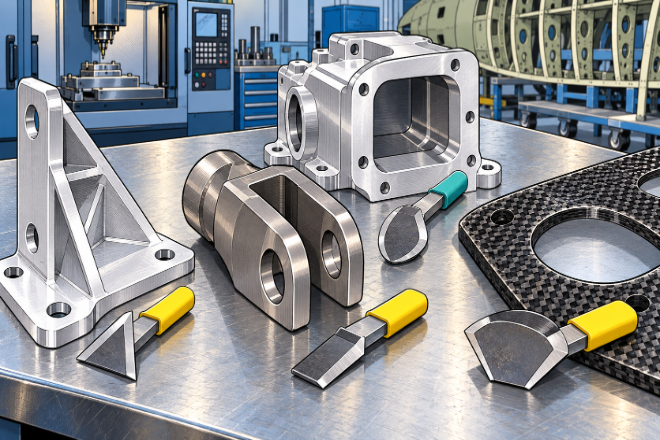
Carbide trimming tools can support finishing work on a range of aerospace components. The correct application depends on the material and the required edge condition.
1). Aluminum Structural Components
Aluminum alloys are used in many 航空宇宙 structures and machined parts. Milling and drilling can leave burrs around holes, slots, and cut edges.
A suitable carbide trimming tool can remove these defects and prepare the component for assembly.
Careful tool selection is important because aluminum can stick to the cutting edge under unsuitable conditions.
2). Titanium Components
Titanium alloys are used in applications that require a strong material with a good strength-to-weight ratio.
However, titanium can be challenging to machine because of its heat and cutting-force demands.
Carbide tools are used in titanium machining, but trimming operations still require the right tool design and operating conditions.
A tool that is not suited to the task may wear or chip early, affecting both accuracy and surface quality.
3). Precision Brackets and Fittings
Brackets, fittings, and mounting parts may contain small holes, narrow channels, and detailed contours. Burrs around these features can affect how parts fit together.
Carbide trimming tools can clean selected edges before inspection or assembly. Their size and cutting profile should match the access space and the amount of material to be removed.
4). Composite Components
Composite materials, including carbon-fiber-reinforced plastics, require careful edge treatment. Poor trimming can cause fiber pull-out, rough edges, or delamination.
A suitable carbide tool may work for some composite applications, but the material and tool design must be considered together.
Some composites need dedicated tools or other cutting methods to achieve the required result.
5. How Do Carbide Trimming Tools Improve CNC Aerospace Machining?
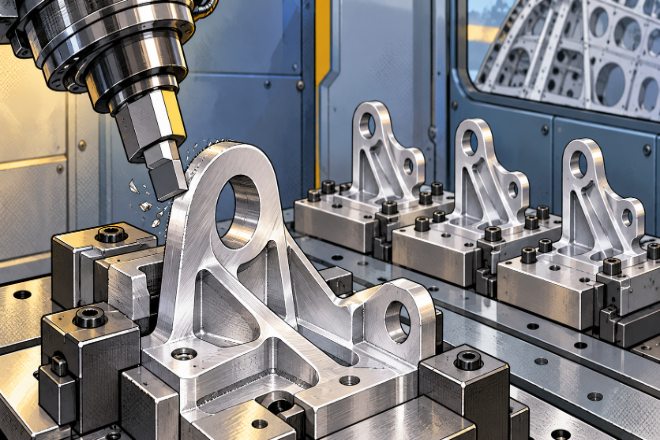
CNC machining allows manufacturers to follow programmed tool paths and repeat the same operation across similar parts.
Carbide trimming tools can be used in suitable CNC setups to finish edges after the main machining process.
This can improve accuracy in several ways.
1). Repeatable Tool Paths
A programmed path helps control where the tool contacts the component.
After testing and approval, the same path can be used for similar parts, reducing variation caused by manual tool movement.
2). Less Manual Finishing
Manual deburring can produce different results depending on the operator, tool angle, and applied force.
When a suitable trimming operation can be completed by CNC, some of this variation may be reduced.
Manual finishing may still be needed for complex or hard-to-reach areas, but unnecessary handwork can often be limited.
3). Better Control of Process Changes
Manufacturers can track tool wear, edge quality, cycle time, and inspection results.
If the finishing result begins to change, these records help identify whether the cause is tool wear, machine setup, or another process issue.
のために 航空宇宙 production, repeatability must be supported by proper inspection and process control.
A CNC program alone does not prove that every part meets its required limits.
6. How Can Manufacturers Reduce Rework and Improve Inspection Results?
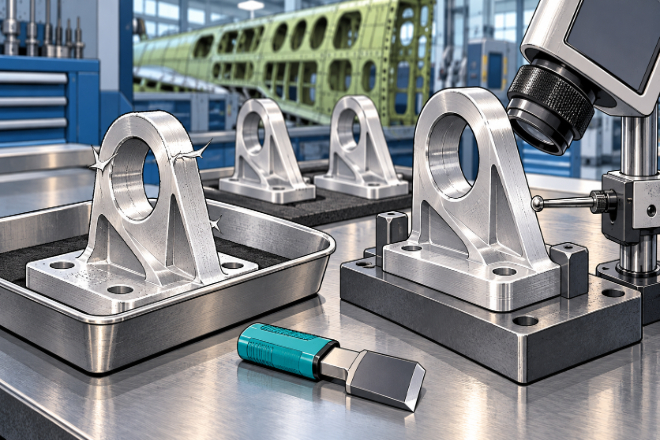
Rework often begins with a small finishing problem. A burr remains, an edge is cut too deeply, or the surface is damaged during material removal.
The part then needs another operation or fails inspection.
Carbide trimming tools can help reduce these problems when they are correctly selected and used in a stable process.
Manufacturers can improve results by following a few practical steps:
Define the required edge condition: Specify whether the task involves burr removal, chamfering, or contour finishing.
Use a suitable tool profile: Match the cutting edge to the part geometry and material.
Secure the workpiece: Prevent movement and vibration during trimming.
Set a tool inspection schedule: Replace or service tools before wear affects the finished part.
Check representative parts: Confirm that the process meets dimensional and surface requirements.
Record process results: Track rework, tool life, and inspection failures to identify patterns.
These steps help production and quality teams find the cause of finishing problems rather than repeatedly correcting the same defect.
7. How Does Better Edge Accuracy Affect Aerospace Production Costs?
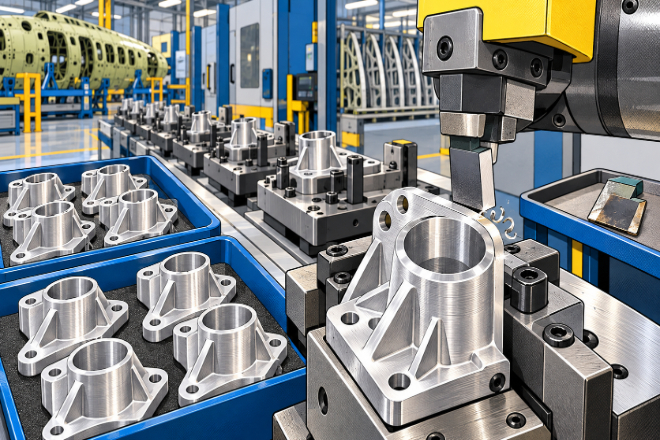
航空宇宙 components can involve expensive materials, long machining cycles, and detailed quality checks.
When a part needs repeated finishing or fails inspection, the extra work can be costly.
Improved edge accuracy can help reduce these costs by lowering the need for manual correction, repeat machining, and additional inspection.
Manufacturers should consider the full process rather than the tool price alone.
Useful measures include:
Cycle time per component.
Tool life before replacement.
Number of parts requiring rework.
Inspection failure rate.
Time spent on manual edge correction.
Total cost per accepted part.
あ 超硬トリミングツール that maintains its cutting edge for longer may help improve process stability.
However, the actual result depends on the material, tool design, machine setup, and production conditions.
Testing these factors on real components provides a stronger basis for purchasing decisions than relying on material claims alone.
 English
 Español
 简体中文
 Français
 日本語
 한국어
 العربية
 Tiếng Việt