
1. What Is Semiconductor Die Bonding and Precision Micro-Machining?
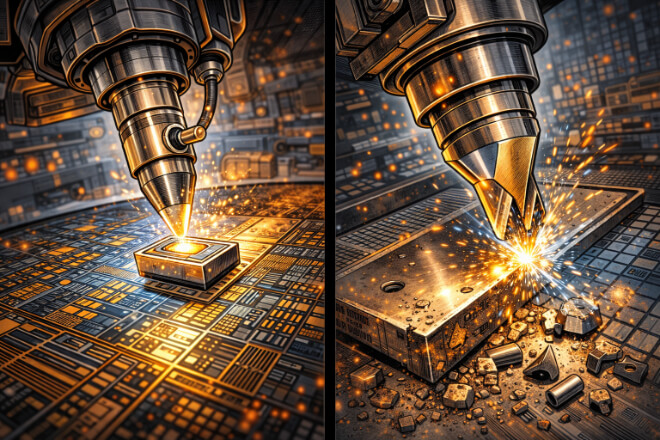
Before we dive into the benefits of タングステンカーバイドチップ, it’s important to understand the key processes involved in semiconductor die bonding and precision micro-machining.
1). Semiconductor Die Bonding:
Die bonding is the process of attaching a semiconductor die (a small piece of semiconductor material, such as silicon) to a package or substrate, typically using a die attach adhesive.
This is a critical step in the production of semiconductor devices like microchips.
The bonding process requires precision to ensure a secure, reliable connection between the die and its packaging.
2). Precision Micro-Machining:
Precision micro-machining involves the use of specialized tools to cut, shape, or fabricate extremely small and intricate parts, often in the micrometer range.
This process is used to manufacture components with very tight tolerances, such as those found in medical devices, optical instruments, and, of course, semiconductors.
Both die bonding and micro-machining require tools that can handle high precision, tight tolerances, and demanding materials.
2. Why Tungsten Carbide Tips Are Ideal for Semiconductor Die Bonding and Micro-Machining
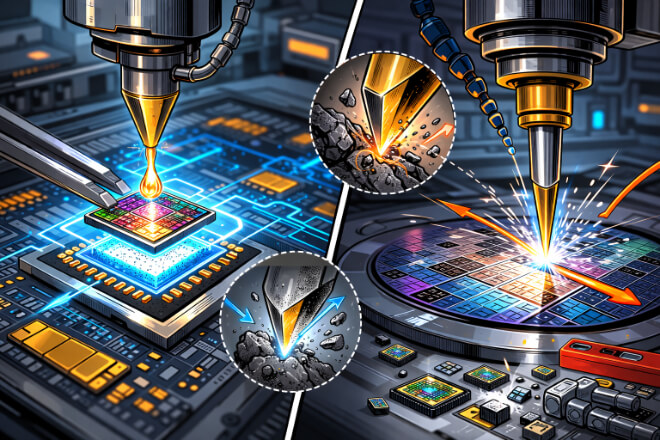
Tungsten carbide is known for its extreme hardness and wear resistance, which makes it the perfect material for applications requiring long-lasting, high-performance cutting tools.
These properties are crucial in semiconductor die bonding and precision micro-machining.
Key Benefits of Tungsten Carbide Tips in These Applications:
硬度 and Durability:
Tungsten carbide is one of the hardest materials known, which makes it perfect for cutting through tough materials and maintaining sharpness over time, even when exposed to high-stress machining environments.
耐摩耗性:
In precision machining, maintaining sharp edges is critical for achieving accurate cuts.
Tungsten carbide’s resistance to wear ensures that tools can be used for longer periods before they need to be replaced.
耐熱性:
The high heat resistance of tungsten carbide allows it to maintain its performance even during high-speed operations where other materials might soften or degrade.
精度:
Tungsten carbide tips can be manufactured with extremely precise geometries, making them ideal for micro-machining and die bonding processes that demand very tight tolerances.
These attributes make tungsten carbide tips the preferred choice for tooling used in semiconductor manufacturing, especially in high-precision tasks like die bonding and micro-machining.
3. Choosing the Right Tungsten Carbide Tip for Micro-Machining and Die Bonding
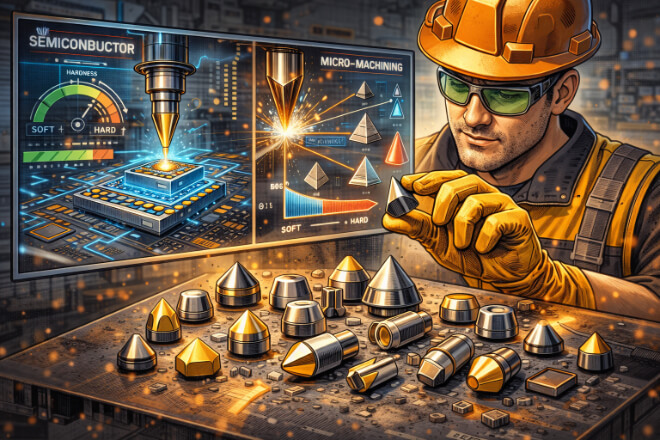
Selecting the appropriate tungsten carbide tip for your application is essential for ensuring optimal performance and tool longevity.
The type of carbide tip you choose will depend on several factors, including the material being worked on, the cutting conditions, and the specific requirements of the application.
Factors to Consider When Selecting Tungsten Carbide Tips:
素材の種類:
The type of material being cut or bonded is one of the most important factors in selecting the right carbide tip.
For example, materials with high 硬度, such as ceramics or hardened steels, require carbide tips with higher hardness and wear resistance.
Cutting Speed and Feed Rate:
The cutting speed and feed rate will determine the amount of heat generated during the machining process.
For high-speed machining, you need carbide tips that are designed to handle high temperatures without losing their edge.
Tip Geometry:
Tungsten carbide tips come in various geometries, such as flat, pointed, or radiused.
The geometry of the tip impacts the cutting efficiency and precision of the tool.
Selecting the right geometry is crucial for achieving the desired cutting results in micro-machining and die bonding.
粒度:
The grain size of the carbide material affects both hardness and toughness.
Fine-grain carbide provides better 耐摩耗性 and is ideal for high-precision machining, while coarse-grain carbide is more impact-resistant and suitable for rougher cutting applications.
By carefully selecting the right タングステンカーバイドチップ, you can ensure that your tools perform effectively and maintain high precision throughout the die bonding or micro-machining process.
4. Maintaining Tungsten Carbide Tips for Optimal Performance
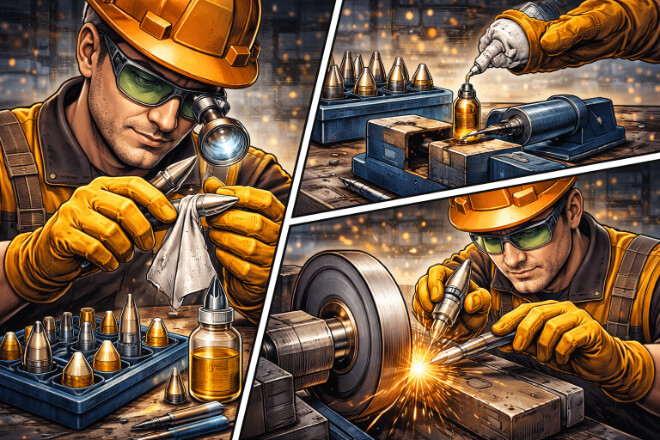
To get the most out of your tungsten carbide tips, proper maintenance is essential.
Regular care ensures that the tips remain sharp, functional, and durable throughout their lifespan.
Maintenance Best Practices:
Routine Cleaning: Clean your carbide tools regularly to remove any debris or material buildup that could affect performance. Use a brush or compressed air to clean the tips.
Inspection for Wear and Damage: Regularly inspect the carbide tips for signs of wear, chipping, or cracking. Early detection of damage allows for timely replacement before tool failure occurs.
Proper Storage: Store carbide tools in a dry, cool place to prevent moisture or contaminants from affecting the tips. Use protective cases or racks to avoid physical damage.
シャープニング: Carbide tips may need occasional sharpening to maintain their cutting edge. Use diamond-coated sharpening tools to restore the precision of the tip.
By following these maintenance practices, you can extend the life of your タングステンカーバイドチップ and ensure consistent performance in precision micro-machining and die bonding applications.
5. Applications of Tungsten Carbide Tips in Semiconductor Die Bonding and Micro-Machining
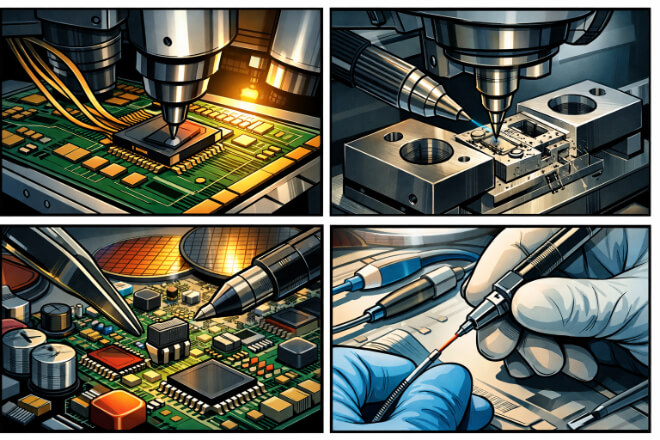
Tungsten carbide tips are used in a variety of applications within the semiconductor and precision machining industries.
These applications require tools that can operate at extremely high speeds and maintain high precision, making tungsten carbide the material of choice.
Common Applications:
Semiconductor Die Bonding:
Tungsten carbide tips are used in the die attach process to precisely bond semiconductor dies to substrates.
The durability and wear resistance of the tips ensure that the bonding process is smooth and consistent.
Precision Micro-Machining:
In the production of micro-components for medical devices, 航空宇宙 parts, and electronics, tungsten carbide tips are used for drilling, milling, and cutting with exceptional accuracy and minimal wear.
医学 Device Manufacturing:
Tungsten carbide tips are also used in the manufacturing of small, intricate parts for medical devices, where tight tolerances and high precision are essential.
Optical Component Fabrication:
In industries like optics, where fine-tuned components are needed, tungsten carbide tips are used to achieve the precision required for high-quality optical devices.
The versatility and durability of tungsten carbide tips make them invaluable in various industries that require precision and long-lasting cutting tools.
6. Cost Benefits of Using Tungsten Carbide Tips in Precision Machining

Although tungsten carbide tips are often more expensive than other materials, their long-term benefits make them a cost-effective solution for industries that require high-performance cutting tools.
Cost Advantages of タングステンカーバイドチップ:
より長い工具寿命: Tungsten carbide tips last longer than other materials, reducing the frequency of tool changes and minimizing downtime.
Higher Cutting Efficiency: Carbide tips maintain their sharpness and cutting precision longer, improving overall machining efficiency and reducing waste.
メンテナンスコストの削減: The durability of carbide tips reduces the need for frequent maintenance, leading to cost savings in labor and operational costs.
Improved Productivity: Longer tool life and fewer tool changes mean that operations can run more smoothly, increasing overall productivity and profitability.
Investing in tungsten carbide tips results in significant cost savings over time due to reduced maintenance and increased operational efficiency.
 English
  Español
  简体中文
简体中文  Français
  日本語
日本語  한국어
한국어  العربية
  Tiếng Việt