
Why Binder Material Matters in Tungsten Carbide Tips

Tungsten carbide is extremely hard, but without a binder it would be brittle. The binder controls several critical material properties:
The choice between nickel and cobalt can change tool performance more than many users expect.
Performance Characteristics: Nickel vs Cobalt Binders
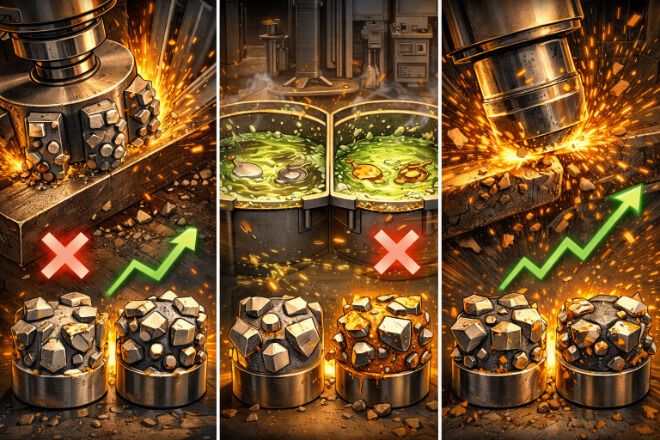
Nickel and cobalt influence hardness, toughness, corrosion performance, and wear resistance in different ways.
Cobalt binder grades typically offer higher wear resistance in dry and abrasive conditions.
Nickel binder grades may lose hardness slightly earlier under abrasive loads but perform better in chemical or corrosive environments.
2). 強靭さ 耐衝撃性
Cobalt-bonded WC offers better impact toughness, making it suitable for tools facing vibration, shock, or high torque loads.
Nickel binder improves durability in low-impact but corrosive environments.
3). Corrosion and Chemical Resistance
Nickel provides superior 耐腐食性, especially against saltwater, chemical fluids, and acidic environments.
Cobalt corrodes faster, especially in chloride or acidic applications.
4). Temperature Behavior
Both binders can withstand high temperatures, but cobalt tools may lose toughness faster under sustained heat. Nickel maintains stability more consistently in long exposure.
Applications Where Nickel Binder Performs Better

Nickel-bonded tungsten carbide is ideal when corrosion or chemical exposure is a major concern:
Marine environments
石油・ガス (corrosion zones)
Chemical processing
Slurry pumps
Seawater pumps
Precision tools in corrosive atmospheres
Due to its non-magnetic properties, nickel binder is also used in:
Applications Where Cobalt Binder Performs Better
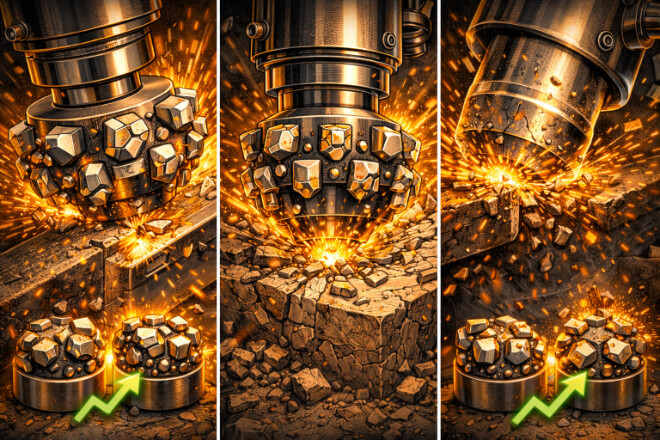
Cobalt-bonded tungsten carbide performs best where impact and wear resistance are more important than corrosion resistance:
Metal 切削工具
鉱業 and construction tools
Drilling tools
CNC machining inserts
Saws, mills, and high-torque tools
Earthmoving and excavation applications
Cobalt binders dominate in harsh mechanical wear scenarios due to their toughness and edge retention.
Cost and Availability Considerations

While performance matters, procurement decisions also consider cost and sourcing stability.
Nickel binder grades tend to be more expensive due to raw material cost and niche usage.
Cobalt binder grades are more widely available and dominate industrial tooling markets.
Nickel binder consumption increases in environmentally regulated markets and where stainless steels or abrasive fluids are common.
Which Binder Should Decision-Makers Choose?

The choice depends on operational priorities:
✔ Choose Nickel Binder when:
耐腐食性 is critical
Magnetic interference must be avoided
Tools operate in chemical or marine environments
The application has low-to-moderate impact loads
✔ Choose Cobalt Binder when:
道具 強靭さ and impact loads dominate
Cutting or high-speed machining is required
Cost efficiency matters
Wear and abrasives are the main failure cause
 English
  Español
  简体中文
简体中文  Français
  日本語
日本語  한국어
한국어  العربية
  Tiếng Việt