
Understanding WC-Co and WC-Ni Bushings
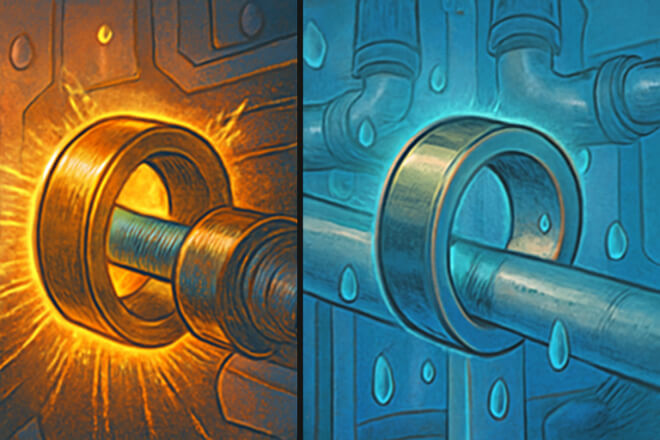
Tungsten carbide bushings are composites of tungsten carbide particles bonded by a metal binder. The two most common binders are cobalt and nickel.
These binders serve to hold the carbide grains together and provide some flexibility to the otherwise brittle tungsten carbide.
While both WC-Co and WC-Ni bushings share the same core tungsten carbide material, the choice of binder has a significant impact on the bushing’s performance, especially in corrosive conditions.
Key Differences Between WC-Co and WC-Ni:
1). WC-Co (Cobalt-Bonded Tungsten Carbide):
Cobalt provides 강인함 충격 저항성이 뛰어납니다.
훌륭한 내마모성 under dry and high-load conditions.
Less resistant to corrosion compared to nickel.
2). WC-Ni (Nickel-Bonded Tungsten Carbide):
Nickel enhances 내식성, particularly in acidic or aggressive environments.
Offers good thermal stability and wear resistance in wet conditions.
Slightly lower toughness than WC-Co.
Performance of WC-Co Bushings in Corrosive Environments
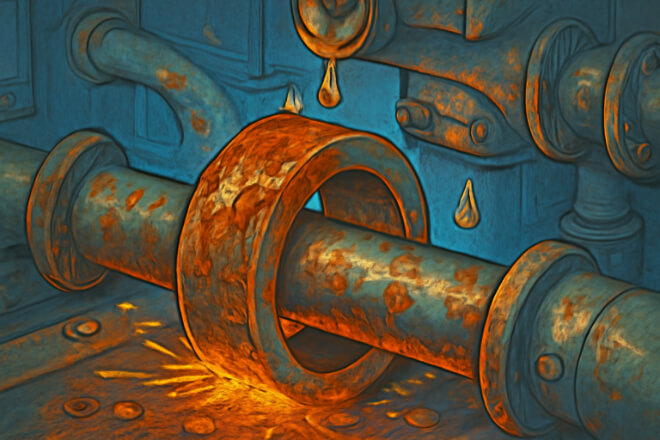
While WC-Co bushings are widely used in industrial applications, their performance in corrosive environments, especially those involving acids, bases, or aggressive chemicals, can be limited.
1). 부식 저항성
Cobalt, the binder in WC-Co, is not highly resistant to corrosion, especially in acidic or chlorine-rich environments.
Over time, the cobalt binder may degrade, causing the bushing to lose its strength and functionality.
However, WC-Co bushings still offer excellent wear resistance in environments where corrosion is not the primary concern.
2). Applications in Corrosive Environments:
WC-Co bushings are best suited for conditions where abrasion resistance is critical, but where corrosion is minimal or manageable.
Common uses include high-load industrial systems, 채광, and drilling, where abrasive materials cause wear but the environment isn’t chemically aggressive.
3). Why Choose WC-Co in Corrosive Environments?
강인함: WC-Co bushings excel in applications where impact resistance and toughness are more important than corrosion resistance.
Cost-Effective: They are generally more affordable compared to WC-Ni bushings, making them a viable choice for applications where wear resistance is the primary need.
Performance of WC-Ni Bushings in Corrosive Environments
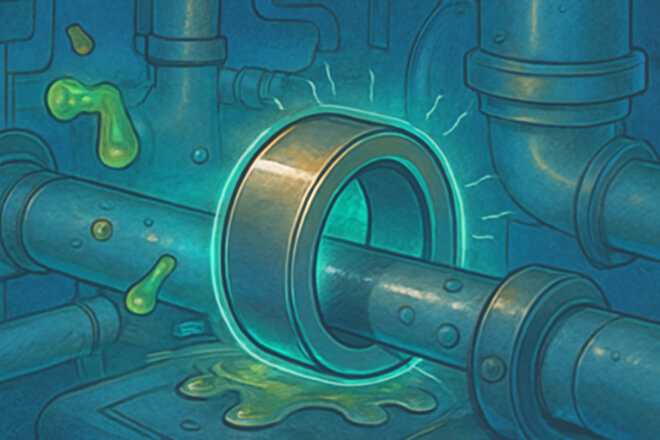
Nickel-bonded tungsten carbide, or WC-Ni, provides significantly better performance in corrosive environments compared to WC-Co.
Nickel’s inherent corrosion resistance makes WC-Ni the better choice for applications exposed to acids, salts, and other aggressive chemicals.
1). 부식 저항성
Nickel significantly improves the corrosion resistance of WC-Ni bushings.
The material can withstand exposure to a range of chemicals, including acids, alkalis, and chlorides, without degrading as quickly as WC-Co.
This makes WC-Ni ideal for applications in marine environments, chemical processing, and petrochemical industries.
2). Applications in Corrosive Environments:
- WC-Ni bushings are commonly used in pump systems, valves, and high-performance machinery in industries like chemical processing, 석유 및 가스, and marine technology.
3). Why Choose WC-Ni in Corrosive Environments?
Corrosion Resistance: The main advantage of WC-Ni is its ability to resist aggressive chemicals, ensuring longer service life in corrosive applications.
Thermal Stability: WC-Ni bushings can perform well in both wet and high-temperature conditions, making them suitable for a variety of industrial applications where temperature and moisture are factors.
When to Choose WC-Co vs. WC-Ni in Corrosive Environments
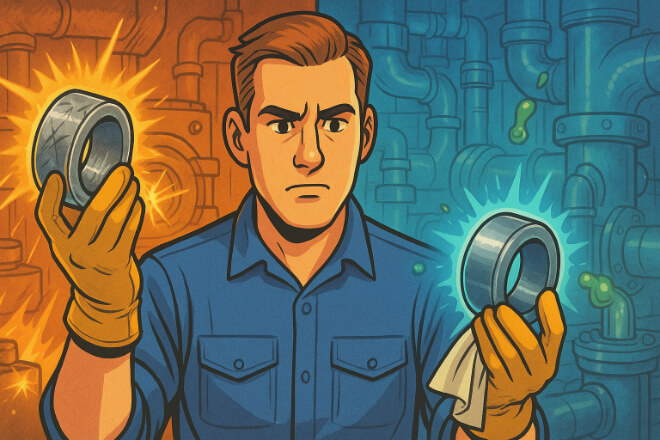
Choosing between WC-Co and WC-Ni bushings depends on the specific demands of your application. Here are some guidelines:
1). Choose WC-Co If:
Your application requires high impact resistance and 강인함 over corrosion resistance.
You are working with abrasive environments where 내마모성 is the priority.
You are looking for a more cost-effective option for industries like mining or heavy machinery.
2). Choose WC-Ni If:
Corrosion is a primary concern, especially in acidic or saline environments.
Your equipment will operate in wet conditions, including chemical processing or marine applications.
High thermal stability and extended service life are critical to your operation.
 English
  Español
  简体中文
简体中文  Français
  日本語
日本語  한국어
한국어  العربية
  Tiếng Việt