
Why Tungsten Carbide Bushings Are Critical in ESP Systems
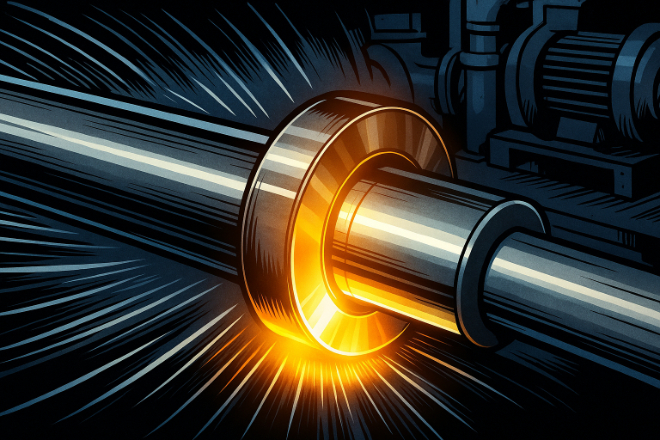
ESP systems run at high speeds and experience constant axial and radial loads. This puts extreme stress on bearings and bushings.
Tungsten carbide bushings help maintain shaft alignment, reduce friction, and prevent vibration that could damage the pump.
Key performance requirements in ESP applications
높은 경도 for abrasive conditions
훌륭한 내마모성
Low friction to reduce heat
Good chemical stability in corrosive fluids
Ability to handle continuous operation
Dimensional precision for stable shaft support
In ESP environments, even minor misalignment or wear can lead to pump failure. This is why tungsten carbide is preferred over bronze, steel, or composite materials.
Operating Conditions of ESP That Demand Tungsten Carbide
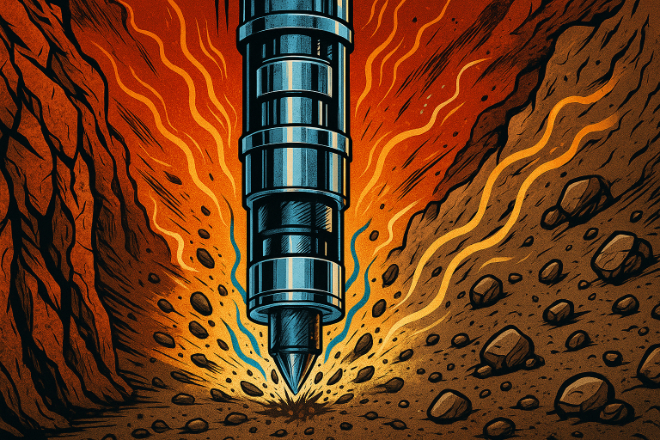
ESP pumps often operate thousands of meters underground, in wells containing sand, gas, brine, and chemical additives. These conditions require a material that can survive long-term exposure.
Key environmental challenges
High temperature from motor heat and friction
High pressure deep in the well
Sand and solids causing abrasion
Corrosive water or hydrocarbons
High RPM of pump shaft
Continuous running cycles
Tungsten carbide offers the best balance of hardness and 강인함 for this environment.
Best Tungsten Carbide Grades for ESP Bushings
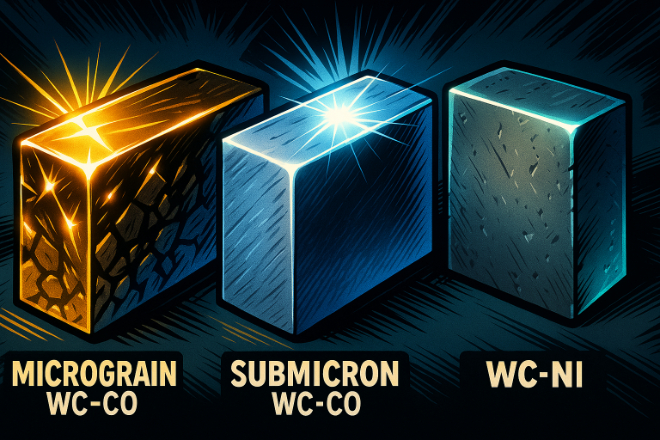
Different ESP conditions require different types of tungsten carbide. Two key factors determine grade selection: grain size and binder type.
1). Recommended binder types
Cobalt binder (WC-Co): Strong 강인함, 좋은 내마모성. Best for wells with solids and high abrasion.
Nickel binder (WC-Ni): Higher 내식성. Best for wells with brine, seawater, or aggressive chemicals.
2). Common ESP Grades Comparison
Design Factors for ESP Tungsten Carbide Bushings
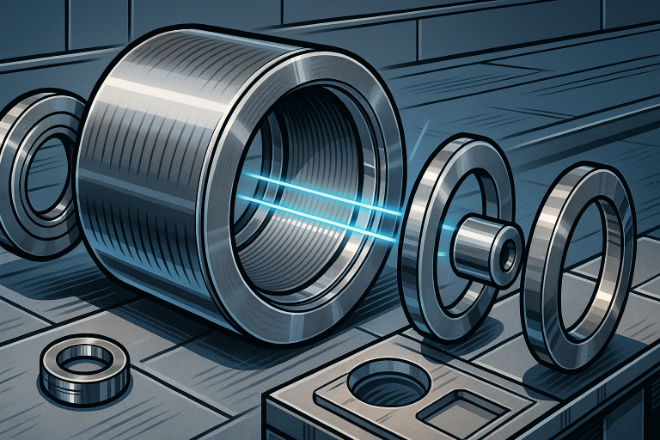
Correct design is just as important as material grade. ESP bushings must be made with high precision to avoid shaft damage or pump vibration.
1). Key design considerations
Tight dimensional tolerance: Helps ensure stable shaft rotation.
Smooth surface finish: ESP typically requires Ra ≤ 0.2 µm.
Correct clearance fit: Too tight = heat buildup; Too loose = vibration and premature wear
Oil or fluid grooves: Helps lubrication and cooling.
Concentricity and roundness: Must be controlled to minimize vibration.
Proper design improves overall ESP system efficiency.
Installation and Alignment Considerations
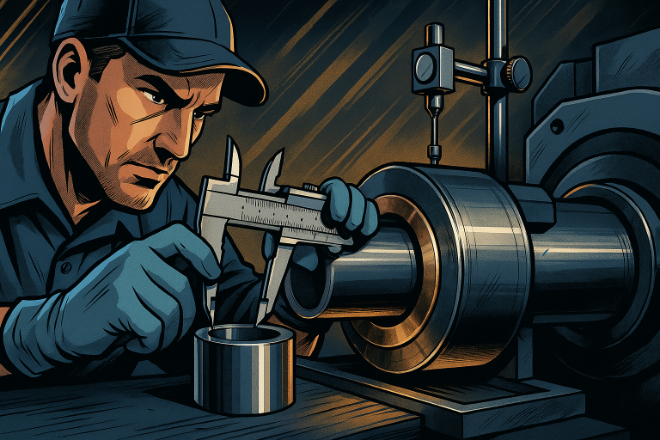
Even the best material will fail early if installation is incorrect.
1). Installation priorities
Shaft and bushing must be aligned precisely
No excessive force during press-fit
Avoid thermal shock during installation
Clean all sand or debris before assembly
Use correct lubrication during assembly
2). Common alignment issues
Shaft misalignment
Bent shaft
Wrong clearance
Poor surface matching
3). Alignment Problem Table
Failure Modes of Tungsten Carbide Bushings in ESP
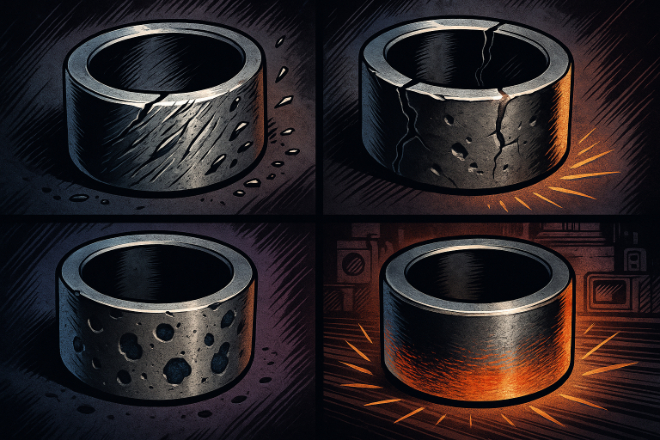
Understanding how bushings fail helps improve design and material choice.
1). Common failure modes
Abrasive wear (sand cutting the surface)
Corrosion from brine or chemicals
Thermal cracking from overheated shaft
Chipping from impact or misalignment
Binder leaching in aggressive fluids
Monitoring failure patterns helps OEMs optimize their pump design and maintenance schedule.
Selecting the Right Supplier for ESP Bushings

ESP applications require high reliability, so choosing a trustworthy supplier is essential.
1). Supplier checklist
Ability to provide cobalt and nickel binder grades
Strict powder control and traceability
Sintering and HIP equipment
Experience in oil and gas applications
교체 부품의 빠른 납기
A strong supplier reduces risk and ensures long-term ESP performance.
 English
  Español
  简体中文
简体中文  Français
  日本語
日本語  한국어
한국어  العربية
  Tiếng Việt