
1. Why Do Plastic Parts Need Edge Trimming?
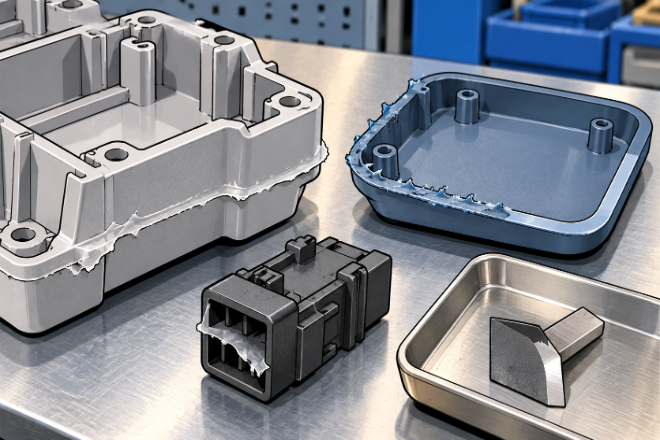
Plastic parts may look ready for use when they leave the mold, but small defects can still cause problems during assembly or inspection.
One common issue is flash. This thin layer of extra plastic can form along the mold parting line or around small openings. Even a small amount may stop two parts from fitting together correctly.
Rough edges are another concern. They can affect the appearance of a product, create unwanted sharp spots, or interfere with nearby components.
For parts used in electronics, vehicles, and industrial equipment, these details can matter more than they first appear.
Some components also need extra material removed around holes, slots, and curved edges. These areas can be difficult to finish by hand, especially when many parts must meet the same size requirements.
여기가 바로 그곳입니다 카바이드 트리밍 도구 can help. A suitable tool removes unwanted material while keeping the finished edge close to the required shape.
However, plastic is not one single material. ABS, nylon, polycarbonate, POM, and glass-filled plastics respond differently to cutting. A tool that works well on one type may produce heat, roughness, or deformation on another.
The first step is to understand the plastic and the finishing task. Once those are clear, manufacturers can select a tool that suits the job instead of relying on trial and error alone.
2. What Makes Carbide Trimming Tools Effective for Plastic Edges?
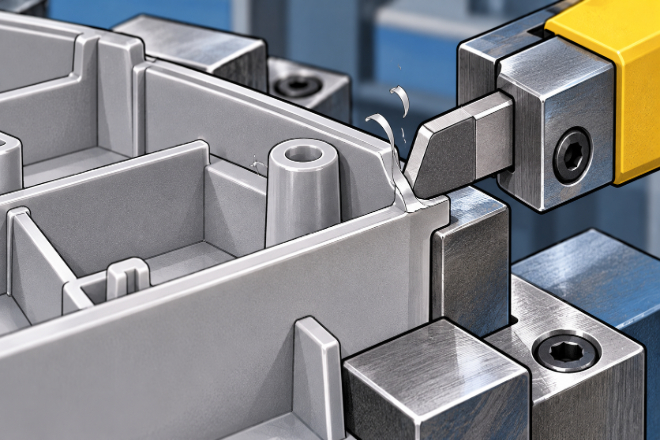
The main advantage of 카바이드 트리밍 도구 is their hardness and resistance to wear. These properties help the cutting edge keep its shape during repeated operations.
Compared with many conventional steel tools, carbide tools can offer longer useful life in demanding applications, especially when the plastic contains abrasive fillers.
But hardness is only part of the story. Good edge finishing also depends on tool geometry, cutting conditions, and the way the workpiece is held.
Clean and Controlled Material Removal
Plastic edge trimming often involves removing a small amount of material. Too little removal leaves flash behind, while too much can change the part’s dimensions.
A suitable carbide trimming tool can remove excess material along a planned cutting path. This is useful for cleaning molded edges, finishing small openings, and removing unwanted plastic around assembly features.
좋은 내마모성
Some plastics contain glass fibers or mineral fillers that can wear a cutting edge more quickly than unfilled plastics.
A suitable carbide tool can resist this wear and maintain useful cutting performance for longer.
This does not mean every carbide tool will last longer in every plastic application. Tool grade, cutting geometry, and operating conditions all affect tool life.
Repeatable Results
When the cutting edge remains in good condition, manufacturers can often keep edge quality more consistent across a production batch.
That matters when hundreds or thousands of parts must fit together correctly. However, tool condition is only one factor.
Machine stability, fixture design, and the quality of the molded part also affect the final result.
3. Which Plastic Materials Can Carbide Trimming Tools Handle?
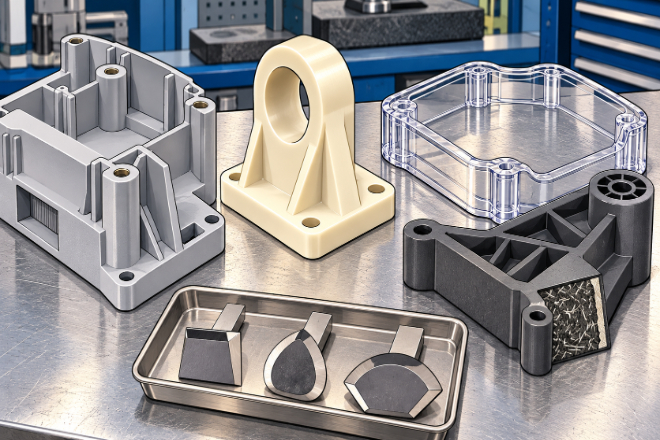
Different plastics behave differently during cutting. Some soften easily when heat builds up, while others contain hard fillers that increase tool wear.
ABS Plastic
ABS is widely used for housings, covers, and molded consumer or industrial parts. It can be trimmed to remove flash and clean selected edges.
A suitable sharp tool can help reduce roughness, but excessive heat may soften the edge or leave marks on the surface. Stable cutting conditions are important when appearance matters.
Nylon and POM
Nylon and POM are used in many mechanical parts, including clips, gears, guides, and other components that need strength or low friction.
Their cutting behavior depends on the grade and part design. Some parts may flex during trimming, while others may develop burrs if the cutting edge is unsuitable.
The tool should be matched to the material and the amount of material being removed.
Polycarbonate
Polycarbonate is used for covers, guards, and other parts where impact resistance is important.
When trimming thin polycarbonate components, too much cutting force or heat may lead to rough edges or unwanted marks.
A suitable carbide trimming tool, combined with good workpiece support, can help keep the edge clean.
Glass-Filled Plastics
Glass-filled plastics are more abrasive than many unfilled resins. The glass fibers can wear the cutting edge during repeated operations.
카바이드 트리밍 도구 may be a useful choice for these materials because of their wear resistance.
Manufacturers should still check the tool’s performance on the exact plastic grade and replace the tool when wear begins to affect part quality.
The key lesson is simple: choose the tool for the plastic being cut, not just for the shape of the part.
4. How Can Manufacturers Prevent Melting and Rough Edges?
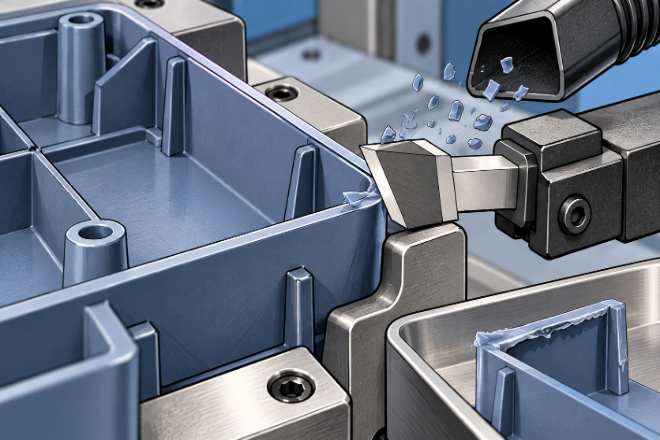
A carbide tool does not automatically prevent plastic damage. If the tool rubs instead of cutting cleanly, heat can build up and soften the material. Excessive force can also deform thin walls or leave uneven edges.
A few practical steps can help avoid these problems.
Set Suitable Cutting Speed and Feed
A higher cutting speed is not always better. The correct settings depend on the plastic grade, tool geometry, machine, and amount of material being removed.
Use the tool maker’s guidance as a starting point, then test the settings on sample parts. Look for signs of melting, smearing, roughness, or changes in edge dimensions.
Keep the Tool Sharp
A worn cutting edge may push or drag plastic instead of cutting it cleanly. This can create burrs, heat, and poor surface quality.
Inspect the tool at planned intervals. Replacing it before wear becomes severe can help prevent defects from spreading across a whole batch.
Hold the Workpiece Firmly
Thin plastic parts can bend or vibrate during trimming. If the part moves, the tool may cut too deeply or leave an uneven edge.
A suitable fixture should support the part close to the cutting area without damaging its surface. Complex parts may need custom support to keep delicate features stable.
Clear Chips from the Cutting Area
Plastic chips can collect around the tool and affect the finish. In some applications, material may stick to the cutting edge and reduce cutting performance.
Use suitable chip removal and extraction methods. If plastic begins to build up on the tool, stop and check the process rather than continuing with a poor cutting edge.
5. How Should Manufacturers Choose the Right Carbide Trimming Tool?
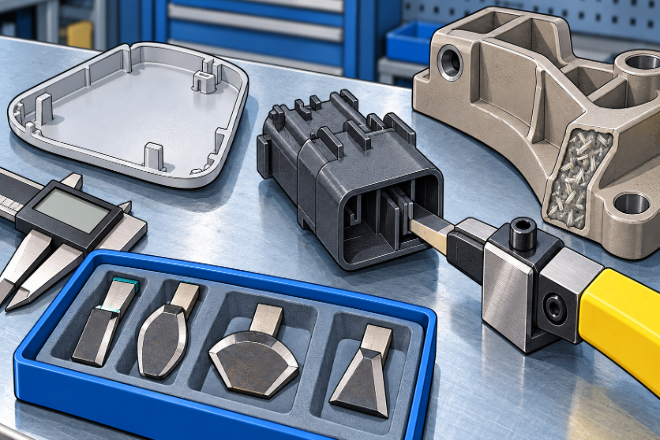
Choosing a 카바이드 트리밍 도구 is easier when the finishing task is clearly defined.
Before comparing tools, manufacturers should know the plastic type, the amount of material to remove, and the required edge quality.
The following factors are worth checking.
Plastic grade: Identify the resin and any glass or mineral fillers.
Edge shape: Decide whether the task involves removing flash, cleaning a hole, or trimming a complex contour.
Tool diameter: Make sure the tool can reach the target area without touching nearby features.
Cutting geometry: Select an edge and flute design suitable for the plastic and cutting operation.
Machine and fixture: Check tool runout, workpiece support, and the stability of the cutting setup.
Production volume: Consider whether the tool is intended for occasional finishing or repeated automated work.
A controlled trial is usually the most reliable way to confirm a choice. Test the tool on representative parts and record edge quality, tool wear, cycle time, and the number of parts that pass inspection.
This gives engineering and purchasing teams a fair basis for comparison. A tool that looks good on paper may not be the best choice once it is used on the actual production line.
6. How Can Carbide Trimming Tools Reduce Production Costs?
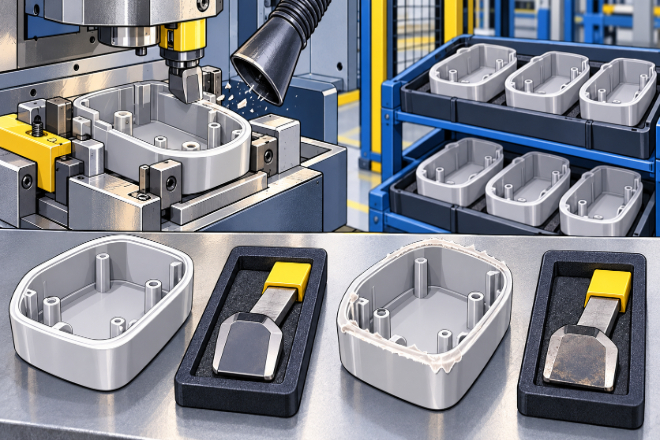
Plastic edge trimming may be a small step in the manufacturing process, but repeated problems can quickly add up.
If a tool wears too fast, operators need to replace it more often. If the edge is rough, parts may need manual cleanup. If too much material is removed, the component may fail inspection.
A suitable carbide trimming tool can help reduce these costs when it provides reliable results over an acceptable tool life.
Manufacturers should track four measures:
Tool life: How many parts can be finished before wear affects quality?
Cycle time: How long does each trimming operation take?
Rework rate: How often do parts need extra finishing?
Cost per accepted part: What is the full cost of producing a component that meets the required standard?
A tool with a higher purchase price may be the better choice if it lasts longer and reduces rework. But for a small batch of easy-to-cut plastic parts, a lower-cost tool may be more suitable.
The aim is not to buy the most expensive tool. It is to find the option that delivers the required edge quality at a reasonable total cost.
 English
 Español
 简体中文
 Français
 日本語
 한국어
 العربية
 Tiếng Việt