
Abrasive Particle Size vs Bushing Lifespan: Practical Thresholds

텅스텐 카바이드 부싱 are widely used in pumps, compressors, and slurry systems because they resist wear better than most materials.

But even tungsten carbide has limits when abrasive particles are present in the fluid. The size, hardness, and concentration of these particles have a major impact on bushing lifespan.

This article explains how abrasive particle size affects wear, what thresholds decision-makers should watch, and how to reduce damage in real applications.

Why Abrasive Particle Size Matters for Tungsten Carbide Bushings
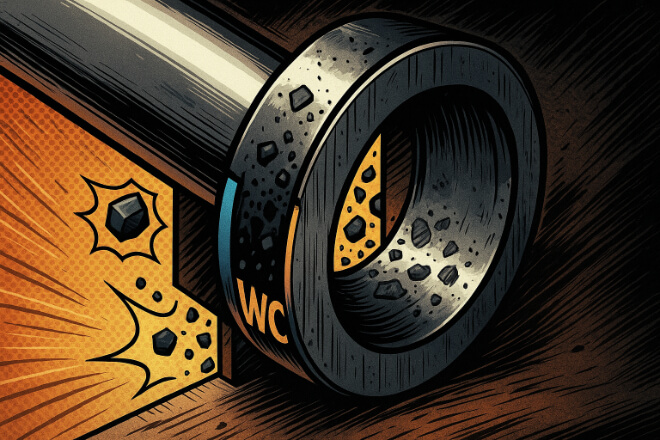
Abrasive wear happens when hard particles slide between the shaft and the bushing surface. Tungsten carbide is extremely hard, but once particles become large enough, they act like cutting tools.

1). Bigger Particles = Faster Wear

  • Large particles create deeper scratches

  • They interrupt lubrication film

  • They increase friction and heat

2). Small Particles Are Still Harmful

Even fine particles can remove material slowly but continuously, especially in high-speed service or boundary lubrication.

How Particle Size Affects Wear Mechanisms
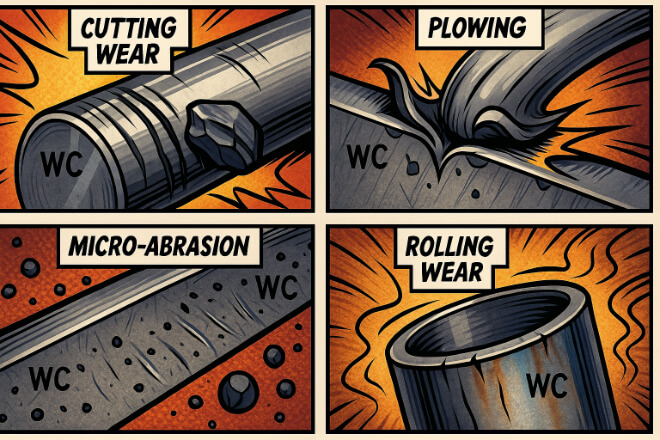
Abrasive wear is not a single mechanism—it changes depending on particle size and 경도. WC bushings typically experience:

  • Cutting Wear: Large particles cut directly into the surface.

  • Plowing Wear: Medium particles push material aside, forming ridges.

  • Micro-Abrasion: Small particles form very fine scratches.

  • Rolling Wear: Round particles roll instead of cutting, reducing wear rate.

입자 크기Wear MechanismEffect on WC Bushing
Large (>150 μm)절단Rapid, severe wear
Medium (50–150 μm)PlowingModerate wear, grooves
Fine (<50 μm)Micro-abrasionSlow but continuous wear
Very fine (<10 μm)Rolling / polishingLow wear unless high concentration

Particle Size Thresholds That Impact WC Bushing Lifespan

Different industries operate with different fluid cleanliness levels. Below is a general guideline for tungsten carbide in abrasive service.

입자 크기Risk LevelExpected Impact
< 25 μm낮은Mostly fine polishing wear
25–75 μm중간Noticeable wear over time
75–150 μm높은Deep scoring, shorter lifespan
> 150 μmSevereRapid wear, early failure

These thresholds can shift depending on:

  • System pressure

  • Particle hardness

  • Shaft speed

  • Lubrication quality

  • Bushing geometry

How Particle Hardness Influences Wear Severity
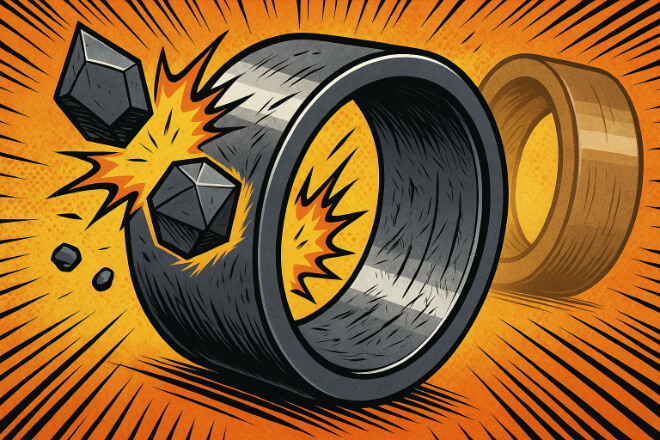
Particle size is only part of the story. Hardness determines how easily a particle can cut tungsten carbide.

Hardness Comparison (Typical Values)

  • Silica sand: 1100–1200 HV

  • Alumina: 1500–2000 HV

  • Tungsten carbide: 1600–2000 HV

When particles approach or exceed WC 경도, wear becomes much more aggressive.

Particle TypeRelative HardnessWear Risk
Silica (sand)Lower than WC보통의
AluminaEqual or higher높은
Quartz slurryClose to WCHigh to severe
Metal debrisVariesCan cause scoring or gouging

Concentration: Why Even Small Particles Become Dangerous in Large Numbers
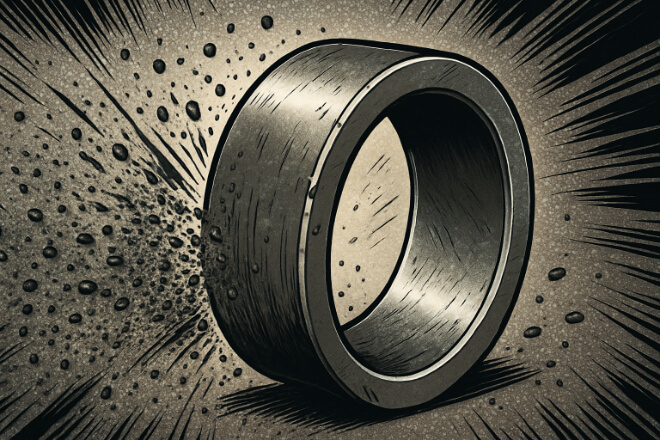
A single particle may not damage a WC bushing, but millions of particles passing through the gap continuously can act like a sandblasting system.

High Concentration Causes:

  • More particle impacts per second

  • Faster breakdown of the lubrication film

  • Increased surface temperature

  • Accelerated wear groove development

High-speed pumps and agitators are especially sensitive to particle concentration.

Real-World Wear Patterns Caused by Different Particle Sizes

Every abrasive environment leaves a unique signature on the bushing bore.

Typical Wear Patterns

입자 크기Typical Wear PatternInterpretation
< 25 μmFine matte surfaceMicro-abrasion
25–100 μmVisible groovesPlowing wear
100–200 μmDeep scratchesCutting wear
> 200 μmChunk removal, heavy scoringSevere damage

How to Reduce Abrasive Wear in Tungsten Carbide Bushings
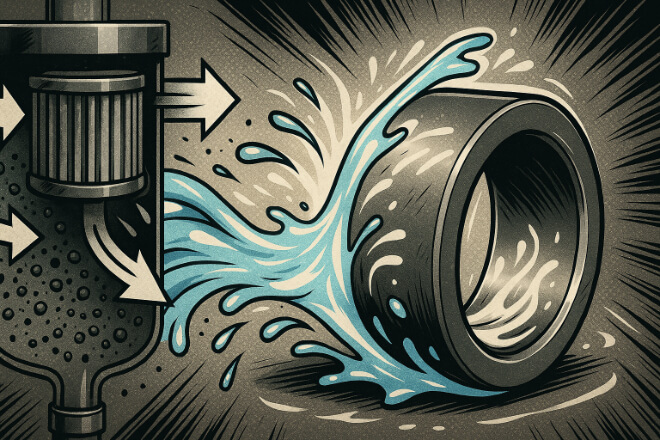
Reducing wear does not always require redesigning the system. Often, small process improvements make a big difference.

Key Strategies

  • Install better filtration or sediment traps

  • Reduce clearance to limit particle ingress

  • Choose harder grades of tungsten carbide

  • Use smooth, well-polished shaft surfaces

  • Improve lubrication flow

  • Avoid pump cavitation, which pulls particles into the gap

Choosing the Right WC Grade for Abrasive Slurry Service

Different WC grades offer different levels of 내마모성. For abrasive environments, finer grain sizes and higher hardness are usually preferred.

WC Grade TypeBest Used For노트
Fine-grain WC-CoSevere abrasion매우 높은 경도
Submicron WCHigh-velocity slurry우수한 내마모성
WC-NiCorrosive slurry내식성이 우수하다
Binderless WCExtreme abrasionHighest hardness

결론

Abrasive particle size is one of the most important factors affecting tungsten carbide bushing lifespan.

By understanding how particle size, hardness, and concentration interact, operators can set practical thresholds for filtration, clearance, lubrication, and WC grade selection.

With the right controls, bushing life can be extended significantly even in harsh slurry environments.

회사에 대한 자세한 내용을 알고 싶으시면 언제든지 문의해 주세요. 문의하세요. 

답글 남기기

이메일은 표시되지 않습니다. 필수 필드는 *표시