
Why Material Authenticity Matters for OEMs
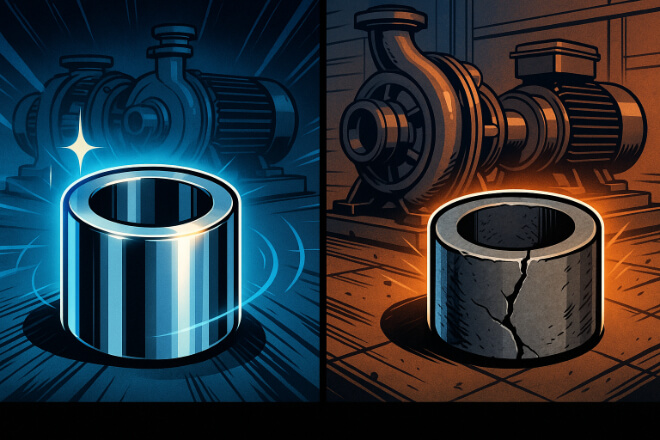
The performance of a tungsten carbide bushing comes mainly from the purity of 텅스텐 카바이드 분말 and the quality of the binder (cobalt or nickel).
If a supplier uses recycled powder, low-purity carbide, or incorrect binder ratio, the bushing will fail earlier than expected.
1). Risks of using non-authentic material
낮추다 경도 and faster wear
더 높은 다공성 leading to cracks
Poor chemical resistance
줄인 밀도
Weak bonding between carbide particles
Shorter service life and more replacements
2). Typical Failure Impact Table
Verify Material Through Chemical Composition Testing
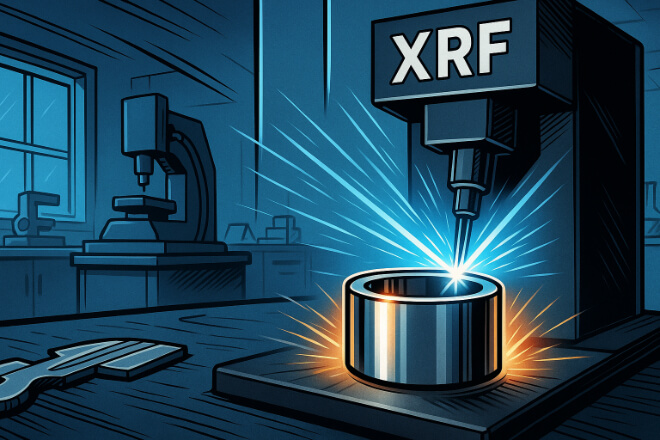
Material composition determines hardness, wear resistance, and corrosion resistance. The most reliable way to confirm authenticity is chemical analysis.
1). Common chemical tests
XRF (X-ray Fluorescence): Detects tungsten carbide purity, binder type, and contamination.
ICP-OES / ICP-MS: Gives precise measurement of cobalt, nickel, iron, and other trace elements.
Carbon & oxygen analysis: Shows moisture or oxidation in carbide powder.
2). What OEMs should require
A chemical composition report for every batch
Clear grade statement (e.g., WC-6Co, WC-12Co, WC-Ni)
Zero recycled powder unless approved
Proof that powder source is stable and consistent
If a supplier cannot offer composition reports, authenticity is doubtful.
Use Density and Porosity Testing
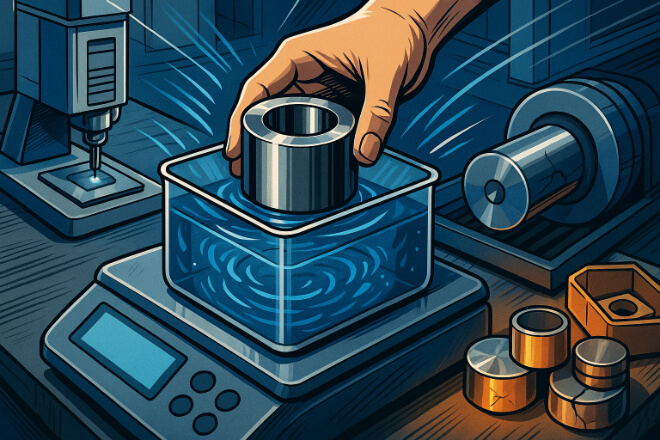
Tungsten carbide is a high-density material. If density is too low, it means the sintering process was poor or the material is not pure.
1). 밀도 testing methods
Archimedes density test (most common)
Hydrostatic weighing
Helium 다공성 test (advanced)
2). Typical density values
Standard WC-Co: 14.4–15.0 g/cm³
Low density = high porosity → poor wear life
3). Density Evaluation Table
Verify Authenticity Through Hardness Testing
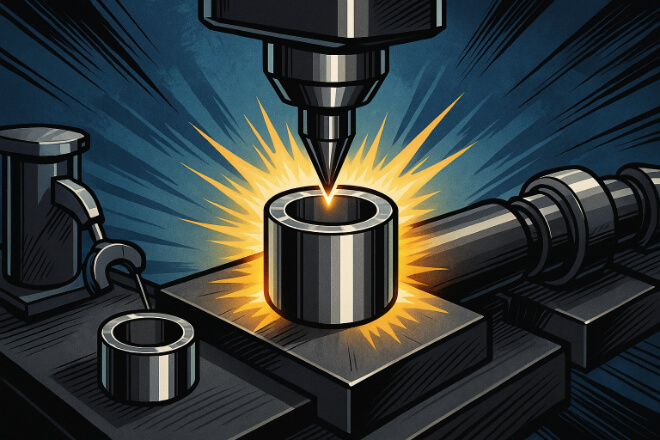
Hardness reveals heat-treatment quality, binder ratio accuracy, and grain structure stability.
1). Hardness expectations
WC-6Co: ~1700 HV
WC-12Co: ~1500 HV
Submicron WC: 1800 HV+
If hardness deviates significantly, the material is not authentic.
2). Typical hardness tests
Vickers 경도 (HV)
Rockwell A
OEMs should always request hardness data for every batch.
Check Microstructure With Microscopy
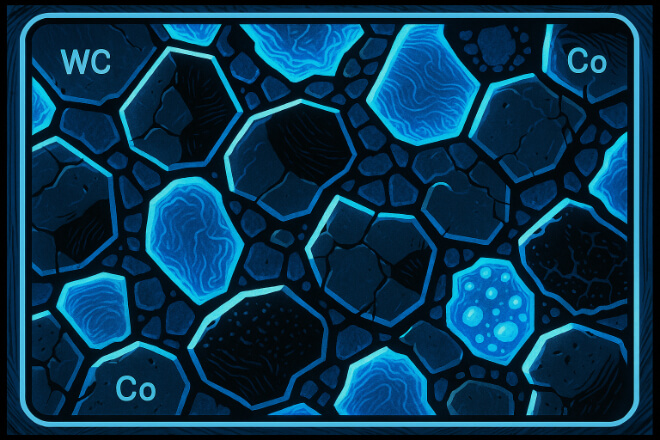
에이 텅스텐 카바이드 부싱’s microstructure can reveal whether the raw powder was pure, mixed, recycled, or sintered properly.
1). What inspectors look for
Uniform WC grains
No abnormal grain growth
Even binder distribution
No cracks, pits, or voids
No contamination particles
2). Equipment used
Optical microscope (basic check)
SEM (Scanning Electron Microscope) (detailed analysis)
Microstructure provides the strongest visual proof of authenticity.
Non-Destructive Testing (NDT) for Hidden Defects
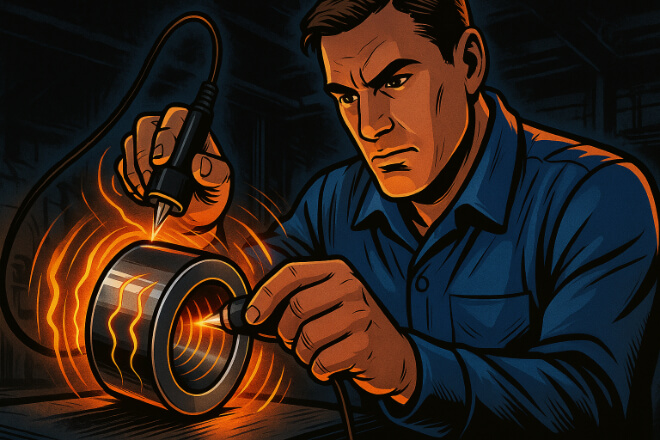
NDT methods help detect internal problems that suggest poor-quality or fake materials.
Common NDT methods
Ultrasonic testing – finds internal cracks or voids
Dye penetrant inspection – finds surface defects
Eddy current testing – detects structural differences
If a bushing has many internal defects, the material quality is probably fake or low-grade.
Evaluate Supplier Documentation and Traceability
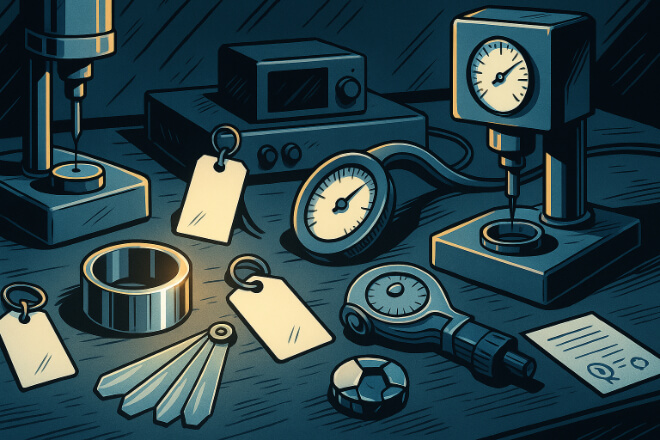
A strong supplier provides complete documentation and full traceability.
1). Documents that prove authenticity
Material certificate (MTC)
Chemical composition report
밀도 report
경도 report
Microstructure images
NDT test results
Powder batch number and source
2). Traceability Table
 English
  Español
  简体中文
简体中文  Français
  日本語
日本語  한국어
한국어  العربية
  Tiếng Việt