
Cacbua Vonfram là gì?
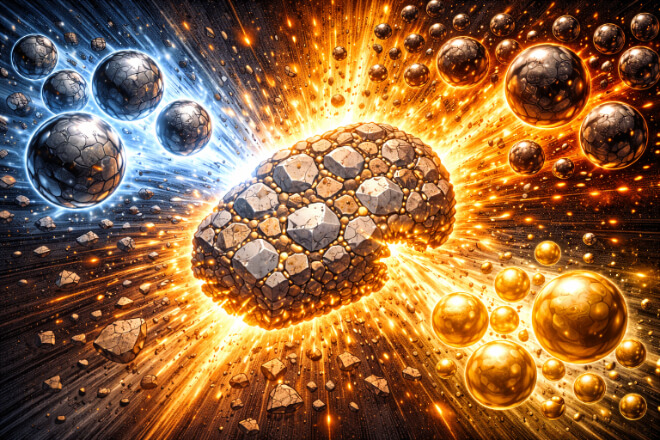
Vonfram cacbua là một hợp chất được tạo thành từ vonfram và cacbon.
Nó nổi tiếng với những đặc điểm nổi bật độ cứng và khả năng chịu mài mòn và nhiệt độ cao. Vonfram cacbua thường được sử dụng trong các dụng cụ như mảnh cắt, mũi khoan và lưỡi cưa.
Hiệu suất của các công cụ này phụ thuộc rất nhiều vào cấu trúc vi mô của cacbua vonfram được sử dụng để chế tạo chúng.
Các thành phần chính của cacbua vonfram:
VonframKim loại này mang lại độ cứng và sức mạnh.
CacbonCác nguyên tử cacbon kết hợp với vonfram tạo thành cacbua, giúp tăng độ cứng và khả năng chống mài mòn.
Vật liệu kết dínhVonfram cacbua thường được kết hợp với vật liệu liên kết, như coban hoặc niken, để tăng độ bền và tính dẻo.
Vai trò của kích thước hạt trong cacbua vonfram
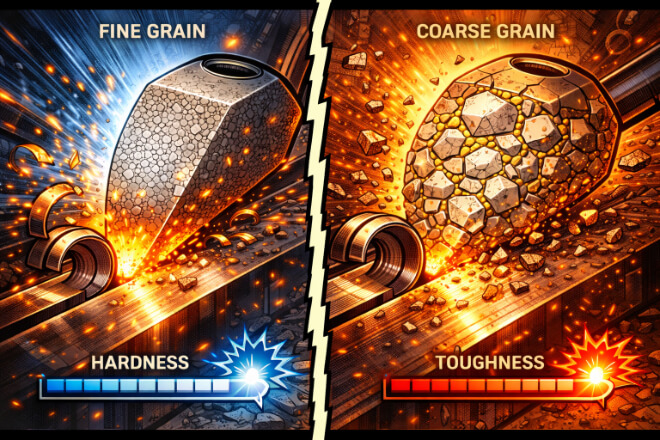
Một trong những yếu tố quan trọng nhất quyết định hiệu suất của mũi khoan cacbua vonfram là kích thước hạt trong cấu trúc vi mô của nó.
Kích thước hạt Ảnh hưởng của kích thước hạt đến độ cứng, độ dẻo dai và khả năng chống mài mòn của vật liệu. Hạt nhỏ hơn có xu hướng cải thiện độ cứng và khả năng chống mài mòn, trong khi hạt lớn hơn làm tăng độ dẻo dai và khả năng chống va đập.
Hạt mịn so với hạt thô:
Hạt mịnNhững loại ngũ cốc này cung cấp tốt hơn khả năng chống mài mòn Và độ cứng, Điều này làm cho vật liệu trở nên lý tưởng cho các ứng dụng cắt và gia công.
Hạt thôNhững loại ngũ cốc này mang lại sự cải thiện độ dẻo dai, Điều này giúp vật liệu trở nên phù hợp hơn cho các ứng dụng chịu lực cao, chẳng hạn như dụng cụ khai thác mỏ.
Bảng: Hạt mịn so với hạt thô trong cacbua vonfram
Ảnh hưởng của vật liệu kết dính đến cấu trúc vi mô
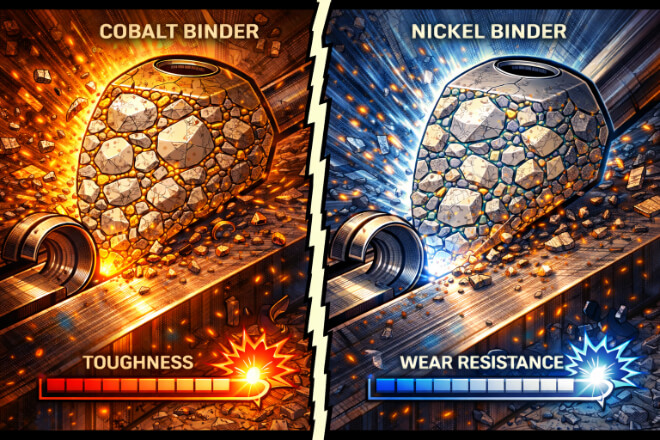
Các vật liệu liên kết như coban và niken đóng vai trò quan trọng trong cấu trúc vi mô của cacbua vonfram.
Các vật liệu này giúp giữ các hạt cacbua vonfram lại với nhau và tạo độ bền cho cacbua vốn dễ vỡ.
Việc lựa chọn vật liệu liên kết ảnh hưởng đến các tính chất cơ học tổng thể của đầu mũi cacbua vonfram.
So sánh chất kết dính Coban và Niken:
CobanCoban là chất kết dính phổ biến nhất được sử dụng trong cacbua vonfram. Nó mang lại khả năng chống mài mòn tuyệt vời và tăng cường khả năng chịu nhiệt và áp suất của vật liệu.
Niken: Các chất kết dính gốc niken thường được sử dụng khi cần cải tiến. khả năng chống ăn mòn Điều này rất cần thiết, đặc biệt là trong các ngành công nghiệp như dầu khí.
Các pha của cacbua vonfram

Vonfram cacbua tồn tại ở hai pha chính: pha alpha và pha beta. Sự phân bố và hàm lượng của mỗi pha trong cấu trúc vi mô đóng vai trò quan trọng trong việc xác định các tính chất tổng thể của vật liệu.
Giai đoạn AlphaPha alpha ổn định ở nhiệt độ thấp hơn và góp phần tạo nên độ cứng của vật liệu.
Giai đoạn BetaPha beta có tính dẻo cao hơn và giúp cải thiện độ bền và khả năng chống va đập.
Sự cân bằng giữa các pha này được kiểm soát cẩn thận trong quá trình sản xuất để đạt được các đặc tính mong muốn trong dụng cụ làm từ vonfram cacbua.
Quá trình thiêu kết và tác động của nó đến cấu trúc vi mô
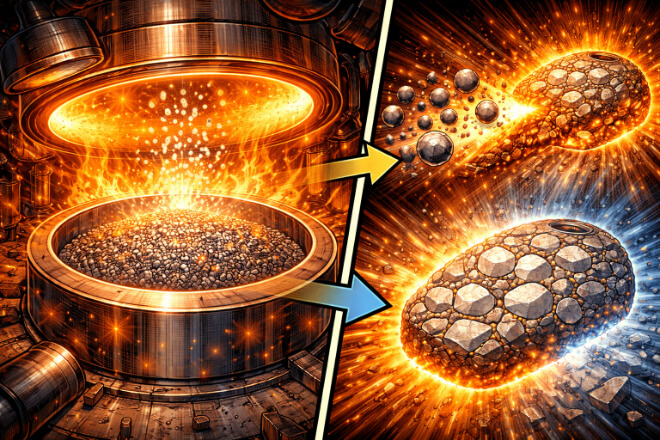
Quá trình thiêu kết đóng vai trò quan trọng trong việc xác định cấu trúc vi mô cuối cùng của cacbua vonfram.
Trong quá trình thiêu kết, bột cacbua vonfram Được nung nóng đến nhiệt độ cao, khiến các hạt kết dính lại với nhau.
Nhiệt độ và thời gian trong quá trình thiêu kết ảnh hưởng đến kích thước hạt và sự phân bố pha, từ đó ảnh hưởng trực tiếp đến các tính chất của vật liệu.
Các yếu tố chính trong quá trình thiêu kết:
Nhiệt độNhiệt độ thiêu kết cao hơn sẽ tạo ra các hạt lớn hơn, trong khi nhiệt độ thấp hơn sẽ tạo ra các hạt mịn hơn.
Thời gianThời gian nung kết lâu hơn cho phép sự phát triển hạt và chuyển đổi pha tốt hơn.
Áp lựcViệc tác dụng áp lực trong quá trình thiêu kết có thể giúp đạt được sự phân bố hạt đồng đều hơn.
 English
  Español
  简体中文
简体中文  Français
  日本語
日本語  한국어
한국어  العربية
  Tiếng Việt