
1. Các kiểu mài mòn trên đầu mũi khoan bằng vonfram cacbua là gì?
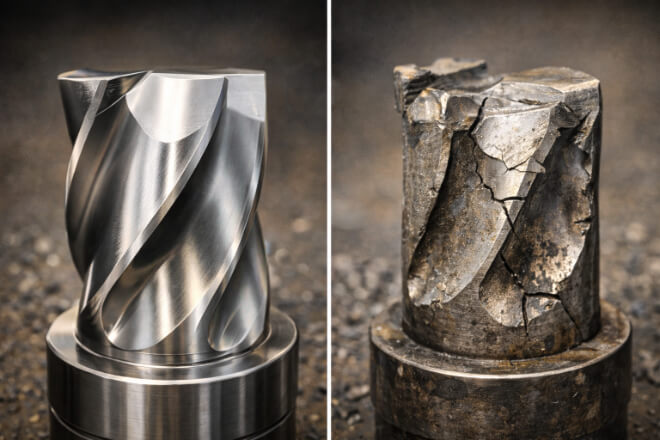
Các kiểu mài mòn đề cập đến những thay đổi trên bề mặt của dụng cụ do sự tương tác của nó với vật liệu được cắt.
BẰNG đầu cacbua vonfram Khi được sử dụng, chúng phải chịu nhiều loại hao mòn khác nhau, chẳng hạn như mài mòn, xói mòn và mỏi cơ học.
Các dấu hiệu mài mòn này cung cấp thông tin quý giá về hiệu suất hoạt động của công cụ và liệu nó có sắp hỏng hay không.
Các kiểu mòn phổ biến:
Mài mònLoại mài mòn này xảy ra khi đầu mũi cacbua tiếp xúc với các hạt cứng trong vật liệu, khiến bề mặt bị mài mòn dần dần.
Đồ bảo hộ nhiệtNhiệt độ cao sinh ra trong quá trình cắt có thể làm cho các đầu mũi cacbua bị mềm hoặc nứt, dẫn đến hình thành các vết mài mòn do nhiệt.
Mài mòn do va đậpVa đập lặp đi lặp lại từ các vật liệu cứng có thể làm cho đầu mũi cacbua bị sứt mẻ hoặc nứt, dẫn đến mài mòn không đều trên bề mặt.
Sự hao mòn do mỏiTiếp xúc lâu dài với ứng suất có thể dẫn đến mài mòn do mỏi, trong đó các vết nứt nhỏ hình thành trên bề mặt cacbua, cuối cùng gây ra hỏng dụng cụ.
Hiểu rõ các kiểu hao mòn này giúp dự đoán khi nào một dụng cụ có khả năng bị hỏng, cho phép bảo trì hoặc thay thế kịp thời.
2. Các kiểu mài mòn giúp dự đoán sự hỏng hóc của dụng cụ như thế nào?

Bằng cách kiểm tra kỹ lưỡng các dấu hiệu mài mòn, có thể dự đoán được tuổi thọ hữu ích còn lại của dụng cụ làm bằng vonfram cacbua.
Các kiểu mài mòn cụ thể có thể cho thấy các giai đoạn khác nhau của sự xuống cấp dụng cụ, và việc hiểu rõ các giai đoạn này là chìa khóa để quản lý tuổi thọ dụng cụ.
Các dấu hiệu chính của sự hỏng hóc công cụ:
Mòn không đềuNếu sự mài mòn tập trung ở một bên của đầu mũi hoặc lưỡi cắt cacbua, điều đó có thể cho thấy sự lệch trục hoặc các thông số cắt không phù hợp. Sự mài mòn không đều này có thể dẫn đến hỏng hóc sớm nếu không được khắc phục.
Sứt mẻ hoặc nứt vỡSự xuất hiện của các mảnh vụn hoặc vết nứt trên đầu mũi cacbua cho thấy dụng cụ đang chịu ứng suất quá mức, điều này có thể dẫn đến gãy hoàn toàn nếu tình trạng mài mòn tiếp diễn.
Sự cùn mòn của lưỡi cắtLưỡi cắt cùn cho thấy đầu mũi cacbua đang mất độ sắc bén do sử dụng lâu dài. Khi dụng cụ bị cùn, hiệu quả cắt giảm, dẫn đến hiệu suất kém và hỏng dụng cụ.
Hư hỏng do nhiệtCác dấu hiệu hư hỏng do nhiệt, chẳng hạn như đổi màu hoặc nứt do nhiệt, cho thấy dụng cụ đã tiếp xúc với nhiệt độ vượt quá phạm vi tối ưu, điều này có thể dẫn đến giảm hiệu suất và hỏng hóc.
Bằng cách phát hiện sớm các dấu hiệu hao mòn này, người vận hành có thể thay thế hoặc sửa chữa dụng cụ trước khi nó bị hỏng hoàn toàn, giảm thiểu thời gian ngừng hoạt động và duy trì hiệu quả vận hành.
3. Các phương pháp đánh giá kiểu mài mòn trên đầu mũi hợp kim vonfram cacbua
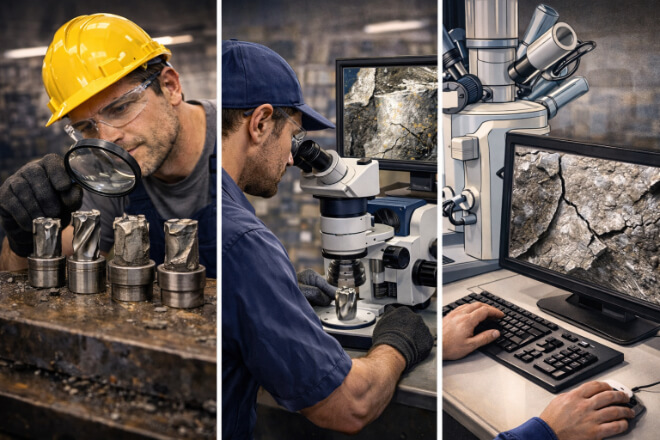
Để đánh giá hiệu quả các kiểu mài mòn và dự đoán sự hỏng hóc của dụng cụ, việc sử dụng đúng dụng cụ và kỹ thuật là điều cần thiết.
Có nhiều phương pháp có thể giúp xác định các kiểu mài mòn, từ kiểm tra bằng mắt thường đến các công nghệ tiên tiến phân tích bề mặt dụng cụ.
Các phương pháp đánh giá kiểu mòn:
Kiểm tra trực quanKiểm tra trực quan thường xuyên các đầu mũi cacbua là phương pháp đơn giản và phổ biến nhất để phát hiện sự mài mòn. Hãy tìm kiếm các vết nứt, sứt mẻ và dấu hiệu cùn hoặc mài mòn không đều dọc theo cạnh cắt.
Phân tích hiển viĐể đánh giá độ mài mòn chi tiết hơn, phân tích hiển vi cho phép kiểm tra cận cảnh bề mặt dụng cụ, xác định các vết nứt nhỏ, vết xước và kết cấu bề mặt tổng thể.
Kính hiển vi điện tử quét (SEM)Công nghệ SEM cho phép chụp ảnh chi tiết các vết mài mòn, cung cấp những hiểu biết quý giá về cách bề mặt dụng cụ bị xuống cấp ở cấp độ vi mô.
Huỳnh quang tia X (XRF)Phân tích XRF giúp đo độ dày và thành phần của các đầu mũi cacbua, xác định sự xuống cấp vật liệu do mài mòn hoặc tiếp xúc với hóa chất.
Bằng cách sử dụng các phương pháp này, người vận hành có thể đánh giá chính xác hơn các kiểu mài mòn và xác định tuổi thọ còn lại của dụng cụ.
4. Các yếu tố ảnh hưởng đến sự mài mòn và hỏng đầu mũi của dụng cụ cacbua vonfram

Có nhiều yếu tố góp phần gây ra sự mài mòn và hư hỏng của đầu mũi cacbua vonfram. Hiểu rõ các yếu tố này giúp quản lý dụng cụ tốt hơn và tối ưu hóa hiệu suất trong môi trường khắc nghiệt.
Các yếu tố chính ảnh hưởng đến sự mài mòn và hỏng đầu mũi:
Tốc độ cắt và tốc độ tiến daoTốc độ cắt cao hoặc tốc độ cấp liệu quá nhanh có thể tạo ra nhiệt và ma sát quá mức, làm tăng tốc độ mài mòn và tăng nguy cơ hỏng đầu mũi dao.
Vật liệu Độ cứngViệc cắt các vật liệu cứng hơn sẽ gây áp lực lớn hơn lên đầu mũi cacbua, dẫn đến mài mòn nhanh hơn và có nguy cơ gãy mũi. Các dụng cụ dùng để cắt kim loại cứng hơn hoặc vật liệu mài mòn cần được kiểm tra thường xuyên hơn.
Làm mát và bôi trơnViệc làm mát và bôi trơn không đầy đủ sẽ làm tăng ma sát và nhiệt lượng, dẫn đến mài mòn dụng cụ nhanh chóng và có nguy cơ quá nhiệt. Bôi trơn đúng cách giúp giảm ma sát và tích tụ nhiệt, kéo dài tuổi thọ dụng cụ.
Căn chỉnh công cụViệc căn chỉnh dụng cụ không đúng cách có thể dẫn đến mài mòn không đều, gây thêm áp lực lên một phần của đầu mũi cacbua, dẫn đến hỏng hóc sớm.
Xử lý công cụViệc xử lý không đúng cách các dụng cụ cacbua trong quá trình lắp đặt, tháo gỡ hoặc bảo quản có thể dẫn đến nứt hoặc vỡ vụn, khiến dụng cụ dễ bị hỏng hơn.
Bằng cách theo dõi và kiểm soát các yếu tố này, doanh nghiệp có thể giảm tỷ lệ hao mòn và tránh tình trạng đầu mũi bị hỏng sớm.
5. Bảo trì phòng ngừa đối với dụng cụ cacbua vonfram

Bảo trì phòng ngừa là yếu tố then chốt để đảm bảo các dụng cụ làm từ vonfram cacbua có tuổi thọ cao nhất có thể.
Việc kiểm tra thường xuyên, xử lý đúng cách và bảo trì có thể giảm đáng kể nguy cơ hao mòn và hư hỏng.
Các biện pháp tốt nhất để bảo trì phòng ngừa:
Kiểm tra thường xuyênTiến hành kiểm tra thường xuyên bằng mắt thường và kính hiển vi để phát hiện sớm các dấu hiệu hao mòn hoặc hư hỏng.
Căn chỉnh dụng cụ đúng cáchHãy đảm bảo dụng cụ được căn chỉnh đúng cách trong quá trình sử dụng để tránh mài mòn không đều.
Điều chỉnh thông số cắtTối ưu hóa tốc độ cắt, tốc độ tiến dao và chiều sâu cắt để tránh mài mòn quá mức và giảm nguy cơ quá nhiệt.
Sử dụng hệ thống làm mát và bôi trơn thích hợp.Đảm bảo hệ thống làm mát và bôi trơn hoạt động tốt để ngăn ngừa tích tụ nhiệt và giảm thiểu mài mòn trong quá trình cắt gọt.
Kho lưu trữ dụng cụBảo quản dụng cụ bằng cacbua đúng cách để tránh hư hỏng vật lý hoặc nhiễm bẩn có thể dẫn đến mài mòn sớm.
Bằng cách tuân thủ các biện pháp bảo trì phòng ngừa này, doanh nghiệp có thể tối đa hóa tuổi thọ của mũi khoan cacbua và giảm khả năng xảy ra hỏng hóc đột ngột.
6. Bảo trì dự đoán dựa trên dữ liệu hao mòn

Các công nghệ tiên tiến hiện nay cho phép bảo trì dự đoán bằng cách thu thập dữ liệu mài mòn từ các dụng cụ cacbua trong thời gian thực.
Bằng cách sử dụng cảm biến và thiết bị giám sát, người vận hành có thể thu thập thông tin về hiệu suất dụng cụ, tốc độ mài mòn và điều kiện cắt, giúp dự đoán khi nào cần bảo trì hoặc thay thế dụng cụ.
Bảo trì dự đoán hoạt động như thế nào:
Cảm biến giám sát độ mài mònCác cảm biến này theo dõi độ mài mòn của đầu mũi cacbua trong quá trình hoạt động, cung cấp dữ liệu thời gian thực về hiệu suất của công cụ.
Phân tích dữ liệuDữ liệu thu thập được sẽ được phân tích để xác định các kiểu hao mòn và dự đoán thời điểm công cụ có khả năng bị hỏng, cho phép thực hiện các biện pháp phòng ngừa.
Mô hình dự đoán tuổi thọ công cụSử dụng dữ liệu mài mòn trong quá khứ, các mô hình dự đoán có thể ước tính tuổi thọ hữu ích còn lại của các đầu mũi cacbua, giúp người vận hành lên kế hoạch bảo trì và thay thế trước.
Bằng cách tích hợp bảo trì dự đoán, các công ty có thể ngăn ngừa sự cố hỏng hóc thiết bị bất ngờ, giảm thời gian ngừng hoạt động và đảm bảo năng suất liên tục.
7. Lợi ích về chi phí của việc ngăn ngừa mài mòn sớm và gãy đầu mũi khoan

Việc ngăn ngừa mài mòn sớm và gãy đầu mũi khoan sẽ giúp doanh nghiệp tiết kiệm chi phí đáng kể.
Mặc dù việc bảo dưỡng các dụng cụ làm từ vonfram cacbua có thể đòi hỏi một khoản đầu tư ban đầu, nhưng lợi ích lâu dài mang lại vượt xa chi phí bỏ ra.
Lợi ích về chi phí:
Tuổi thọ dụng cụ dài hơnBảo trì định kỳ giúp kéo dài tuổi thọ của mũi khoan cacbua, giảm nhu cầu thay thế thường xuyên.
Giảm thời gian chếtBằng cách dự đoán và ngăn ngừa sự cố hỏng hóc của thiết bị, thời gian ngừng hoạt động được giảm thiểu, dẫn đến hoạt động hiệu quả hơn.
Hiệu quả cắt được cải thiệnCác công cụ được bảo dưỡng đúng cách sẽ cắt hiệu quả hơn, giảm thời gian vận hành và nâng cao năng suất.
Bằng cách thực hiện các biện pháp bảo trì đúng cách, doanh nghiệp có thể giảm chi phí thay thế dụng cụ, nâng cao năng suất và tăng lợi nhuận.
 English
  Español
  简体中文
简体中文  Français
  日本語
日本語  한국어
한국어  العربية
  Tiếng Việt