
1. Why Is Fiberglass Difficult to Finish?
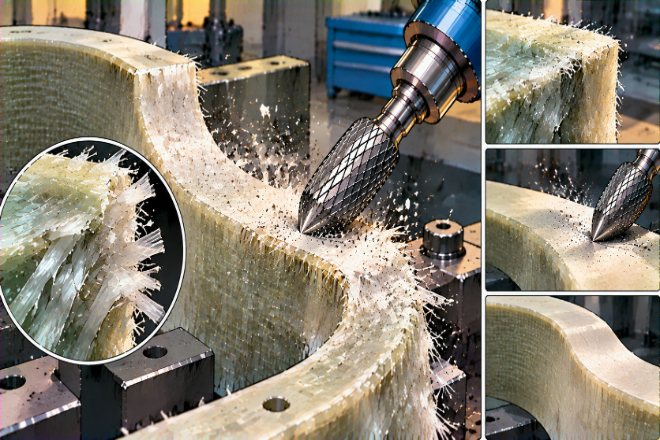
Fiberglass is different from common metals.
Instead of being a solid material with a uniform structure, fiberglass is a composite made from glass fibers combined with a resin matrix. This structure gives fiberglass excellent strength while keeping the weight low.
However, the same structure creates challenges during finishing. One major problem is fiber tearing.
When a cutting tool does not remove material cleanly, glass fibers may pull away from the surface. This can create rough edges and poor appearance.
Another issue is dust. Fiberglass produces fine particles during cutting and grinding. These particles can affect the working environment and may reduce visibility during finishing operations.
Heat is also a concern. Although fiberglass does not conduct heat like metal, too much friction can soften the resin and reduce surface quality.
A finishing tool must remove material while keeping the surface stable. Complex fiberglass parts create additional challenges.
Many fiberglass components have curved shapes, thin walls, holes, or irregular edges. These areas require controlled cutting to prevent cracking or unwanted damage.
For manufacturers, the main goals are:
Remove excess fiberglass material
Smooth rough edges
Avoid fiber damage
Maintain part shape
Improve surface quality
Tungsten carbide burrs are useful because they combine hardness with strong cutting performance. They can cut through fiberglass composites while maintaining a stable cutting edge.
However, the wrong burr choice can create problems. A tool that is too aggressive may damage the surface. A tool that is too soft may wear quickly and increase production time.
The correct burr depends on the fiberglass structure, finishing requirement, and application method.
2. Which Tungsten Carbide Burr Shapes Work Best for Fiberglass?
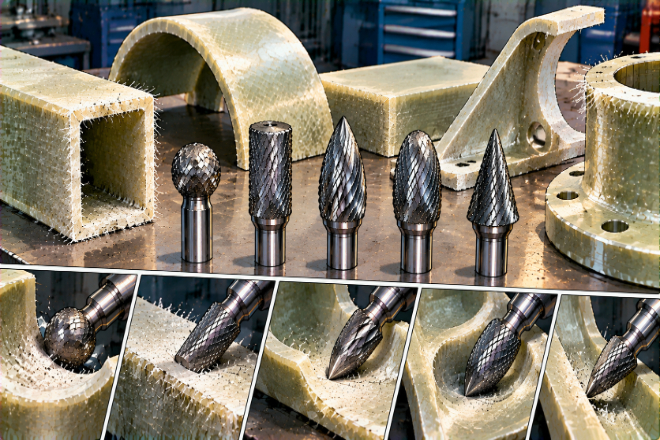
The shape of the burr affects how easily it can follow fiberglass surfaces. Different fiberglass parts require different burr designs.
1). Ball Burrs
Ball-shaped carbide burrs are useful for curved fiberglass surfaces. Their rounded cutting head allows smooth movement and reduces the chance of creating sharp marks.
They are often used for:
Curved panels
Surface blending
Removing small defects
Smoothing transitions
Ball burrs work well when the goal is controlled finishing rather than aggressive cutting.
2). Cylindrical Burrs
Cylindrical burrs are suitable for flat fiberglass surfaces and edge trimming. They provide stable contact and can remove excess material efficiently.
Các ứng dụng phổ biến bao gồm:
Straight edge cleanup
Surface leveling
Removing extra resin
3). Flame Burrs
Flame-shaped burrs are useful for detailed fiberglass finishing. Their tapered design allows access to narrow areas and changing profiles.
They are helpful for:
Complex shapes
Internal transitions
Detailed edge work
4). Oval Burrs
Oval burrs provide a wider curved cutting surface. They are useful when finishing larger fiberglass areas where smooth movement is important.
5). Cone Burrs
Cone burrs can reach small openings and narrow areas. However, they require careful control because the pointed shape can remove material quickly.
The table below shows common burr choices.
3. How Do Tungsten Carbide Burrs Remove Fiberglass Material?
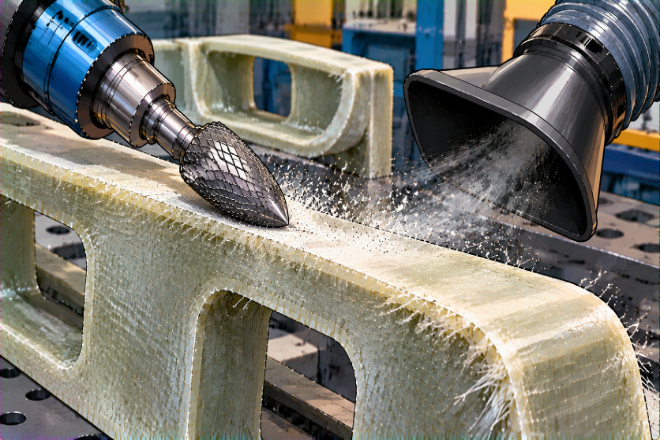
The working principle of a carbide burr is simple. The cutting teeth on the burr remove small pieces of material as the tool rotates.
Unlike sanding tools that mainly wear the surface, carbide burrs cut the fiberglass structure directly. This provides several advantages.
First, they can remove material faster.
Fiberglass finishing often requires edge trimming, hole adjustment, or removing excess resin. A carbide burr can complete these tasks efficiently.
Second, carbide burrs maintain their cutting ability.
Fiberglass contains glass fibers that can quickly wear softer tools. Tungsten carbide provides high hardness, helping the burr maintain performance.
Third, they provide better control.
When the correct burr is used, operators can remove material from specific areas without affecting the entire part.
However, cutting technique matters.
Too much pressure can create:
Excessive dust
Rough edges
Surface damage
Faster tool wear
A light and steady cutting motion usually creates better results. The burr should do the cutting work instead of being forced into the fiberglass.
Keeping the tool moving is also important. Stopping in one area can create uneven surfaces and unnecessary heat.
For automated applications, tool paths should be designed carefully to follow the fiberglass shape. Stable movement helps maintain consistent finishing quality.
4. What Cutting Conditions Should Be Used for Fiberglass Finishing?
Fiberglass requires different cutting conditions compared with metals. The first important factor is speed.
A suitable rotation speed helps the burr cut effectively without creating unnecessary heat. Very high speed may increase friction and dust. Very low speed may reduce cutting efficiency.
The correct speed depends on:
Burr diameter
Fiberglass thickness
Resin type
Finishing goal
Pressure control is also important. Because fiberglass is a layered composite, heavy force may cause fiber separation.
Light pressure allows the burr teeth to remove material more smoothly. Dust control should also be considered.
Fiberglass particles are fine and can spread easily during finishing. Manufacturers should use suitable protection and cleaning methods to maintain a safe working environment.
Tool direction can affect the final surface. Moving the burr smoothly across the edge helps reduce fiber pull-out.
For thin fiberglass parts, extra care is needed. Excessive cutting force can weaken the edge or create cracks. A controlled process is usually better than fast aggressive cutting.
The basic approach should be: Select the correct burr → Set suitable speed → Use light pressure → Maintain steady movement → Inspect the finish
This method improves consistency and reduces rework.
5. How Can Manufacturers Prevent Damage When Using Burrs on Fiberglass?
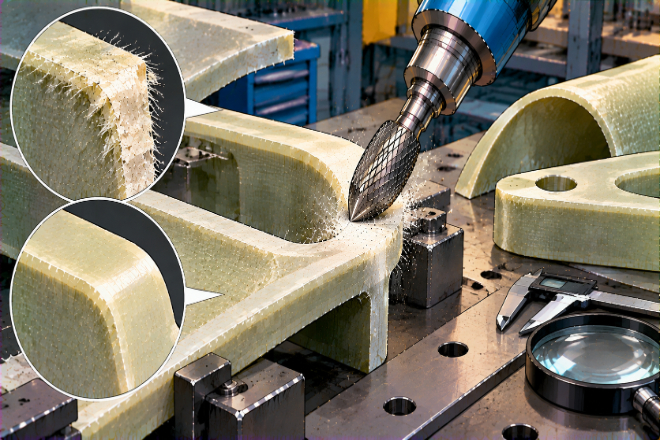
The biggest challenge in fiberglass finishing is avoiding surface damage. A good tool can still produce poor results if the process is not controlled.
The first step is selecting the correct burr. A burr designed for heavy material removal may not be suitable for final surface finishing.
The burr size should also match the part. A large burr may remove too much material from thin fiberglass areas.
A small burr may increase processing time. Tool condition is another important factor. A worn burr may require more pressure, increasing the risk of fiber damage.
Regular inspection helps identify when replacement is needed. The workpiece should also be supported properly.
Thin fiberglass components can move during cutting, which may create uneven edges. A stable fixture improves finishing quality. Cleaning is important as well.
Fiberglass dust can collect around the cutting area and affect visibility. Keeping the surface clean helps operators maintain better control.
For production environments, manufacturers should create standard procedures.
These procedures may include:
Burr selection
Operating speed
Cutting direction
Inspection method
Tool replacement timing
A stable process creates more reliable fiberglass finishing results.
6. When Should Manufacturers Use Tungsten Carbide Burrs for Fiberglass?
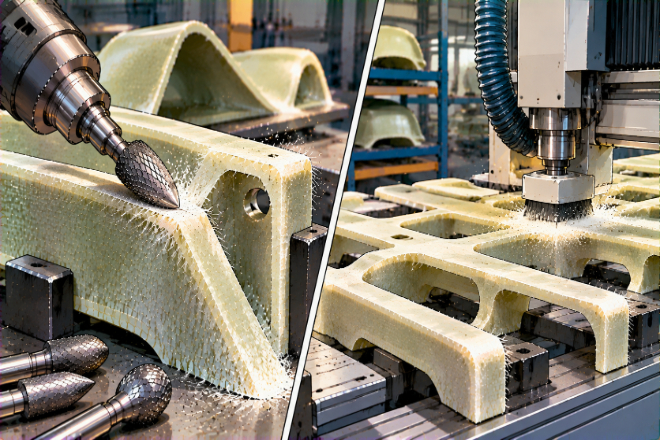
Tungsten carbide burrs are useful when fiberglass parts require controlled shaping and finishing.
Các ứng dụng phổ biến bao gồm:
Edge trimming
Hole adjustment
Removing excess resin
Surface blending
Repair work
Composite finishing
They are especially valuable when manufacturers need flexibility.
For example, a fiberglass component may have a small rough area after cutting. Rebuilding the part is unnecessary.
A carbide burr can remove the unwanted material and restore the surface. However, carbide burrs are not always the only option.
For large-scale production with strict dimensional requirements, specialized cutting systems may provide better automation.
The best choice depends on:
Part size
Required finish
Production volume
Access difficulty
Cost requirements
For repair work, small batches, and complex shapes, carbide burrs provide a practical solution.
 English
  Español
  简体中文
简体中文  Français
  日本語
日本語  한국어
한국어  العربية
  Tiếng Việt