
What Are Carbide Seal Rings?
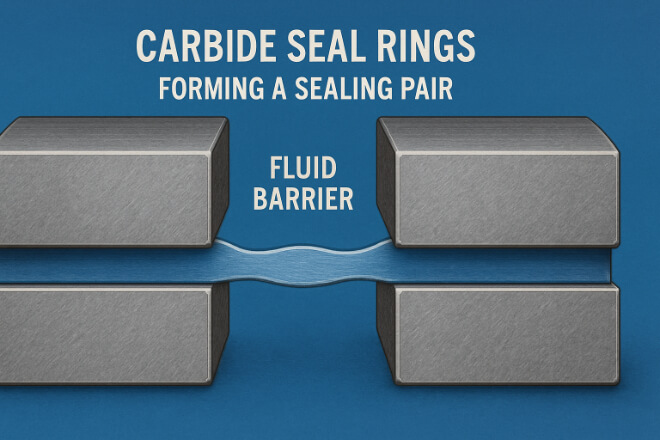
Vòng đệm cacbua are circular components used in mechanical seals to form a tight barrier between rotating and stationary parts.
They prevent leakage of fluids while maintaining pressure and temperature stability.
The two most common types are:
Tungsten carbide seal rings (WC-Co) — extremely hard, tough, and wear-resistant.
Silicon carbide seal rings (SiC) — lighter and more chống ăn mòn but slightly more brittle.
These materials provide a hard, smooth surface that resists abrasion and maintains flatness even under high pressure and temperature.
In most rotating equipment, carbide seal rings are paired with softer counterfaces (like carbon or resin-impregnated graphite) to create a low-friction sealing pair.
How Carbide Seal Rings Reduce Downtime
The main way carbide seal rings reduce downtime is by extending seal life and preventing premature failures.
Below are the key performance mechanisms behind this reliability.
1). Exceptional Khả năng chống mài mòn
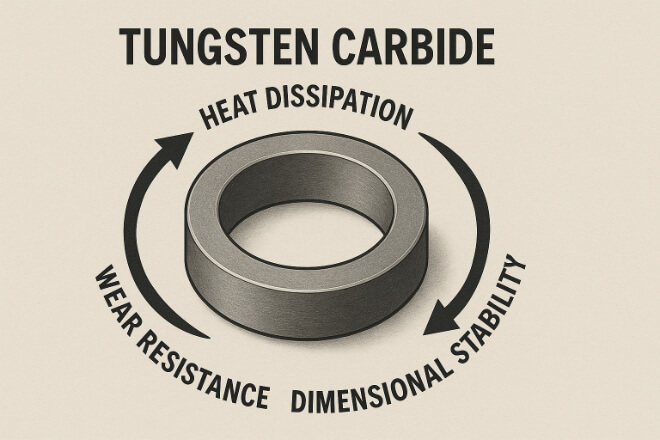
Tungsten carbide has a độ cứng of around 1600–2000 HV, which allows it to resist abrasion from particles in process fluids.
In applications like slurry pumps or chemical mixers, this means far less face wear and fewer replacements.
2). Excellent Thermal Conductivity
Carbide conducts heat efficiently away from the sealing face, preventing local overheating.
This helps maintain stable running conditions and prevents thermal cracking — a major cause of seal failure.
3). Dimensional Stability Under Load
Even at high rotational speeds and pressures, carbide retains its flatness and shape. Stable geometry means better sealing performance and longer life.
4). Corrosion Resistance in Harsh Media
Special grades of tungsten carbide with nickel binders or silicon carbide can resist corrosion from acids, alkalis, and aggressive fluids — reducing chemical damage and downtime caused by seal leakage.
5). Compatibility With Various Fluids
Carbide seals work across a wide range of fluids — from water and oils to chemical slurries — making them a flexible choice for mixed plant environments.
Field Example 1: Slurry Pump in a Mining Operation
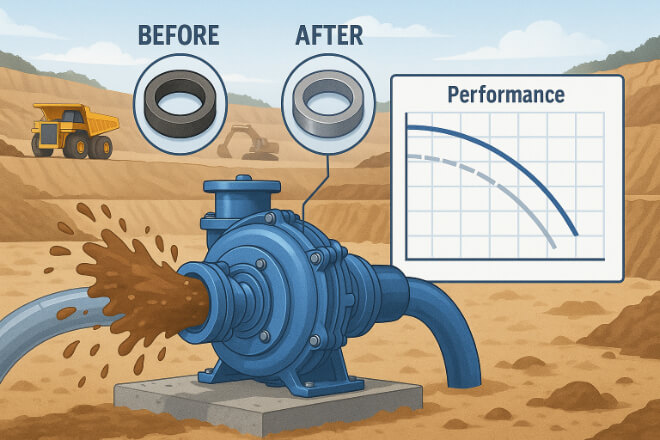
A copper mining plant in South America faced severe seal wear due to abrasive slurry. Each pump seal lasted only 3 weeks before leakage began.
After replacing the standard carbon faces with tungsten carbide seal rings, the service life increased to 12 weeks.
This resulted in:
75% reduction in seal replacements
Fewer shutdowns and maintenance hours
Cost savings of over $150,000 annually
The improved khả năng chống mài mòn of tungsten carbide directly translated into longer uptime and lower maintenance cost.
Field Example 2: Chemical Process Pump
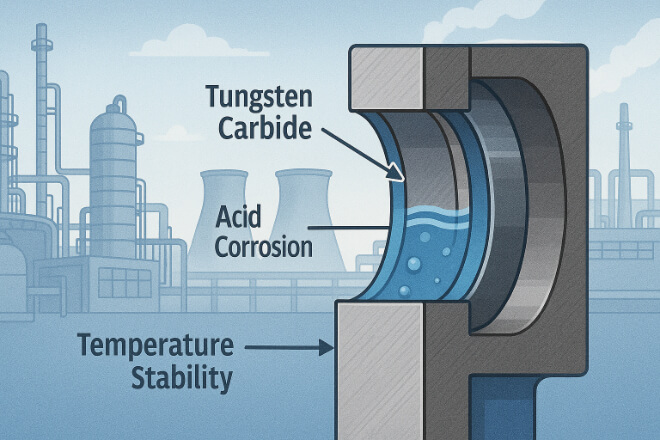
In a chemical plant handling hot acids, ceramic seal rings often failed due to thermal cracking.
After switching to nickel-bonded tungsten carbide rings, the seals lasted four times longer, even under fluctuating temperature cycles.
The plant reported:
No thermal shock failures in 9 months
60% lower seal replacement costs
Improved overall plant reliability
Field Example 3: Power Plant Condensate Pump

A power generation facility used silicon carbide seal rings for condensate pumps operating continuously. Before, seals required replacement every 8 months.
By upgrading to tungsten carbide rings with a precision lapped finish, the service interval extended to over 18 months, cutting planned maintenance frequency by half.
This directly reduced unplanned downtime and increased output reliability.
When to Choose Tungsten Carbide vs. Silicon Carbide
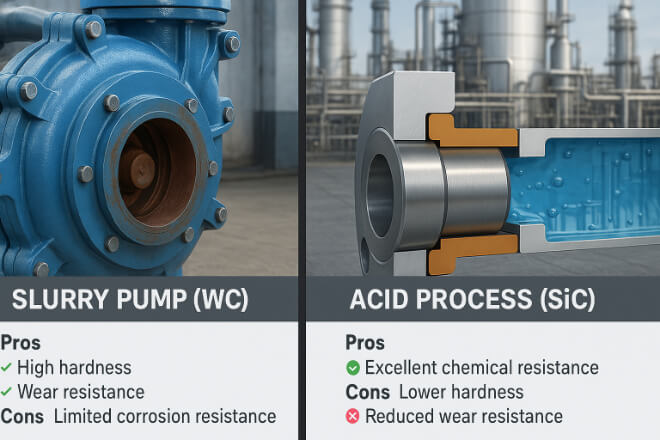
Choosing between tungsten carbide (WC) and silicon carbide (SiC) depends on the working environment. Here’s a simple comparison:
Practical Tips for Maximizing Seal Life
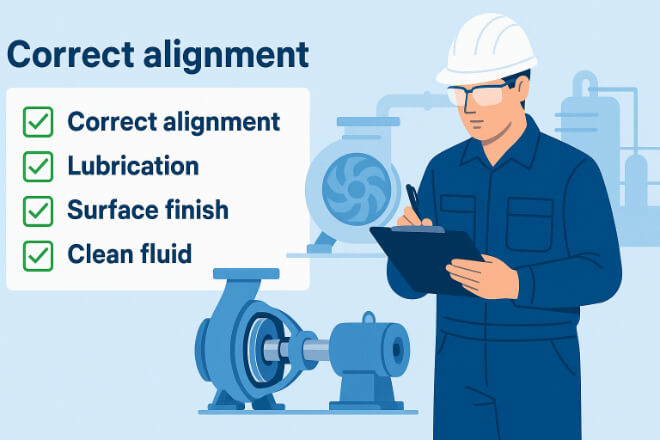
Even with carbide seals, proper installation and handling are vital to achieving maximum uptime:
Ensure flatness and surface finish are within OEM specs (Ra 0.02–0.05 µm).
Avoid dry running; always pre-lubricate seals.
Maintain correct axial alignment and pressure balance.
Implement regular inspection and re-lapping instead of full replacement.
Keep fluid conditions clean and stable to minimize particle impact.
By following these practices, plants can achieve 30–70% longer equipment uptime with carbide seals.
 English
  Español
  简体中文
简体中文  Français
  日本語
日本語  한국어
한국어  العربية
  Tiếng Việt