
Cacbua Vonfram là gì?
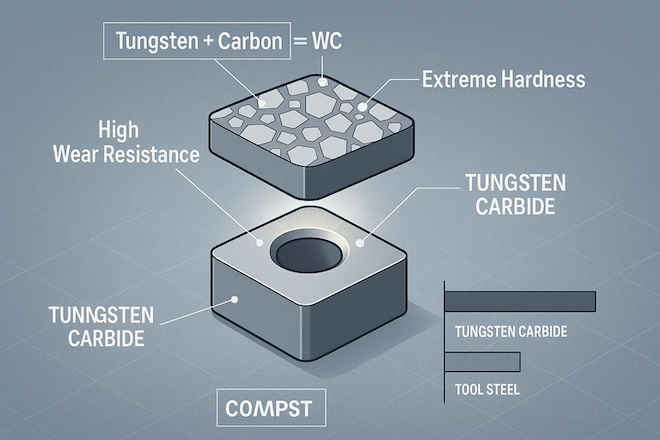
Tungsten carbide is a composite material made of tungsten and carbon, often bonded with cobalt. It is known for:
Độ cứng cực cao
High wear resistance
Excellent heat resistance
Compared to standard tool steels, tungsten carbide tools last much longer and perform better under high-pressure and high-temperature conditions.
Why Tungsten Carbide Tools Are Ideal for Mold and Die Making
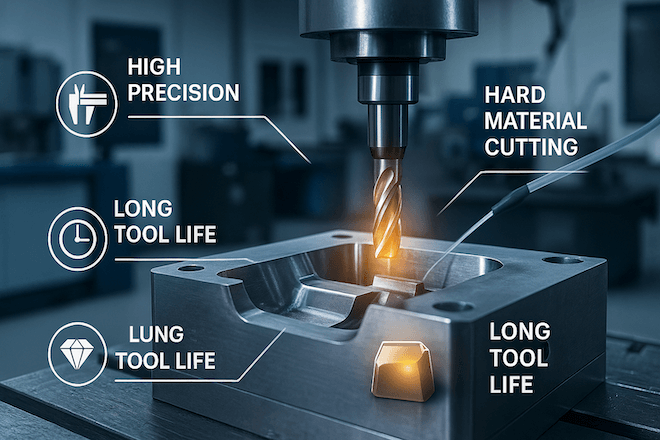
1. Handles Hard Materials
In mold and die manufacturing, materials like hardened steel, graphite, and alloyed metals are common. These materials are difficult to cut. Tungsten carbide tools are strong enough to machine them without quick wear.
2. High Dimensional Accuracy
Molds and dies must have exact shapes and tight tolerances. Carbide tools maintain sharp edges and consistent performance, which ensures precise cutting.
3. Better Surface Finish
Carbide tools can provide smooth surfaces even in difficult materials, reducing the need for polishing or secondary operations.
4. Long Tool Life
Bởi vì của họ độ cứng and heat resistance, tungsten carbide cutting tools last longer. This reduces the need for frequent replacements.
Common Tungsten Carbide Tools Used in Mold and Die Making
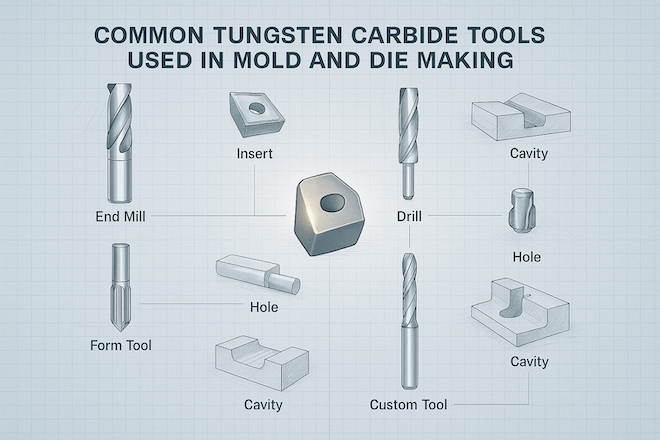
Here are some popular carbide tools used in this field:
| Loại công cụ | Usage |
|---|---|
| Dao phay đầu cacbua | Used for contouring, slotting, and roughing |
| Chèn cacbua | Common in CNC lathes for turning dies |
| Mũi doa cacbua | For finishing holes in mold plates |
| Mũi khoan cacbua | Drilling holes in hard steel or graphite dies |
| Form Tools | Custom-shaped tools for unique mold profiles |
You can explore our full collection of precision tools at Retop’s carbide cutting tool section.
Lợi ích của việc sử dụng dụng cụ cắt cacbua vonfram
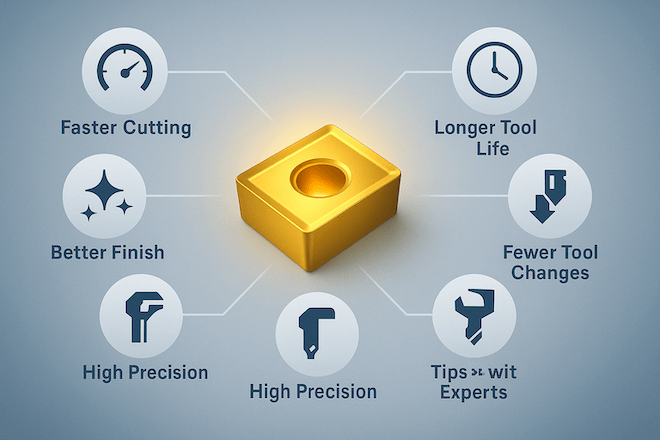
Less Tool Change Time: Longer tool life means fewer machine stoppages.
Lower Production Costs: Higher cutting speed and durability reduce the cost per part.
Improved Efficiency: Carbide tools can cut faster and cleaner, boosting output.
Reliable Performance: Consistent quality, especially important in multi-cavity molds or high-volume dies.
Precision: Perfect for industries that require tight tolerances, such as automotive and electronics.
Applications in Mold and Die Industry
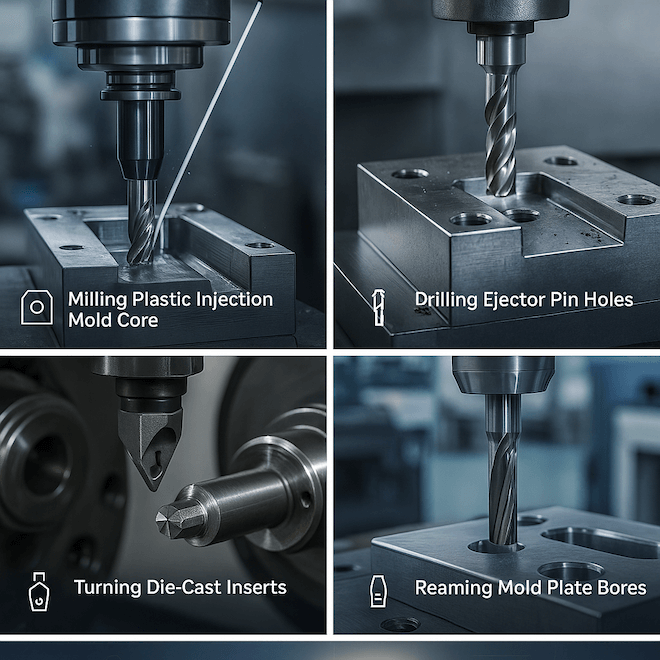
Tungsten carbide tools are used in several mold and die processes:
Injection Mold Making: Carbide tools are used to mill core and cavity areas.
Die Casting: For high-wear areas in dies, like gates and runners.
Punch and Die Sets: Carbide inserts are used in progressive dies for sheet metal.
Plastic Mold Components: Carbide reamers and drills provide tight-fitting parts.
Why Decision Makers Choose Tungsten Carbide

Executives and managers in mold and die shops value:
Consistency in output
Lower tooling costs over time
Fewer production delays
High-quality parts that meet customer demands
Tungsten carbide cutting tools deliver all these benefits, making them a smart investment for companies looking to stay competitive.
Mẹo chọn dụng cụ cacbua vonfram phù hợp
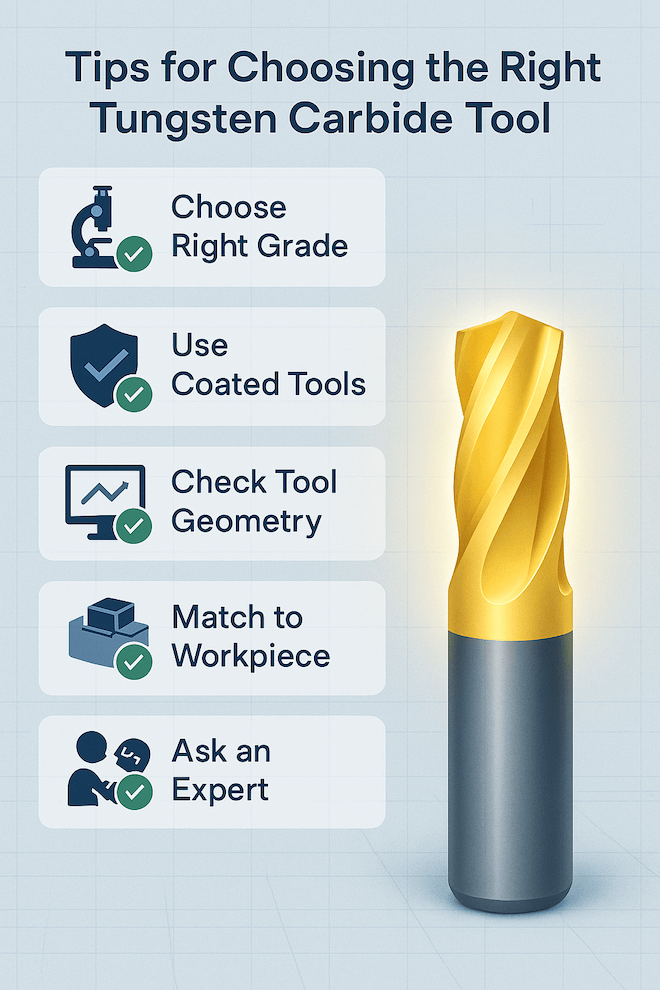
Here’s how to make the best choice:
Know Your Material: Choose the right carbide grade for steel, aluminum, or graphite.
Pick the Right Coating: TiAlN or AlCrN coatings can improve tool life.
Use the Right Tool Geometry: Tool shape matters for surface finish and chip flow.
Consult Experts: Working with trusted suppliers like Retop helps ensure better tool performance and support.
 English
  Español
  简体中文
简体中文  Français
  日本語
日本語  한국어
한국어  العربية
  Tiếng Việt