
1. What Is Material Removal Rate in Milling?
Material removal rate refers to the volume of material removed from a workpiece in a given time during milling.
It is usually influenced by cutting speed, feed rate, depth of cut, and tool performance.
In milling machines, higher MRR means:
Faster production
Lower cost per part
Better machine utilization
However, pushing MRR too high can cause problems such as tool breakage, poor surface finish, and excessive heat.
This is why tool material is critical. Tungsten carbide tips allow manufacturers to safely increase MRR without sacrificing tool reliability.
2. Why Tool Material Matters for Higher Material Removal
Tool material directly affects how much load a milling cutter can handle. When cutting forces increase, weaker materials wear quickly or fail suddenly. This limits how aggressively the machine can cut.
Traditional tool materials often suffer from:
Fast edge wear
Heat softening
Vibration and chatter
Tungsten carbide tips solve these issues because they combine high độ cứng with good độ dẻo dai.
This allows milling machines to run at higher speeds and feeds, which directly increases material removal rates.
3. High Hardness of Tungsten Carbide and Its Impact on MRR
Hardness is one of the main reasons tungsten carbide tips perform well in milling.
Hard tools resist deformation and edge rounding even under heavy cutting loads.
Benefits of high độ cứng include:
Stable cutting edges at high speeds
Ability to cut harder materials
Reduced edge wear during aggressive milling
Because the cutting edge stays sharp longer, operators can increase feed rate and depth of cut. This leads to higher material removal rates without losing cutting control.
4. Wear Resistance and Longer Effective Cutting Time

Wear resistance is critical when trying to improve MRR. As a tool wears, it must be slowed down or replaced, reducing productivity.
Tungsten carbide tips offer:
Strong resistance to abrasive wear
Slower flank and crater wear
Longer time at peak cutting performance
This means milling machines can operate longer at high material removal rates before tool changes are needed.
Over time, this significantly improves total output and reduces downtime.
5. Heat Resistance Allows Higher Cutting Speeds
High MRR often leads to high temperatures at the cutting zone. Many tool materials lose hardness when exposed to heat, limiting cutting speed.
Tungsten carbide tips maintain strength at high temperatures because:
They resist thermal softening
Cutting edges stay stable under heat
Heat-related deformation is minimal
This allows milling machines to run at higher spindle speeds, which directly increases material removal rates while keeping tool wear under control.
6. Improved Stability and Reduced Vibration in Milling

Vibration and chatter are common problems when increasing MRR. Unstable cutting causes poor surface quality and rapid tool damage.
Đầu mũi cacbua vonfram help reduce vibration because:
Their stiffness improves cutting stability
The cutting edge resists micro-chipping
Load is distributed more evenly
Stable cutting allows deeper cuts and higher feed rates. This means more material is removed per pass, increasing overall milling efficiency.
7. Performance in Rough Milling and Heavy Cuts
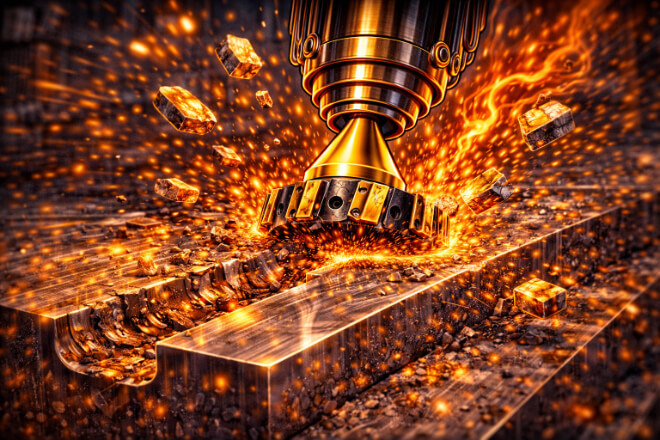
Rough milling focuses on removing large amounts of material quickly. This stage benefits the most from tungsten carbide tips.
In rough milling, tungsten carbide tips:
Handle high cutting forces
Resist edge chipping
Maintain performance under shock loads
Because of this, milling machines can use aggressive cutting parameters, achieving very high material removal rates without frequent tool failure.
9. Cost Efficiency from Higher Material Removal Rates

Although tungsten carbide tips have a higher initial cost, they reduce total machining cost by enabling higher MRR.
Cost benefits include:
Shorter cycle times
Fewer tool changes
Less machine downtime
Higher output per shift
For decision-makers, the improved material removal rate leads to lower cost per part and faster return on investment.
 English
  Español
  简体中文
简体中文  Français
  日本語
日本語  한국어
한국어  العربية
  Tiếng Việt