
1. Advancements in Tungsten Carbide Materials
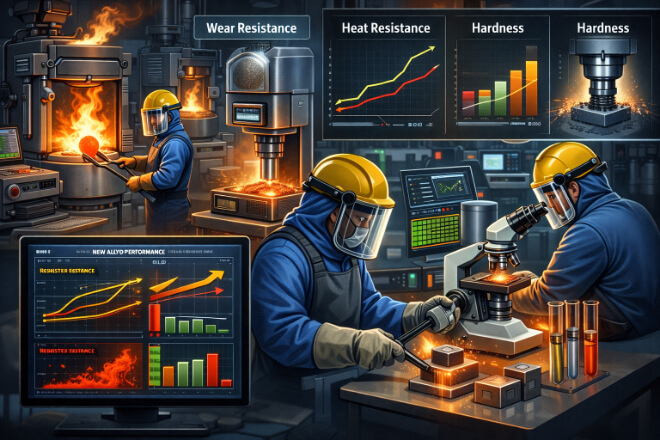
The development of new tungsten carbide materials is driven by the demand for better performance, longer tool life, and improved 耐磨性, heat, and impact.
Over the years, manufacturers have refined carbide compositions to create stronger, more durable materials suited for different applications.
New Tungsten Carbide Alloys:
High-Performance Alloys:
Advances in binder materials, such as cobalt and nickel, are leading to the creation of high-performance tungsten carbide alloys that are more resistant to heat and wear.
These alloys are ideal for applications that require both 韧性 和 硬度, like mining tools and heavy-duty machining.
纳米结构碳化钨:
Nanotechnology is being applied to tungsten carbide to create a more uniform structure, which improves wear resistance and overall durability.
These nano-sized particles help achieve a better surface finish and reduce the rate of tool wear.
Carbide Composites:
Tungsten carbide composites, made by combining tungsten carbide with other materials like ceramics or hard metals, offer improved toughness.
Reducing brittleness and enhancing impact resistance for tools that deal with high-stress operations.
These advancements in material science provide greater versatility and performance for tungsten carbide tips, allowing for more efficient and cost-effective tools.
2. Innovations in Tungsten Carbide Manufacturing Techniques
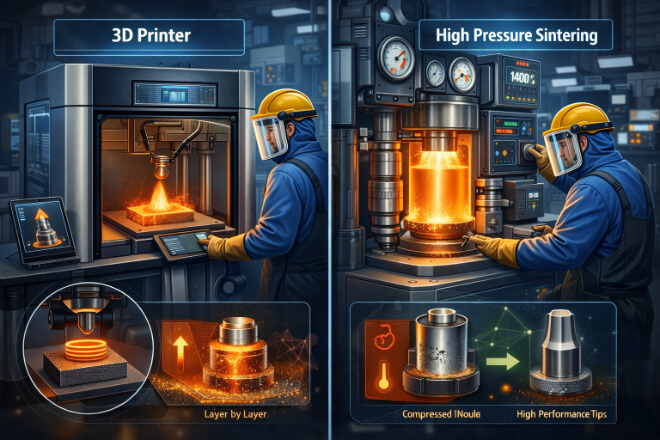
Manufacturing processes for tungsten carbide tips have also evolved significantly, incorporating cutting-edge technologies to enhance product quality, precision, and efficiency.
From 3D printing to sintering advancements, these new methods are pushing the boundaries of what’s possible in carbide manufacturing.
Emerging Manufacturing Techniques:
Additive Manufacturing (3D Printing):
Additive manufacturing, also known as 3D printing, is revolutionizing the production of tungsten carbide tools.
This process allows for the creation of complex, customized carbide components with high precision. It reduces material waste, cuts down production time, and provides more flexibility in design.
Laser Sintering:
Laser sintering is an advanced technique where powdered tungsten carbide is melted and fused together using a laser.
This method allows for high precision in shaping carbide tips, producing parts with intricate designs and enhanced material properties.
High-Pressure Sintering:
High-pressure sintering techniques are being developed to further enhance the 密度 and uniformity of tungsten carbide.
By applying high pressure during the sintering process, manufacturers can create carbide tips with improved 硬度 和 韧性, reducing the risk of cracks and wear.
Coating and Surface Treatments:
Advances in coating technology, such as applying diamond-like carbon (DLC) coatings to tungsten carbide, are improving tool life and performance.
Coatings can enhance the carbide’s resistance to abrasion, corrosion, and heat, making them even more effective in demanding applications.
These innovations in manufacturing techniques help reduce production costs, improve the quality of the final product, and allow manufacturers to meet the growing demands of modern industries.
3. Sustainability Trends in Tungsten Carbide Production
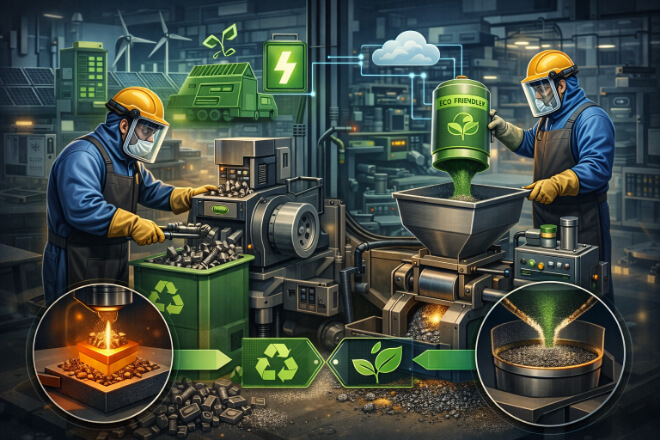
As sustainability becomes increasingly important, the tungsten carbide industry is also adopting greener practices in material sourcing and manufacturing.
With growing concerns about resource depletion and environmental impact, companies are turning to more sustainable methods to produce tungsten carbide tips.
Sustainable Practices in Tungsten Carbide Manufacturing:
Recycling Tungsten Carbide:
One of the most significant sustainability trends is the recycling of tungsten carbide.
Recycled carbide materials are being used to produce new carbide tips, reducing the need for virgin tungsten and minimizing waste.
Companies are investing in technologies that allow for the efficient recovery of carbide from worn-out tools and scrap materials.
Cleaner Production Processes:
Manufacturers are implementing cleaner production processes to reduce energy consumption and carbon emissions.
This includes adopting energy-efficient sintering methods and using renewable energy sources in production plants.
Eco-Friendly Binder Materials:
Research into eco-friendly binder materials is gaining momentum.
Traditional cobalt binders are being replaced with more environmentally friendly alternatives, reducing the environmental footprint of carbide tools.
These sustainability trends are helping companies meet environmental regulations while reducing costs and minimizing their impact on the planet.
4. Customized Tungsten Carbide Tips for Specific Applications
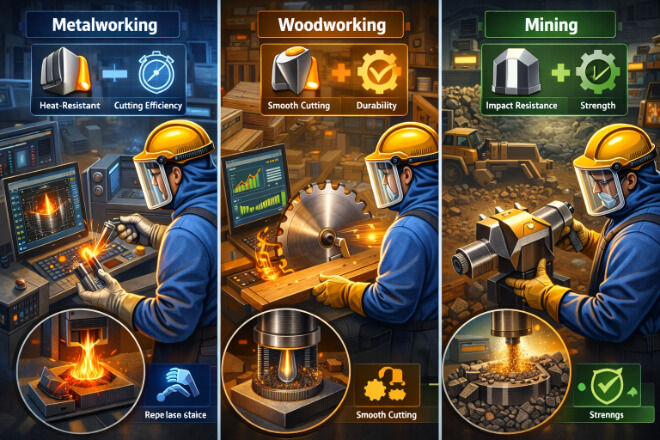
The demand for specialized tools has driven the development of customized tungsten carbide tips designed to meet the unique needs of different industries.
Tailoring carbide tip geometry, size, and material composition to specific applications can significantly improve tool performance.
Customization Trends:
Precision-Cut Geometry:
Manufacturers are now able to design carbide tips with highly specific geometries for various applications.
Custom tip shapes and angles help improve cutting efficiency and reduce wear, allowing tools to perform better in specialized tasks.
Tailored Composition for Different Materials:
By altering the composition of the carbide material, manufacturers can create tips that are optimized for specific materials, such as harder metals, ceramics, or composites.
This ensures better performance and tool longevity for applications in industries like 航天, 汽车, 和 建造.
Improved Performance for Challenging Environments:
Customized carbide tips are also being designed for extreme conditions, such as high-speed machining, high-temperature cutting, and harsh chemical environments.
Tailored grades and coatings ensure that tools perform at their best even in the toughest conditions.
Customization enables industries to get the most out of their tools, improving both cutting efficiency and tool life.
5. Trends in Quality Control and Testing for Tungsten Carbide Tips
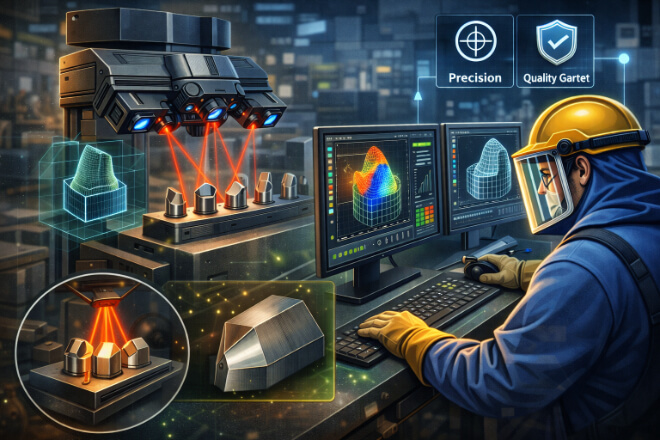
As the demand for precision and reliability in cutting tools grows, so does the need for advanced quality control methods.
Manufacturers are increasingly using state-of-the-art testing and inspection techniques to ensure that tungsten carbide tips meet stringent performance standards.
Emerging Quality Control Techniques:
Non-Destructive Testing (NDT):
Methods like ultrasonic testing, X-ray inspection, and eddy current testing are being used to detect internal defects in tungsten carbide tips without damaging them.
These non-destructive techniques help ensure the quality and integrity of the carbide material.
Laser Scanning and 3D Imaging:
Advanced laser scanning and 3D imaging technologies are being employed to inspect the geometry and surface quality of carbide tips with high precision.
These technologies enable manufacturers to identify defects and imperfections that may not be visible to the naked eye.
Performance Testing:
Manufacturers are conducting rigorous performance testing on tungsten carbide tips to simulate real-world conditions and assess how they perform under stress, heat, and wear.
These tests help ensure that the tips will perform reliably in their intended applications.
Quality control innovations are ensuring that tungsten carbide tips maintain consistent performance and meet the highest industry standards.
6. Cost Considerations in Tungsten Carbide Manufacturing
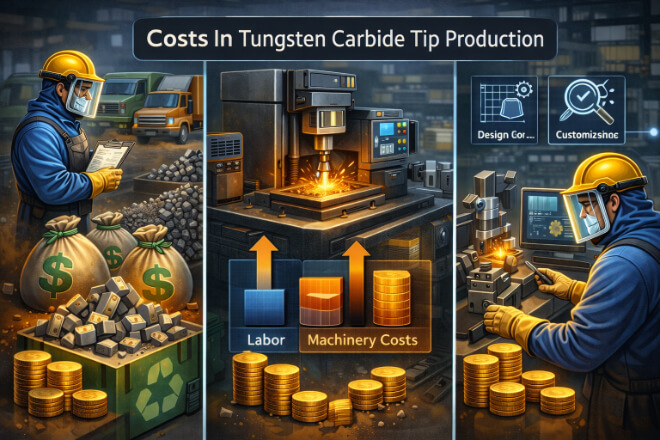
As tungsten carbide materials and manufacturing techniques evolve, so do the associated costs.
It’s important to understand the factors influencing the cost of carbide tools to make informed decisions when purchasing them for industrial applications.
Cost Factors to Consider:
材料采购:
The cost of raw materials, including tungsten and binder materials, impacts the final cost of tungsten carbide tips. Fluctuations in the price of tungsten can affect the overall cost of production.
制造流程:
Advanced manufacturing techniques, such as additive manufacturing or high-pressure sintering, may come with higher upfront costs but can offer cost savings in the long term by improving tool performance and reducing waste.
Tool Customization:
Custom carbide tips tailored to specific applications can increase the cost, but they also provide better performance, potentially reducing tool replacement and downtime.
While the initial cost of tungsten carbide tools may be higher, their performance and durability in harsh conditions make them a cost-effective investment over time.
 English
  Español
  简体中文
简体中文  Français
  日本語
日本語  한국어
한국어  العربية
  Tiếng Việt