
Abrasive Particle Size vs Bushing Lifespan: Practical Thresholds

Tungsten carbide bushings are widely used in pumps, compressors, and slurry systems because they resist wear better than most materials.

But even tungsten carbide has limits when abrasive particles are present in the fluid. The size, hardness, and concentration of these particles have a major impact on bushing lifespan.

This article explains how abrasive particle size affects wear, what thresholds decision-makers should watch, and how to reduce damage in real applications.

Why Abrasive Particle Size Matters for Tungsten Carbide Bushings
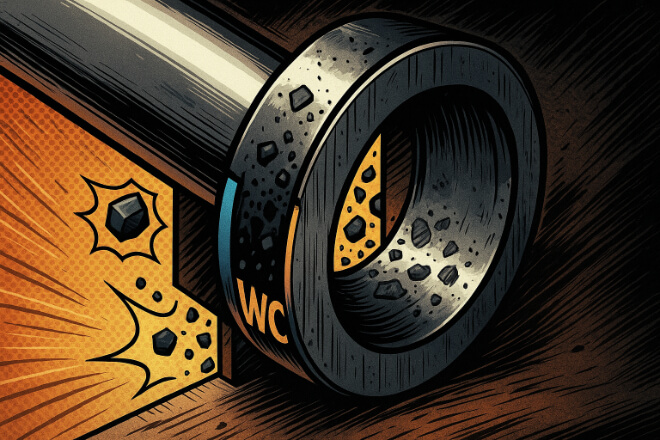
Abrasive wear happens when hard particles slide between the shaft and the bushing surface. Tungsten carbide is extremely hard, but once particles become large enough, they act like cutting tools.

1). Bigger Particles = Faster Wear

  • Large particles create deeper scratches

  • They interrupt lubrication film

  • They increase friction and heat

2). Small Particles Are Still Harmful

Even fine particles can remove material slowly but continuously, especially in high-speed service or boundary lubrication.

How Particle Size Affects Wear Mechanisms
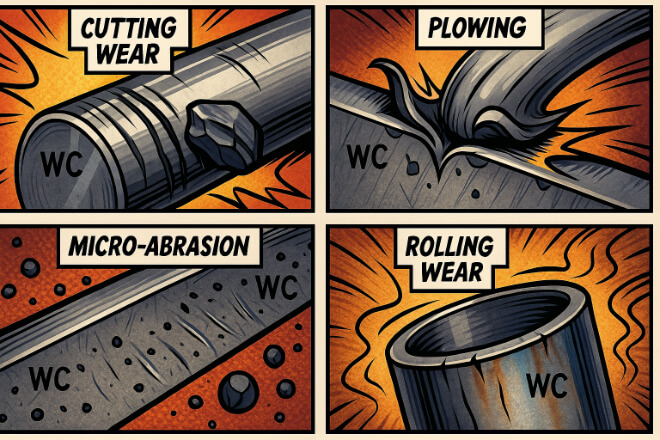
Abrasive wear is not a single mechanism—it changes depending on particle size and 硬度. WC bushings typically experience:

  • Cutting Wear: Large particles cut directly into the surface.

  • Plowing Wear: Medium particles push material aside, forming ridges.

  • Micro-Abrasion: Small particles form very fine scratches.

  • Rolling Wear: Round particles roll instead of cutting, reducing wear rate.

粒度Wear MechanismEffect on WC Bushing
Large (>150 μm)切割Rapid, severe wear
Medium (50–150 μm)PlowingModerate wear, grooves
Fine (<50 μm)Micro-abrasionSlow but continuous wear
Very fine (<10 μm)Rolling / polishingLow wear unless high concentration

Particle Size Thresholds That Impact WC Bushing Lifespan

Different industries operate with different fluid cleanliness levels. Below is a general guideline for tungsten carbide in abrasive service.

粒度Risk LevelExpected Impact
< 25 μm低的Mostly fine polishing wear
25–75 μm中等的Noticeable wear over time
75–150 μm高的Deep scoring, shorter lifespan
> 150 μmSevereRapid wear, early failure

These thresholds can shift depending on:

  • System pressure

  • Particle hardness

  • Shaft speed

  • Lubrication quality

  • Bushing geometry

How Particle Hardness Influences Wear Severity
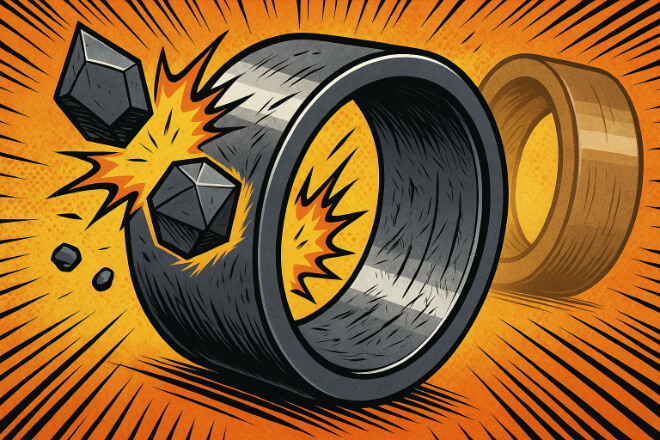
Particle size is only part of the story. Hardness determines how easily a particle can cut tungsten carbide.

Hardness Comparison (Typical Values)

  • Silica sand: 1100–1200 HV

  • Alumina: 1500–2000 HV

  • Tungsten carbide: 1600–2000 HV

When particles approach or exceed WC 硬度, wear becomes much more aggressive.

Particle TypeRelative HardnessWear Risk
Silica (sand)Lower than WC缓和
AluminaEqual or higher高的
Quartz slurryClose to WCHigh to severe
Metal debrisVariesCan cause scoring or gouging

Concentration: Why Even Small Particles Become Dangerous in Large Numbers
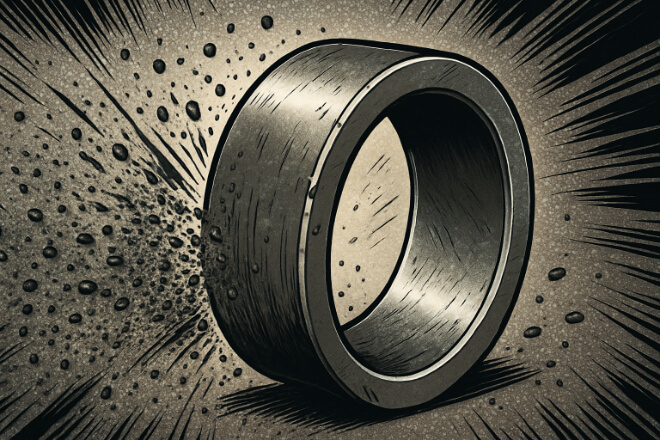
A single particle may not damage a WC bushing, but millions of particles passing through the gap continuously can act like a sandblasting system.

High Concentration Causes:

  • More particle impacts per second

  • Faster breakdown of the lubrication film

  • Increased surface temperature

  • Accelerated wear groove development

High-speed pumps and agitators are especially sensitive to particle concentration.

Real-World Wear Patterns Caused by Different Particle Sizes

Every abrasive environment leaves a unique signature on the bushing bore.

Typical Wear Patterns

粒度Typical Wear PatternInterpretation
< 25 μmFine matte surfaceMicro-abrasion
25–100 μmVisible groovesPlowing wear
100–200 μmDeep scratchesCutting wear
> 200 μmChunk removal, heavy scoringSevere damage

How to Reduce Abrasive Wear in Tungsten Carbide Bushings
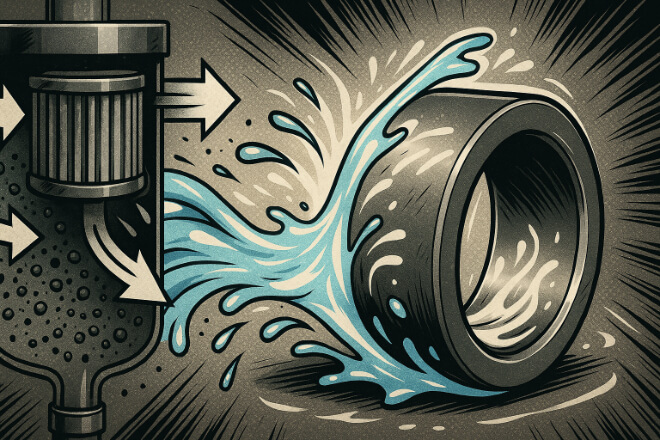
Reducing wear does not always require redesigning the system. Often, small process improvements make a big difference.

Key Strategies

  • Install better filtration or sediment traps

  • Reduce clearance to limit particle ingress

  • Choose harder grades of tungsten carbide

  • Use smooth, well-polished shaft surfaces

  • Improve lubrication flow

  • Avoid pump cavitation, which pulls particles into the gap

Choosing the Right WC Grade for Abrasive Slurry Service

Different WC grades offer different levels of 耐磨性. For abrasive environments, finer grain sizes and higher hardness are usually preferred.

WC Grade TypeBest Used ForNotes
Fine-grain WC-CoSevere abrasion硬度极高
Submicron WCHigh-velocity slurry优异的耐磨性
WC-NiCorrosive slurry耐腐蚀性能好
Binderless WCExtreme abrasionHighest hardness

结论

Abrasive particle size is one of the most important factors affecting tungsten carbide bushing lifespan.

By understanding how particle size, hardness, and concentration interact, operators can set practical thresholds for filtration, clearance, lubrication, and WC grade selection.

With the right controls, bushing life can be extended significantly even in harsh slurry environments.

如果您想了解任何公司的更多详细信息,请随时 联系我们。 

发表回复

您的邮箱地址不会被公开。 必填项已用 * 注意