
Understanding Why Cracks Happen in Tungsten Carbide

Tungsten carbide is very hard, but also brittle. This means it can resist wear but cannot absorb strong impact or heavy stress.
When a bushing faces force it was not designed for, cracks can form, especially near edges or thin walls.
Key Characteristics That Influence Cracking
Root Cause: Improper Press-Fit Conditions
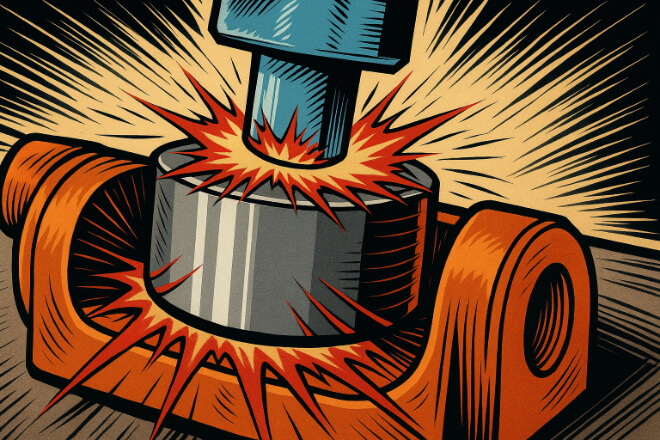
Press-fitting is a common installation method, but too much interference or uneven force can create high hoop stress in the bushing. This stress builds up and leads to cracks after installation or during operation.
1). Signs of Press-Fit Cracking
Cracks forming around the outer surface
Bushing becomes tight or distorted
Chipping at the edges
Sudden failure after startup
2). Common Press-Fit Mistakes
Root Cause: Misalignment Between Shaft and Housing

If the shaft is not centered inside the bushing, the load becomes uneven. One side carries more pressure, leading to bending stress and surface cracks.
1). Symptoms of Misalignment Cracking
Wear marks on only one side
Out-of-round wear pattern
Early vibration
Vertical or angled cracks along the bore
2). Typical Misalignment Sources
Shaft machining errors
Housing bore not perpendicular
Machine frame distortion
Bearing seat damage
Root Cause: Thermal Shock and Temperature Stress
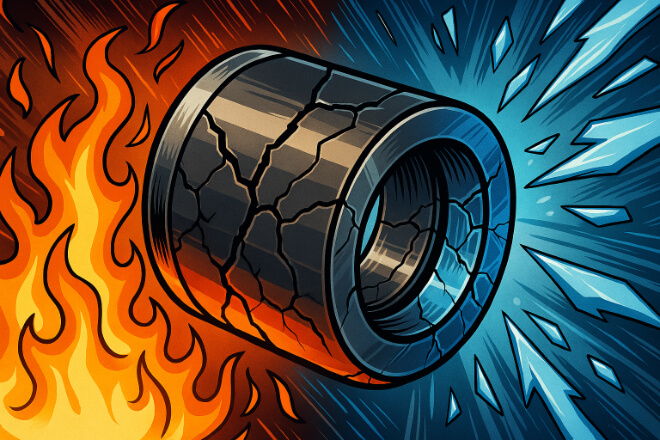
Tungsten carbide does not expand as much as steel or cast iron. If temperature changes quickly, the bushing can crack from thermal shock.
This often happens in pumps running hot fluid or experiencing sudden cooling.
1). Temperature-Related Crack Conditions
Rapid cool-down from cold water during flushing
Running dry, then sudden cooling from fluid
Heating due to friction from poor lubrication
2). Recommended Thermal Limits
Root Cause: Corrosion and Binder Attack
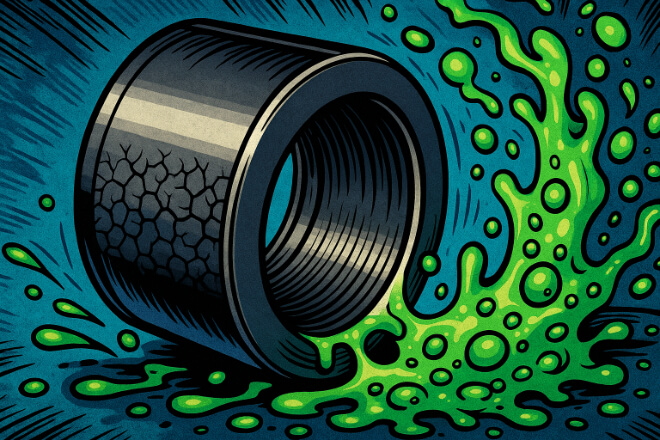
Although tungsten carbide is stable, its binder metal (Co or Ni) is vulnerable in certain fluids.
If the binder corrodes, the structure weakens. Cracks then form under normal load because the material loses toughness.
1). Fluids That Increase Cracking Risk
High-chloride water
Acidic or low-pH fluids
Strong alkaline cleaners
Saltwater with high oxygen content
2). How Binder Attack Leads to Cracking
Corrosion begins at the binder.
Grain boundaries weaken.
Micro-cracks form.
Cracks grow under load.
Root Cause: Impact and Handling Damage
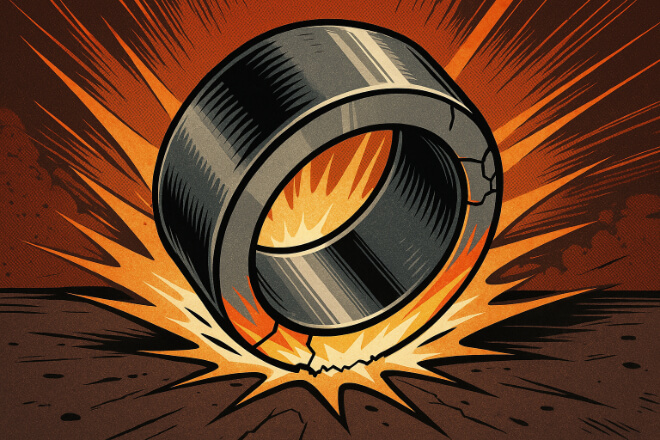
Tungsten carbide chips easily if dropped or hit. Many cracks start before the bushing is even installed due to poor handling during shipping, storage, or unpacking.
1). Common Handling Mistakes
Dropping the bushing on a hard surface
Allowing bushings to collide with each other
Using metal tools that strike the edges
Storing without padding
2). Early Crack Indicators
Small chips around the edge
Hairline cracks visible under magnification
Slight deformation at corners
 English
  Español
  简体中文
简体中文  Français
  日本語
日本語  한국어
한국어  العربية
  Tiếng Việt