
1. What Types of Plastic Parts Can Carbide Trimming Tools Finish?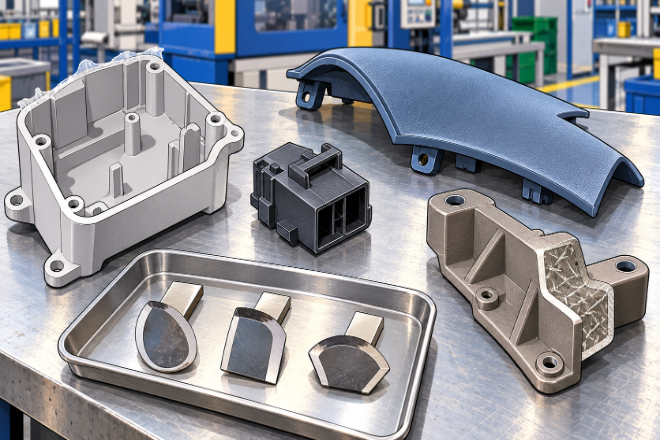
أدوات تشذيب الكربيد are useful for different plastic finishing tasks, from removing thin flash to cleaning small openings.
The exact application depends on the plastic grade, part design, and amount of material that needs to be removed.
Injection-Molded Plastic Components
Injection molding can leave thin excess material along parting lines, around openings, or near small features. This excess material is known as flash.
A suitable carbide trimming tool can remove flash from selected areas without changing the main shape of the component.
This is useful for plastic housings, clips, covers, and other molded parts that need to fit together correctly.
However, flash thickness can vary. If the tool removes too much material, it may damage the edge or change the dimensions of the part. Manufacturers should check the molding process as well as the trimming operation when flash becomes inconsistent.
Electronic Connector Housings
Electronic connectors often contain small openings, thin walls, and detailed shapes.
Even a small piece of unwanted plastic can interfere with assembly or prevent another component from fitting correctly.
Small carbide trimming tools can reach selected areas and remove minor defects. Tool diameter and cutting profile matter because the surrounding plastic features may be delicate.
The goal is to remove the unwanted material without scratching nearby surfaces or widening an opening beyond its specified size.
السيارات Plastic Parts
Automotive manufacturing uses plastic for interior panels, electrical housings, clips, covers, and many other components.
After molding or machining, some parts need additional edge finishing before assembly. A suitable carbide trimming tool can remove small amounts of excess material and help produce a more consistent edge.
For thin panels and flexible parts, proper support is essential. If the component moves during trimming, the tool may leave an uneven edge or cut into an area that should remain untouched.
Glass-Filled Engineering Plastics
Some engineering plastics contain glass fibers or other fillers to improve strength, stiffness, or heat resistance.
These materials can be more abrasive than unfilled plastics. A suitable carbide trimming tool may offer better مقاومة التآكل than many conventional steel tools, particularly during repeated finishing operations.
Manufacturers should still select the tool based on the exact material grade and cutting conditions. Reinforced plastics may require different tool geometry and maintenance intervals from ordinary plastic parts.
2. How Should Manufacturers Choose Carbide Trimming Tools for Plastic?
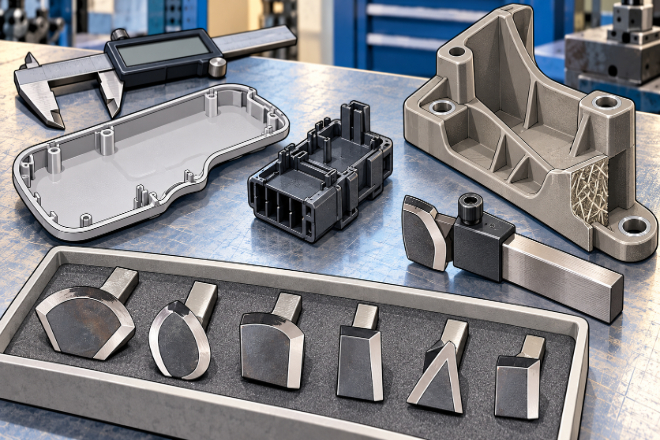
The best tool is not necessarily the one with the highest صلابة or the most cutting edges. It is the one that removes unwanted material cleanly without damaging the plastic or slowing down production.
Before selecting a tool, consider the following factors.
Plastic type: ABS, nylon, polycarbonate, POM, and glass-filled plastics have different cutting behaviors. The tool should match the actual resin and filler content.
Cutting edge: A sharp, suitable edge helps cut plastic cleanly instead of pushing or dragging it. The required edge design depends on the material and the type of defect.
Flute design: Flutes provide space for chips to leave the cutting area. Suitable chip clearance helps reduce material buildup and supports stable cutting.
Tool diameter: Small tools can reach narrow openings, but they may be more sensitive to vibration and tool deflection.
Tool coating and surface finish: A polished cutting surface may help reduce material buildup in suitable plastic applications. A coating should be chosen only when it fits the material and cutting conditions.
Production volume: A tool for occasional manual finishing may not be the best choice for automated, high-volume production.
The machine and fixture also matter. A sharp tool cannot deliver consistent results if the workpiece is poorly supported or the spindle has excessive runout.
3. How Can Manufacturers Prevent Plastic Parts from Melting or Deforming?
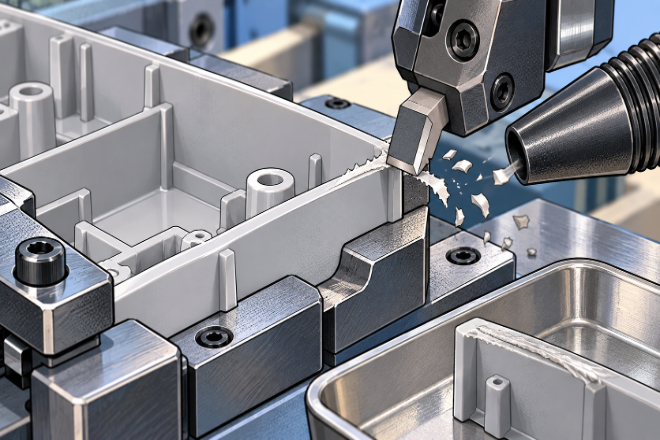
Plastic does not respond to cutting heat in the same way as metal.
Some plastics soften at relatively low temperatures, and thin features can change shape when exposed to excessive heat or cutting force.
The good news is that several practical steps can help reduce these risks.
Use Suitable Cutting Speeds and Feeds
Higher speed does not always mean better performance. If the tool rubs against the plastic instead of cutting it cleanly, friction can cause heat buildup.
Follow the tool guidance as a starting point, then test the settings on representative parts.
The correct speed and feed depend on the plastic grade, tool geometry, machine, and amount of material being removed.
Keep the Cutting Edge Sharp
A dull tool may push, smear, or tear the plastic rather than produce a clean cut. It can also increase heat and leave rough edges.
Inspect the cutting edge at planned intervals. Replace or service the tool when wear begins to affect the finished part.
Secure Thin Plastic Components
Thin walls and flexible parts can bend under cutting pressure. If the workpiece moves, the tool may remove too much material or leave marks on the surface.
Use a suitable fixture to support the part close to the cutting area. Delicate features may need extra support to prevent movement during trimming.
Remove Chips Effectively
Plastic chips can collect around the cutting edge and affect the finish. In some materials, heat and pressure can cause chips to stick to the tool.
Use suitable chip removal and extraction methods for the material and machine. Inspect the tool if material buildup appears, rather than continuing to cut with a contaminated edge.
4. How Do Carbide Trimming Tools Improve Production Efficiency?
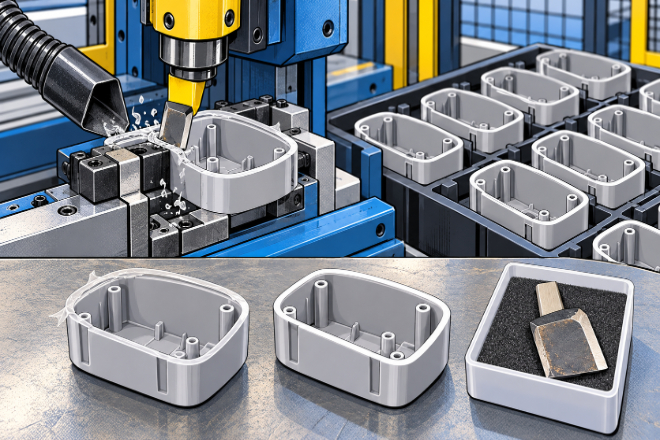
Plastic trimming may take only a short time on each part, but small delays can add up across a large production run.
If operators must remove flash by hand, replace tools too often, or correct damaged edges, the finishing stage can become a bottleneck.
A suitable أداة تشذيب الكربيد can help make this stage more predictable.
Less Manual Finishing
When a tool removes flash and unwanted material cleanly, workers may spend less time on sanding, scraping, or repeated trimming.
Manual finishing may still be needed for certain shapes, but reducing avoidable handwork helps keep the production process moving.
More Consistent Results
A suitable tool and stable machining program can help produce similar edges across a batch of parts.
This is especially useful for components that must fit together during assembly. However, consistency also depends on molding quality, fixture design, tool wear, and machine condition.
Fewer Unplanned Tool Changes
Carbide’s wear resistance can be valuable when the same finishing operation is repeated many times.
For abrasive, filled plastics, suitable carbide tools may maintain useful cutting performance longer than conventional steel alternatives.
Tool life should be measured in production rather than assumed. Track the number of acceptable parts produced before wear affects quality.
5. How Can Manufacturers Control the Cost of Plastic Part Finishing?
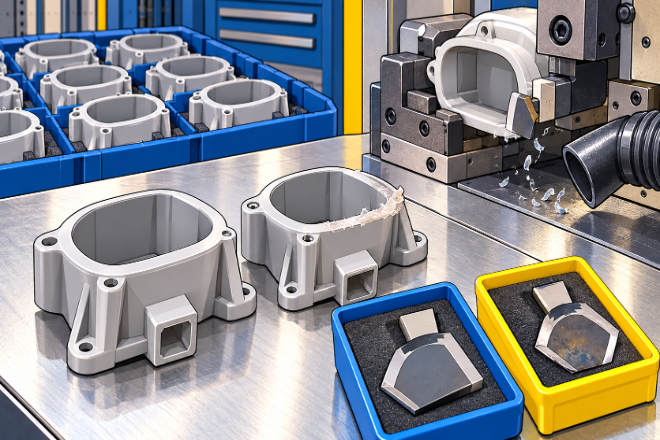
The price of a trimming tool is only one part of the total finishing cost. Tool changes, cycle time, manual cleanup, and rejected parts can have a greater effect on the final cost per component.
To compare options fairly, manufacturers should track four measures:
Tool life: How many parts can be finished before tool wear affects quality?
Cycle time: How long does each trimming operation take?
Rework rate: How often does a part need extra finishing?
Cost per accepted part: What does it cost to produce a component that meets the required standard?
For example, a lower-cost tool may be suitable for a small batch of unfilled plastic parts.
In a high-volume operation involving glass-filled plastic, a more مقاوم للتآكل carbide tool may offer better value if it lasts longer and reduces interruptions.
The aim is not to buy the most expensive tool. It is to find the tool that produces acceptable parts reliably at a reasonable total cost.
 English
 Español
 简体中文
 Français
 日本語
 한국어
 العربية
 Tiếng Việt