
1. Why Are Broken Bolts Difficult to Remove?
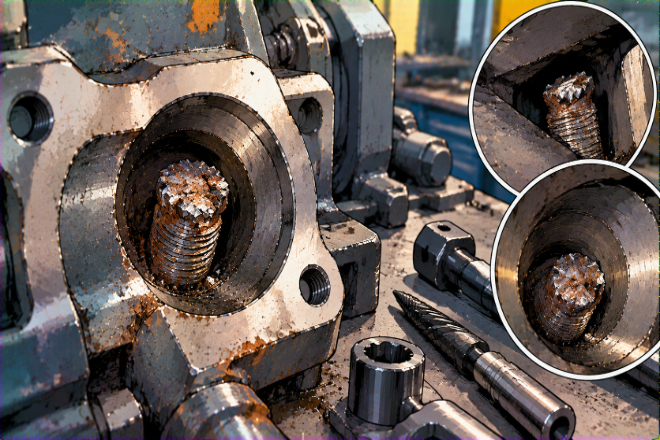
A broken bolt may look like a small problem, but it can create major repair challenges.
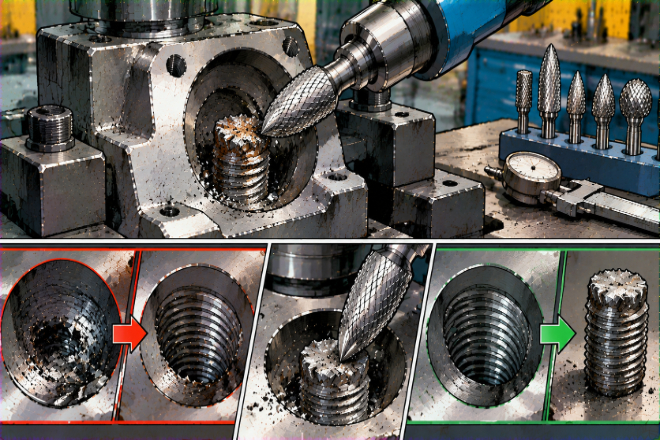
When a bolt breaks, part of it may remain inside a threaded hole. The broken section may be level with the surface, below the surface, or damaged by corrosion and wear.
One of the biggest challenges is access.
If the broken bolt is exposed, it may be possible to remove it with simple tools. However, many broken bolts are located inside housings, engine parts, machinery frames, or other difficult areas.
Another challenge is material صلابة. Bolts are often made from strong steel alloys. After years of use, corrosion, heat, and stress can make removal even harder.
Traditional removal methods may not always work.
For example, drilling can be difficult because the drill may move away from the center of the bolt. This can damage the surrounding threads or the main component.
Welded methods may also be unsuitable in some situations because heat can affect nearby parts.
Common problems during broken bolt removal include:
Limited working space
Hard bolt material
Corrosion buildup
Damaged threads
Risk of component damage
The goal is not simply to destroy the broken bolt. The goal is to remove it while protecting the original part. This is where tungsten carbide burrs can provide an advantage.
Because carbide burrs use cutting teeth instead of simple grinding action, they can remove hard materials in a controlled way.
They are especially useful when the broken bolt needs to be cut, opened, or shaped before removal.
2. How Do Tungsten Carbide Burrs Remove Broken Bolts?
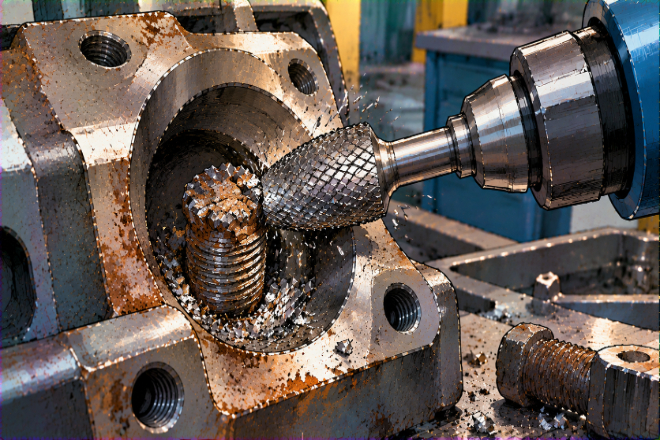
قواطع كربيد التنغستن remove broken bolts through a controlled cutting process. The burr rotates at high speed, and the carbide teeth cut small pieces of metal from the bolt surface.
Unlike softer abrasive tools, carbide burrs maintain sharp cutting edges and can work on hard steel materials.
The removal process usually includes several steps.
1). Opening the Center Area
When a bolt breaks inside a hole, the first step is often creating access.
A small carbide burr can remove the damaged center area or create a starting point for further removal.
This helps improve control during the repair process.
2). Cutting Away the Broken Material
After creating access, the burr can gradually remove the remaining bolt material. Operators can reduce the bolt size until the remaining material becomes easier to remove.
This method is useful when the broken bolt is too damaged for extraction tools.
3). Cleaning the Thread Area
After removing most of the bolt, the burr can help clean leftover material from the surrounding area.
This prepares the hole for thread repair or replacement. The key advantage of tungsten carbide burrs is control.
A skilled operator can remove only the unwanted material while protecting the surrounding component.
However, correct tool selection is important. Using excessive pressure or the wrong burr shape can damage the part.
3. Which Tungsten Carbide Burr Shapes Work Best for Broken Bolt Removal?
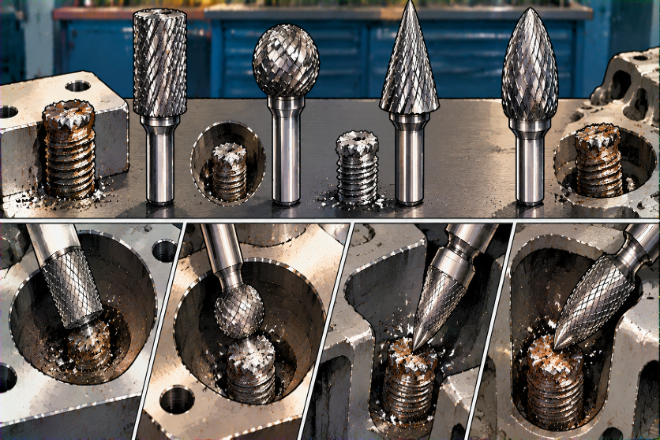
Different broken bolt situations require different burr shapes.
The best choice depends on the bolt size, location, and removal method.
4. What Materials Can Carbide Burrs Remove During Bolt Repair?
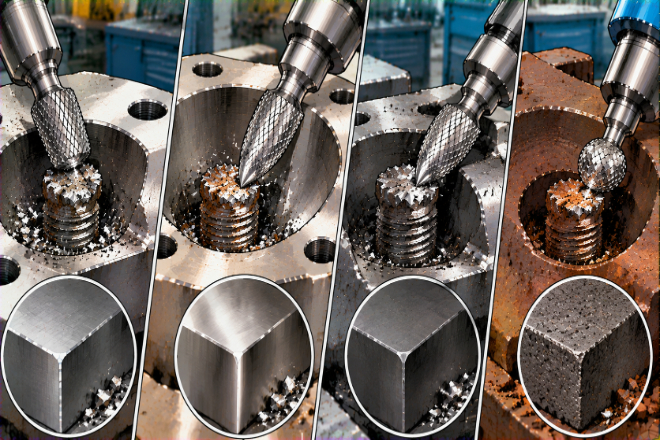
Broken bolts are usually made from steel, but different applications may involve different materials.
قواطع كربيد التنغستن can work on many hard materials, including:
Carbon steel
الفولاذ المقاوم للصدأ
Hardened steel
Cast iron
Alloy materials
For softer materials, the cutting process may require different techniques. The burr selection should match the material.
For example, hardened bolts may require a stronger carbide burr with suitable cutting geometry. Corroded bolts may create another challenge.
Rust and corrosion can make the material uneven. In these cases, controlled cutting helps remove damaged sections without affecting the surrounding area.
The surrounding component material is also important. Removing a broken bolt from aluminum housing requires more care than removing one from a steel structure.
Too much cutting force can damage softer materials.
For repair decision-makers, the important question is not only: “Can the burr cut the bolt?” The better question is: “Can the burr remove the bolt while protecting the expensive component?”
5. How Can You Prevent Damage During Broken Bolt Removal?
Broken bolt removal requires patience and control. The biggest mistake is using too much force. A carbide burr is designed to cut, not to be pushed aggressively.
Excess pressure can cause:
Heat buildup
Tool wear
الضرر السطحي
Poor control
The first step is securing the workpiece. Movement during removal can make accurate cutting difficult. Tool speed is also important.
The correct speed depends on:
Burr size
Material hardness
Bolt condition
Running the burr too fast may create unnecessary heat. Running it too slowly may reduce cutting performance. Another important factor is tool angle.
Keeping the burr stable helps prevent unwanted contact with the surrounding component. Regular inspection during removal is recommended.
Operators should check:
Remaining bolt material
Hole condition
Thread condition
الضرر السطحي
A slow and controlled process usually creates better results than fast aggressive cutting.
6. When Should Manufacturers Use Tungsten Carbide Burrs for Broken Bolt Removal?
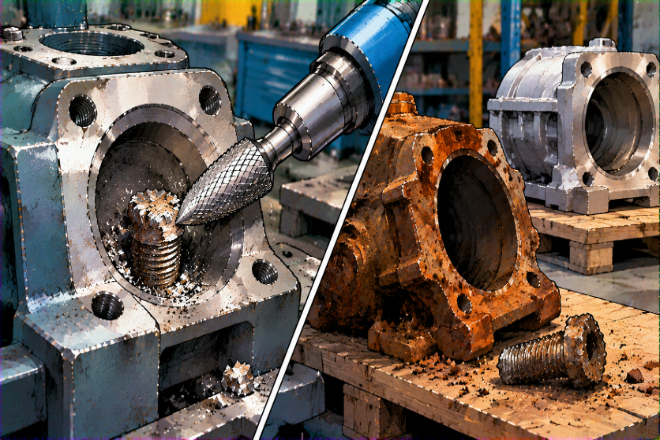
قواطع كربيد التنغستن are valuable repair tools when broken bolts cannot be removed easily with standard methods.
They are especially useful for:
Industrial equipment repair
Machinery maintenance
Automotive repair
Mold repair
Heavy equipment servicing
Component restoration
They provide flexibility because they can work in difficult locations and remove only the damaged material.
For example, a broken bolt inside a valuable machine component may not justify replacing the entire part.
Using a carbide burr can make repair possible and reduce downtime. However, carbide burrs are not always the first choice.
If a bolt can be removed safely with simpler extraction methods, those methods may be faster.
The decision depends on:
Bolt condition
Access space
Component value
Repair requirements
For difficult cases, tungsten carbide burrs provide a practical solution.
 English
  Español
  简体中文
简体中文  Français
  日本語
日本語  한국어
한국어  العربية
  Tiếng Việt