
1. Why Is Inconel Difficult to Machine?
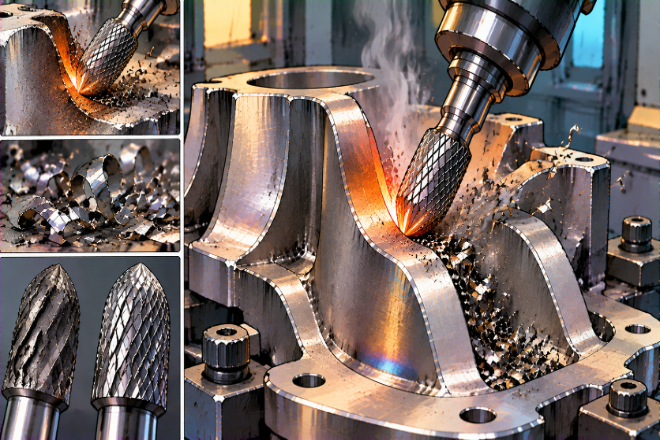
Inconel belongs to the nickel-based superalloy family. It is designed to perform in conditions where many common metals lose strength.
This makes it useful for components that face high temperature, pressure, and stress. However, the properties that make Inconel valuable also make it difficult to machine.
The first challenge is dureza.
During cutting, Inconel can become harder near the surface. This process is called work hardening. If a tool does not cut effectively, the next pass may encounter an even harder surface.
Another challenge is heat.
Inconel has low thermal conductivity compared with many steels. This means heat generated during machining stays near the cutting area instead of moving away quickly.
High heat can reduce burr life and damage cutting edges. Tool wear is another major concern.
When machining Inconel, the cutting edge experiences strong friction and pressure. A standard tool may wear quickly, creating poor surface quality and increasing replacement costs.
The material also produces difficult chips. Inconel chips can be tough and stringy, which may affect cutting stability and surface finish.
For manufacturers, this creates several goals:
Remove material without excessive heat
Maintain stable cutting performance
Reduce vibration
Protect the final surface quality
Fresas de carburo de tungsteno are often selected because carbide provides high dureza y resistencia al desgaste. However, not every carbide burr performs the same on Inconel.
The burr design, cut style, size, and operating speed all affect the result.
A successful Inconel finishing process requires the right combination of tool selection and machining control.
2. Which Tungsten Carbide Burr Shapes Are Suitable for Inconel?
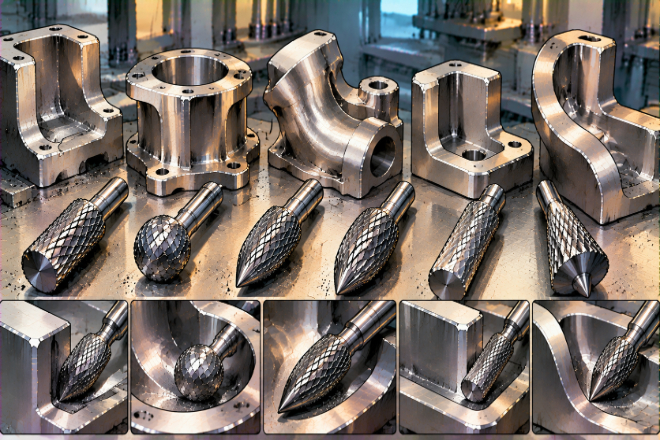
The burr shape determines how the tool contacts the Inconel surface.
Because Inconel is difficult to cut, manufacturers usually need a burr that provides good control rather than simply maximum material removal.
1). Cylindrical Burrs
Cylindrical carbide burrs are useful for flat areas, straight edges, and surface cleanup. They provide stable contact and can remove excess material from accessible areas.
They are commonly used for:
Edge correction
Surface blending
Removing machining marks
However, they may not be the best choice for deep curved areas.
2). Ball Burrs
Ball-shaped carbide burrs work well for curved surfaces and internal transitions. Their rounded cutting head helps distribute cutting force more evenly.
They are useful for:
Curved Inconel components
Internal radius finishing
Smooth surface blending
3). Flame Burrs
Flame-shaped burrs are suitable for complex profiles. Their tapered shape allows better access to narrow areas and changing contours.
They are often used for:
Aeroespacial-style complex parts
Curved edges
Detailed finishing work
4). Oval Burrs
Oval burrs provide a wider curved contact area. They can be useful when finishing larger curved surfaces where smooth movement is required.
5). Cone Burrs
Cone burrs help reach narrow spaces and angled areas.
However, because Inconel requires controlled cutting, excessive pressure should be avoided when using pointed burr shapes.
The table below shows common options.
3. What Cut Style Works Best for Tungsten Carbide Burrs on Inconel?
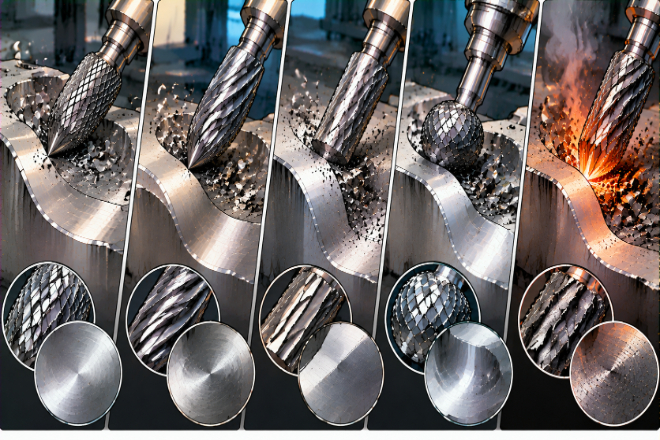
The cutting pattern of the burr has a major effect on performance. For Inconel, aggressive cutting is not always the best approach.
A burr that removes material too quickly can create more heat and increase tool stress. Single-cut burrs have fewer cutting edges and produce larger chips.
They can provide smoother cutting action in some situations, especially when controlled material removal is required.
Double-cut burrs have crossed cutting teeth. They generally produce smaller chips and can provide better operator control during finishing.
For many Inconel applications, double-cut carbide burrs are a common choice because they balance cutting ability and surface control.
Fine-cut burrs are useful when surface quality is more important than fast material removal. They can help create smoother finishes after rough material removal.
However, the cut style should match the operation.
Por ejemplo:
Heavy excess material removal may need a more aggressive cut
Final surface blending may need a finer cut
Detailed areas may require better control
The wrong cut style can lead to:
Increased heat
Faster wear
Mal acabado superficial
Higher machining costs
For decision-makers, the goal should not be choosing the most aggressive burr.
The better choice is the burr that removes material efficiently while maintaining tool life and surface quality.
4. How Can You Control Heat When Using Carbide Burrs on Inconel?
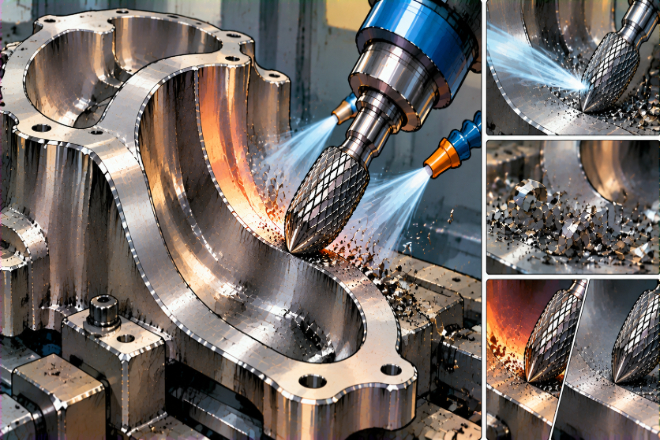
Heat control is one of the most important factors when machining Inconel.
Because the material does not transfer heat away quickly, too much friction can damage both the burr and the workpiece.
The first step is selecting the correct speed. Running a carbide burr too fast can create excessive heat.
The ideal speed depends on:
Burr diameter
Material condition
Cutting pressure
Application type
Pressure control is equally important. Many machining problems happen because operators push harder when the tool removes material slowly.
With Inconel, heavy pressure often creates more heat instead of faster cutting. The burr should cut through its teeth rather than being forced into the material.
Short and controlled passes usually provide better results. Another factor is tool movement. Keeping the burr moving prevents heat from building in one area.
Stopping in one location can create localized overheating. Cooling methods may also help depending on the application.
For some operations, suitable cutting fluids or air cooling can reduce temperature and improve tool life.
Chip removal should not be ignored. Accumulated chips can increase friction and make the cutting process unstable.
Keeping the working area clean helps maintain consistent performance.
A good process is: Choose the right burr → Set suitable speed → Use controlled pressure → Keep steady movement → Inspect the surface
This approach helps reduce unnecessary tool damage.
5. How Do You Extend Carbide Burr Life When Machining Inconel?
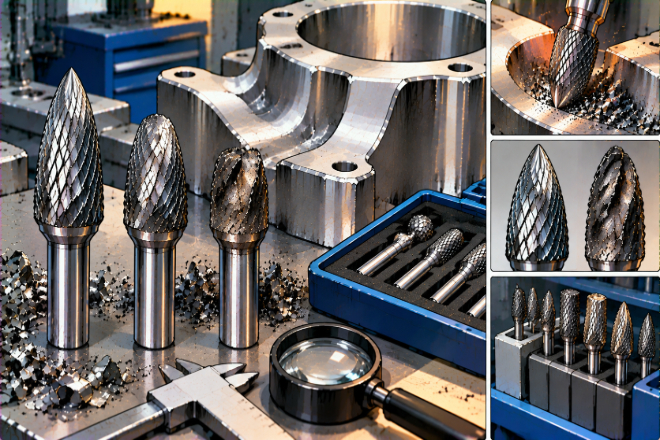
Because Inconel is demanding, tool life management is important. A small improvement in burr life can reduce downtime and replacement costs.
The first step is avoiding incorrect tool selection. Using a burr designed for softer materials may result in rapid wear.
The burr grade and cutting design should match the material. Tool holding also matters. A loose holder creates vibration.
Vibration increases stress on the cutting teeth and may cause early failure. The workpiece should also be secured properly.
Movement during cutting can damage both the burr and the finished surface. Operators should avoid forcing worn burrs to continue working.
A worn burr usually requires more pressure, which increases heat and reduces efficiency.
Regular inspection can identify:
Damaged cutting edges
Reduced cutting performance
Surface quality problems
Storage is another simple but important factor.
Fresas de carburo should be protected from impact because the cutting edges can be damaged before the tool is even used.
For production environments, tracking burr performance can help identify the best tool choice.
Important data includes:
Material removed
Working time
Surface quality
Frecuencia de reemplazo
This information helps manufacturers improve their process over time.
6. When Should Manufacturers Use Tungsten Carbide Burrs on Inconel?
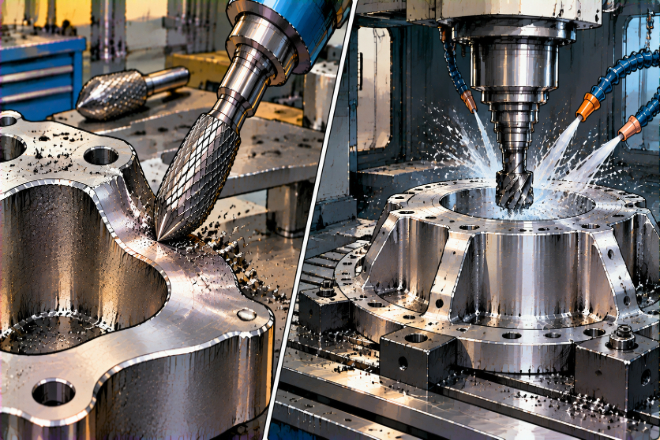
Fresas de carburo de tungsteno are useful for Inconel when flexibility and controlled finishing are needed.
Typical applications include:
Edge blending
Weld cleanup
Surface correction
Removing excess material
Finishing complex shapes
They are especially valuable when a large machining setup is unnecessary. For example, a component may have a small surface defect after welding or machining.
Using a carbide burr can correct the area without remaking the entire part. However, carbide burrs are not always the best option.
If a part requires extremely precise dimensions, dedicated CNC machining tools may provide better accuracy.
The decision should consider:
Required tolerance
Production volume
Surface requirements
Tool access
Total cost
For high-volume manufacturing, automated machining may be more efficient. For repair work, small batches, or difficult areas, carbide burrs provide valuable flexibility.
The right tool is the one that matches the actual production challenge.
 English
  Español
  简体中文
简体中文  Français
  日本語
日本語  한국어
한국어  العربية
  Tiếng Việt