
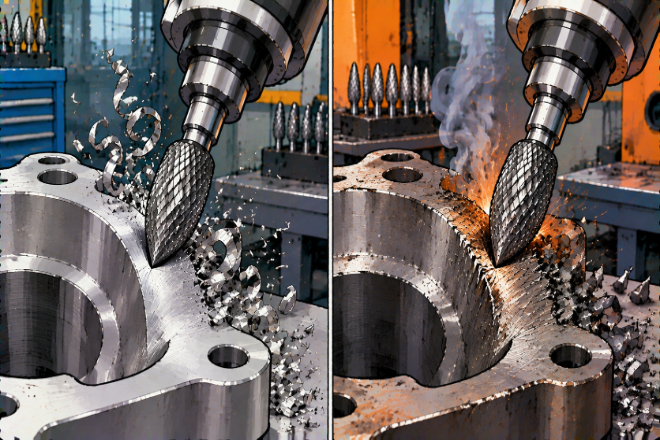
1. Why Does RPM Matter When Using Tungsten Carbide Burrs?
Many users focus on the burr material first.
They look at tungsten carbide because it is hard, résistant à l'usure, and suitable for demanding metalworking applications.
However, even the best carbide burr cannot perform well if it runs at the wrong speed.
RPM, or revolutions per minute, controls how quickly the cutting teeth move through the material.
This affects several important factors:
Cutting efficiency
Heat generation
Finition de surface
Usure des outils
Operator control
A carbide burr is different from a grinding wheel. A grinding wheel removes material through abrasive action.
A carbide burr works like a small rotary cutter with sharp teeth. The teeth need the correct cutting speed to remove material effectively.
When RPM is too low, several problems may appear. The burr may start rubbing instead of cutting. The operator may apply more pressure, which increases vibration and reduces tool life.
When RPM is too high, the cutting edges can become overheated. Excess heat can reduce carbide performance and damage the workpiece surface.
The correct RPM allows the burr to cut smoothly. Think of it like driving a vehicle. Too slowly, and you may not reach the road speed needed for efficient movement. Too fast, and control becomes difficult.
The same idea applies to rotary tools. For companies using tungsten carbide burrs in production, repair, or maintenance work, RPM control is not a small detail. It directly affects total operating cost.
A burr that lasts twice as long can reduce tool replacement, downtime, and labor costs. A burr that creates a better surface finish can reduce additional finishing steps.
That is why RPM selection should be part of the tool selection process, not an afterthought.
2. What Factors Affect the Correct RPM for Carbide Burrs?
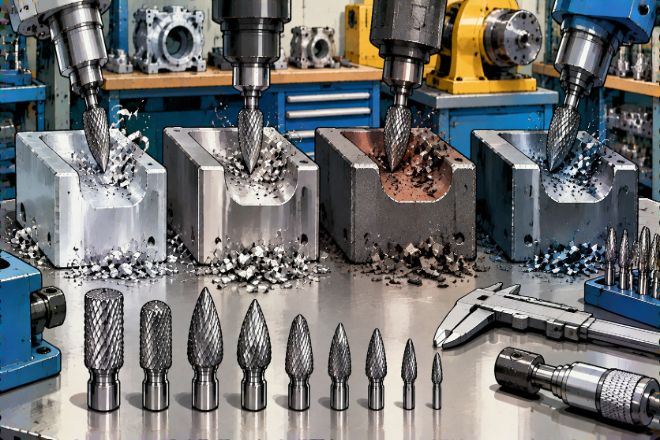
There is no single RPM that works for every tungsten carbide burr. The correct speed depends on several factors.
1). Burr Diameter
Burr size is one of the biggest factors. A small burr has a smaller cutting surface, so it usually requires a higher RPM.
A larger burr has a larger cutting area and moves faster at the same rotation speed, so it normally needs a lower RPM.
Par exemple:
Small diameter burrs → higher RPM
Large diameter burrs → lower RPM
Running a large burr at the same speed as a small burr can create excessive heat and unnecessary stress.
2) Matériau à découper
The workpiece material also changes the recommended speed. Aluminum, stainless steel, cast iron, carbon steel, and hardened alloys all behave differently.
Aluminum can clog cutting teeth if the speed and cutting style are not correct. Stainless steel creates more heat and can work harden during cutting.
Hardened steel requires strong cutting performance and controlled operation.
A simple guide:
3. What Is the Recommended RPM Range for Tungsten Carbide Burrs?
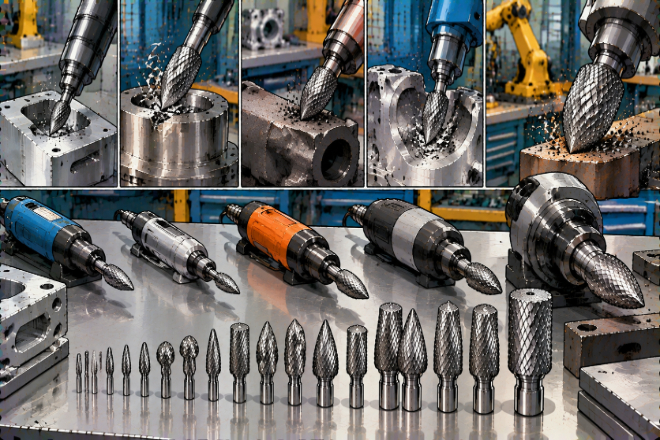
The ideal RPM range depends on burr size and application. Manufacturers usually provide speed recommendations based on burr diameter.
A general guideline:
4. How Can Wrong RPM Damage Carbide Burrs?
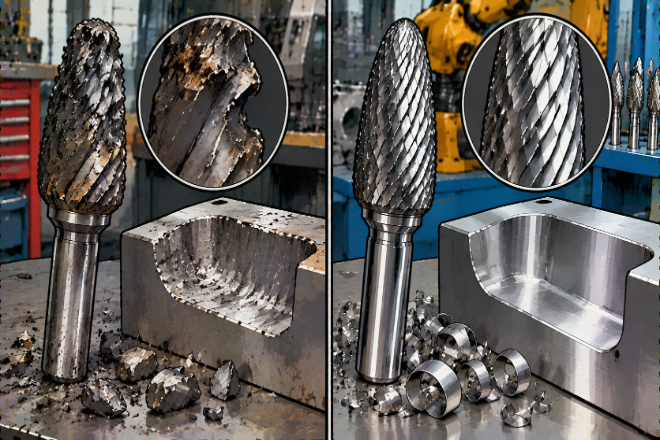
Using the wrong speed does not always create an immediate failure. Sometimes the damage appears slowly.
A burr running too fast may experience:
Surchauffe
Loss of cutting ability
Faster tooth wear
Mauvaise finition de surface
The operator may notice that the burr becomes less aggressive. Instead of cutting efficiently, it starts sliding over the material.
A burr running too slowly creates different problems. The operator may push harder to compensate.
This extra force can cause:
Vibration
Uneven cutting
Broken teeth
Shorter tool life
In automated systems, incorrect RPM can also create unstable results. A robot follows the programmed path, but it cannot feel that the burr is struggling.
The result may be inconsistent edge quality across many parts. For production managers, this is important.
A small RPM mistake repeated across thousands of components can become a major cost issue. The correct speed protects both the tool and the production process.
5. How Do You Optimize RPM for Different Applications?
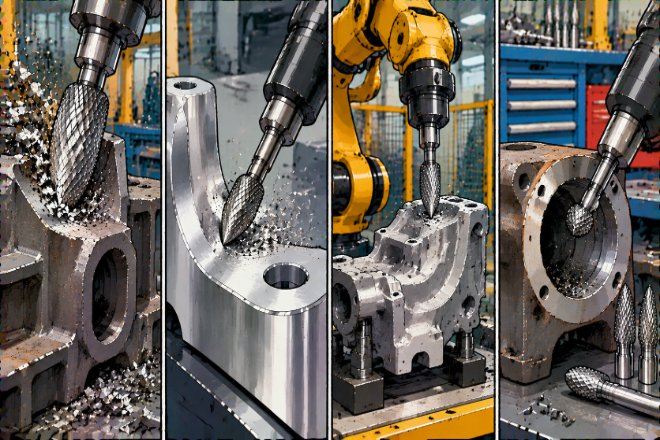
Different jobs require different RPM strategies.
1). Material Removal
When removing a large amount of material, the goal is efficiency. A suitable speed combined with the correct burr shape allows faster cutting without excessive heat.
However, pushing the burr harder is not always the answer. The tool should cut naturally.
2). Finishing Work
Finishing requires more control. A slightly different speed may improve surface quality and reduce marks. Fine-cut burrs are often selected for these applications.
3). Automated Deburring
Automated systems need repeatability. The RPM should remain stable throughout production.
Companies should test:
Vitesse de coupe
Taux d'alimentation
Burr life
Surface quality
The best setting is not always the fastest. It is the setting that produces consistent results with the lowest total cost.
4). Repair and Maintenance
Maintenance work often involves different materials and conditions. A technician may work on steel, stainless steel, cast iron, or aluminum in the same day.
Adjusting RPM based on the material can significantly improve results. Flexibility is important. A single fixed RPM setting is rarely ideal for every repair task.
6. How Should Companies Manage Carbide Burr RPM Selection?
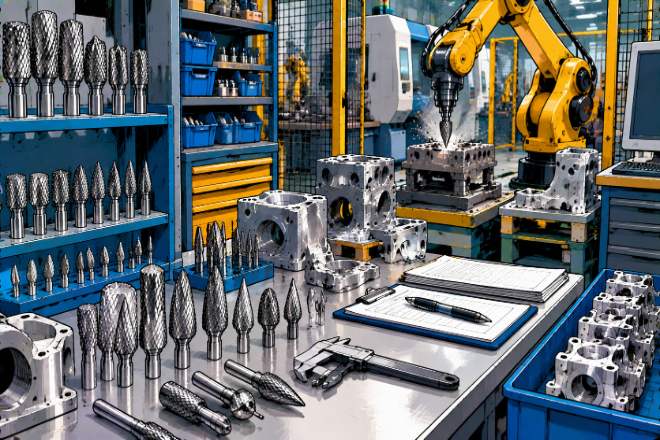
For companies using tungsten carbide burrs regularly, RPM selection should become part of standard operating procedures.
A good process includes:
Recording successful RPM settings
Training operators
Following supplier recommendations
Checking tool condition
Reviewing cutting results
Tool suppliers can also provide valuable guidance. They understand how burr geometry, carbide grade, and cutting design affect performance.
Companies should also avoid selecting tools only by purchase price. A cheaper burr that wears quickly or requires slower production may cost more in the long run.
The real measurement is: Cost per finished part or completed repair. A well-selected carbide burr running at the correct RPM can reduce:
Tool replacement
Production delays
Rework
Finishing time
For decision-makers, RPM is not only a technical setting. It is part of productivity management.
 English
  Español
  简体中文
简体中文  Français
  日本語
日本語  한국어
한국어  العربية
  Tiếng Việt