
Understanding the Role of Carbide Seal Rings
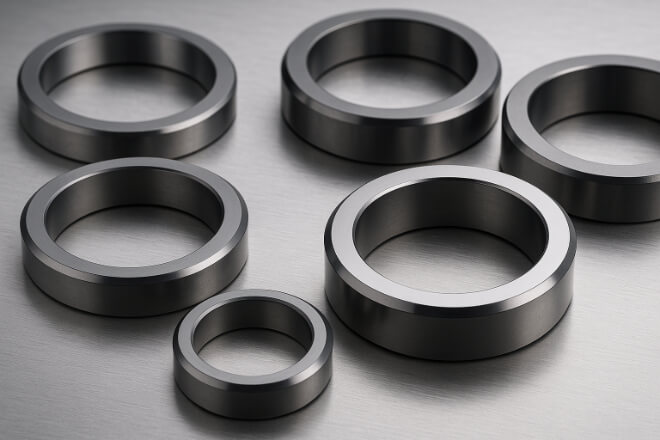
タングステンカーバイド製シールリング are critical components in pumps, compressors, and rotating equipment.
They provide sealing performance, 耐摩耗性, and corrosion protection under harsh conditions.
These rings are often used in 石油とガス, chemical, and mechanical seal assemblies, where reliability and precision are vital.
Because every application is different, many companies require custom carbide seal rings with specific material grades, surface finishes, and geometrical tolerances.
That’s why a detailed RFQ is the foundation of a successful project.
Why a Detailed RFQ Matters
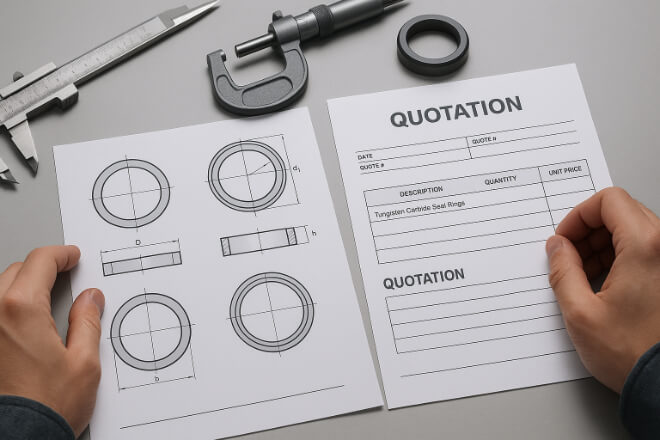
A clear and well-prepared RFQ checklist helps both you and your supplier.
It reduces the number of clarification emails and design revisions.
It ensures that the quotation you receive reflects the actual cost and lead time.
It allows your supplier to choose the most efficient carbide grade and machining process.
In short, a complete RFQ saves time, prevents misunderstandings, and builds trust between buyer and manufacturer.
Key Details to Include in Your RFQ
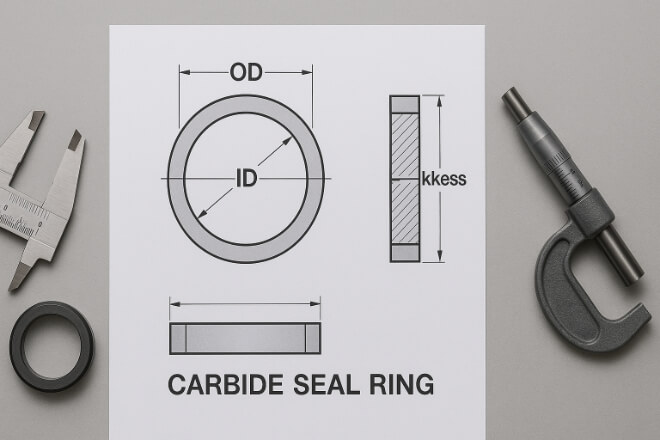
When sending your RFQ for custom 超硬シールリング, make sure you include at least the following information:
1). Basic Information
Part name and quantity
Application (e.g., mechanical seal, pump, compressor)
Operating conditions (temperature, pressure, media type)
2). Material and Grade
Specify the tungsten carbide grade if known.
If you’re not sure, describe the working environment (abrasive, corrosive, or high temperature).
The supplier can then recommend a suitable grade.
3). Dimensions
Provide full dimensional data. For seal rings, the key parameters usually include:
外径(OD)
内径(ID)
Thickness or Height
Chamfer or radius details
You can describe them in a drawing or table. Here’s a simple example:
Specifying Tolerances
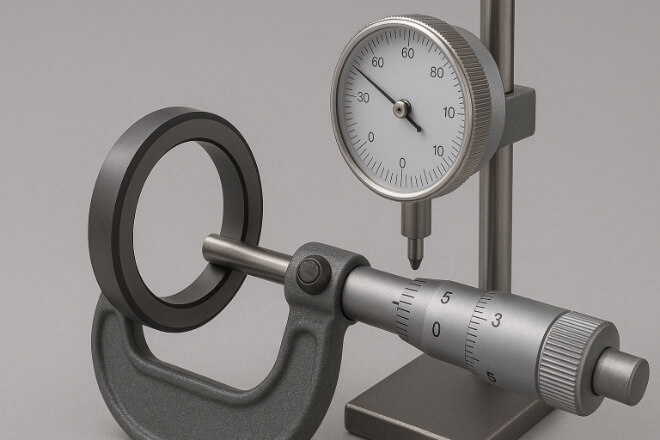
Tolerances define how much variation is acceptable in your ring’s dimensions.
For precision sealing components, tolerances can directly affect leakage rates and rotational stability.
Common tolerance types include:
Dimensional tolerances (e.g., ±0.01 mm)
Flatness and roundness
Concentricity
Surface parallelism
If your ring must fit tightly with another rotating component, always specify mating part tolerances too.
If not specified, manufacturers will apply their standard tolerance range, which may not meet your sealing requirements.
Choosing the Right Surface Finish
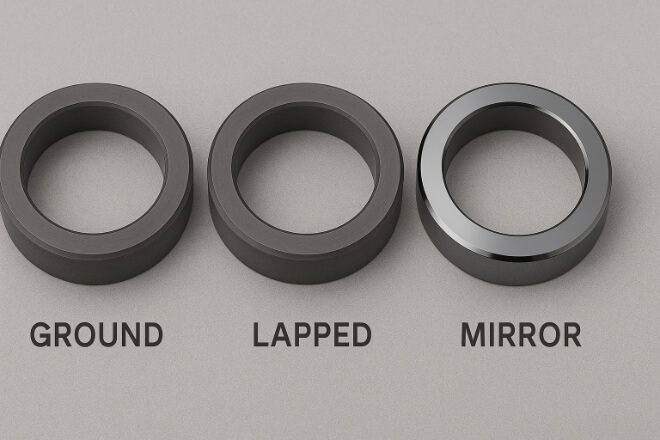
Surface finish is critical for the friction performance and sealing efficiency of carbide rings.
A smoother surface reduces wear and prevents leakage during long-term operation.
Common finish options include:
Ground finish (Ra 0.4–0.8 μm)
Lapped finish (Ra 0.1–0.2 μm)
Mirror finish (Ra ≤ 0.05 μm)
The required finish depends on the ring’s application:
Stationary rings in mechanical seals often need a mirror finish.
Rotating rings may perform well with a fine ground finish.
If your application involves high pressure, abrasive media, or corrosive fluids, mention this clearly.
It helps the supplier select proper lapping and polishing processes.
Additional Points for a Complete RFQ
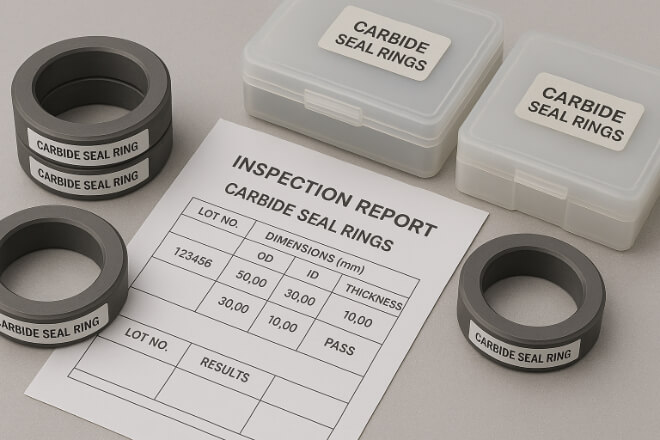
Besides the main technical details, don’t forget these items:
Coating or treatment (e.g., nickel plating, diamond coating)
Quantity and delivery schedule
Drawing files (2D/3D format preferred)
Packaging requirements (to protect precision surfaces)
Quality certification or inspection report requirements
Adding these points ensures your RFQ checklist is complete and professional.
避けるべきよくある間違い
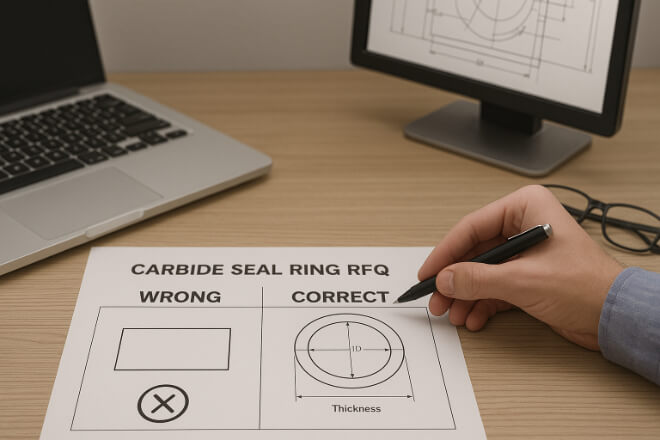
Even experienced buyers can make small mistakes that cause big delays. Watch out for:
Sending only a photo without a technical drawing
Not clarifying working conditions (temperature, medium)
Forgetting to specify tolerances or surface finish
Requesting “the best quality” without describing functional requirements
A professional supplier can help you correct missing details, but it’s always better to send clear specifications from the start.
Benefits of a Well-Structured RFQ

When your RFQ for carbide seal rings is complete and clear:
You get faster and more accurate quotations
Manufacturers can optimize material usage and machining time
The delivered rings fit perfectly with your assemblies
You build a long-term, trusted relationship with your supplier
In other words, a good RFQ isn’t just a request — it’s the foundation of successful cooperation.
 English
  Español
  简体中文
简体中文  Français
  日本語
日本語  한국어
한국어  العربية
  Tiếng Việt