
1. Start with the Right Tungsten Carbide Burr for the Job
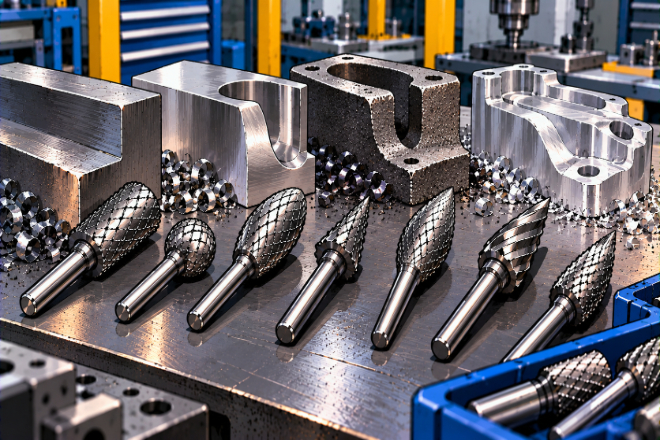
Long tool life starts before the grinder is switched on. One of the easiest ways to wear out a tungsten carbide burr early is to use the wrong burr for the material or application.
A burr may physically cut several metals, but that does not mean it will cut all of them equally well.
Steel, stainless steel, cast iron, aluminum, and high-strength alloys behave differently during cutting. They create different chips, cutting forces, and heat.
This is why burr cut geometry matters. For example, aluminum and other soft non-ferrous metals can produce long, sticky chips. A more open cut helps provide space for chip removal and reduces material buildup on the teeth.
Steel and cast steel may benefit from cutting geometries designed for stronger stock removal.
Cast iron has different cutting behavior again. The same logic applies to the amount of material being removed.
A burr selected for heavy stock removal should not automatically be used for fine finishing.
Likewise, a fine finishing burr may wear unnecessarily fast if it spends the whole day removing thick welds.
Shape matters too. A cylindrical burr works naturally on flatter areas. Ball and oval shapes are useful around curves and cavities.
Tree and flame shapes can reach changing profiles, while cone shapes are useful around angled features and openings.
When the shape matches the part, the operator does not need to fight the tool. That matters more than it sounds. Poor tool selection often leads to more pressure, more vibration, more heat, and more wear.
A useful purchasing sequence is: Material → Operation → Part geometry → Required finish → Burr cut → Burr shape
Companies that standardize this selection process can reduce the number of burrs being used for jobs they were never really suited for. That is the first step toward longer carbide burr life.
2. Use the Correct RPM Instead of One Speed for Everything
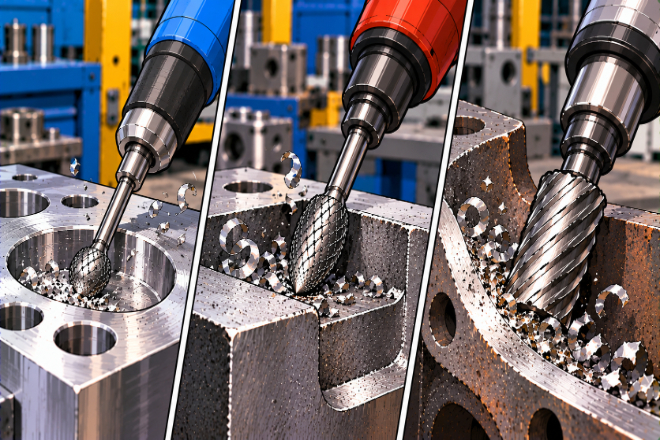
There is no magic RPM that gives every tungsten carbide burr maximum life. The correct rotational speed changes with the material, burr cut, application, and burr diameter.
That last factor is especially important. As burr diameter increases, the outside cutting edge travels farther during each revolution.
This means a large burr generally operates at a lower RPM than a much smaller burr for the same target cutting speed.
Running every burr at one machine setting is convenient. It is not necessarily efficient.
If the speed is too low, the burr may begin to run roughly or chatter instead of cutting cleanly. The operator may then increase pressure to compensate.
Now two problems are working together: poor cutting and excessive force. If the operating conditions create too much heat, tool wear can also increase.
The better approach is to use the burr manufacturer’s recommended speed range and then match the setting to the real application.
Companies should record successful settings for repeated jobs instead of asking every operator to rediscover them.
例えば:
3. Let the Teeth Cut Instead of Pushing Harder
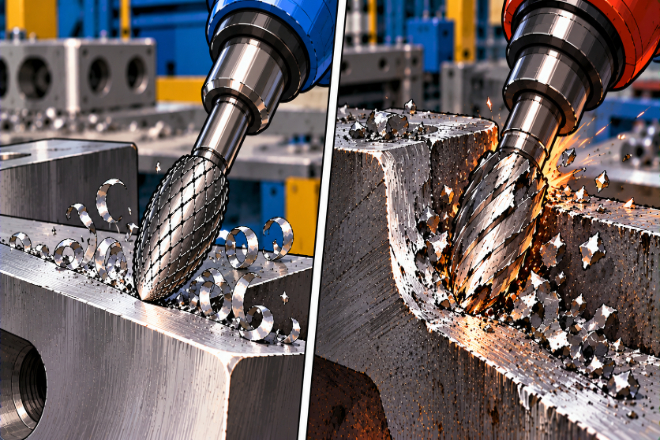
Heavy pressure feels productive. The sparks appear. The grinder sounds busy. Material seems to be disappearing. Unfortunately, a dramatic-looking process is not always an efficient one.
タングステンカーバイドバー are cutting tools. Their teeth need room to enter the material, form a chip, and leave the cutting zone.
Excessive contact pressure increases the load on those teeth. It can create heat, rough running, chipped cutting edges, and faster wear.
There is another detail that is easy to miss: how much of the burr is touching the workpiece.
Avoid burying a large part of the burr head in the material unless the tool and application are specifically designed for that condition. Large contact areas increase cutting forces and can make the burr run roughly.
For many general burr applications, keeping the contact area limited helps maintain smoother cutting. The operator should also keep the burr moving.
Holding an aggressive burr in one small spot can create a deep mark and unnecessary local heat. A controlled sweeping motion spreads the work across the cutting area.
The goal is not feather-light contact. The burr still needs enough contact to remove material efficiently. The goal is controlled pressure.
If the burr suddenly needs much more pressure than before, do not automatically push harder. Check the tool.
The teeth may be worn. The burr may be loaded with material. The speed may be wrong. The cut may not match the workpiece.
More force can hide the original problem for a few minutes while creating a new one.
4. Reduce Vibration with Better Tool Holding and Shorter Reach
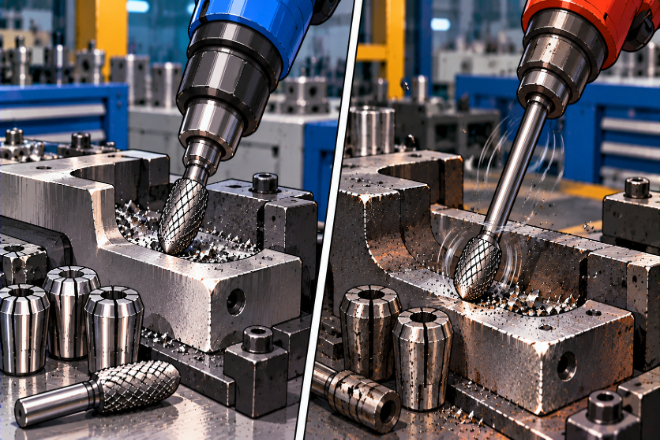
Vibration is one of the quiet enemies of carbide burr life. Every unwanted movement creates changing loads on the cutting teeth. Over time, those repeated impacts can accelerate wear and may contribute to tooth damage.
Start with the collet. It should be clean, correctly sized, and in good condition. A worn collet can allow runout, meaning the burr does not rotate perfectly around its center.
At thousands of revolutions per minute, a small alignment problem repeats very quickly. The grinder and spindle also need attention.
Worn bearings, weak drives, or damaged holders can create vibration even when the burr itself is perfectly good.
Then there is overhang. Operators sometimes extend the shank farther from the collet to reach a difficult area. The reason is understandable. The physics is less forgiving.
More unsupported length means less stiffness. The tool can bend and vibrate more easily under side load.
Use the shortest practical reach whenever possible. Long-shank carbide burrs are available for hard-to-reach areas, but they need extra care and suitable operating conditions.
Extra length should be treated as an engineering choice, not a shortcut.
Workpiece holding also matters. A firmly clamped burr cutting a loosely held component can still vibrate badly.
For repeat production, check the complete system: Burr → Collet → Holder → Spindle → Machine → Workpiece fixture. Tool life does not belong to the burr alone. The entire setup helps decide it.
5. Prevent Loading, Heat, and Small Damage from Becoming Big Problems
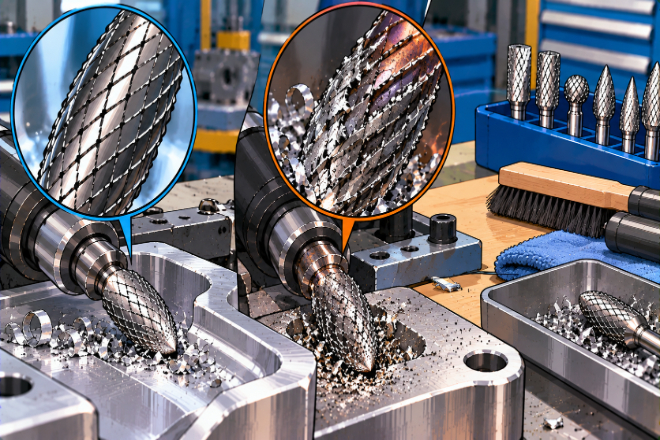
A burr does not need to be broken to be in trouble. Sometimes the first warning is chip loading.
This is especially common with softer materials such as aluminum. Material can stick between the cutting teeth and reduce the space available for new chips.
The operator notices that cutting becomes slower. Then comes the dangerous reaction: More pressure. Instead, stop and check the burr.
For materials that tend to load the tool, choose an appropriate open cut or material-specific burr geometry.
Certain applications may also benefit from a suitable coating or cutting lubricant when recommended for the material and process.
Do not attack a loaded burr with another hard steel object. The carbide teeth can be damaged during cleaning.
Follow the tool manufacturer’s recommended cleaning method and remove buildup before it becomes severe.
Heat deserves attention as well. Excessive heat can be a sign that the process is no longer cutting efficiently. High pressure, unsuitable speed, loading, and a worn burr can all contribute.
Regular inspection can catch these problems early.
Look for:
Missing or chipped teeth
Uneven wear
Material packed into the cut
Shank damage
Increasing vibration
Sudden changes in cutting performance
A small damaged area can change how the entire burr contacts the workpiece. Continuing to run it may damage more teeth. This is why “it still cuts” is not a very useful tool-life standard.
The better question is: “Is it still cutting correctly?” That small change in thinking can prevent a worn tool from creating expensive rework.
6. Turn Carbide Burr Life into a Process You Can Measure
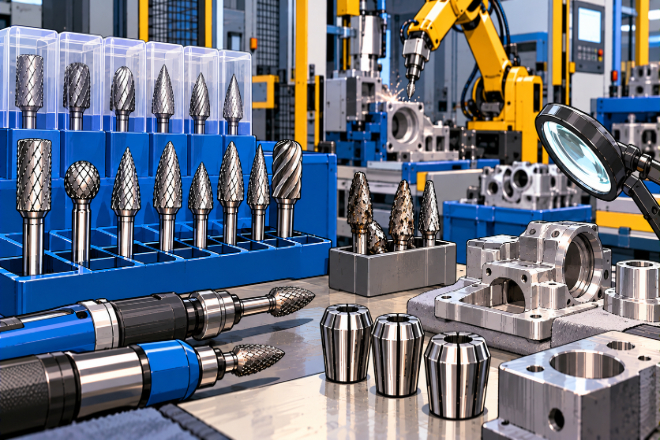
For occasional repair work, one operator may simply replace a burr when it feels worn.
For a factory using hundreds or thousands of carbide burrs, that approach is too vague.
Tool life should become measurable. Start by recording where burrs are being used.
Which material?
Which operation?
Which machine?
Which burr shape and cut?
How long does the burr normally last?
Then look beyond the purchase price. Suppose Burr A costs less but needs frequent replacement, cuts slowly near the end of its life, and creates more rework.
Burr B costs more but completes more acceptable parts with stable performance. The cheaper box may not produce the cheaper process.
Useful production measurements can include:
Parts completed per burr
Working time per burr
Material removed
Rework rate
Tool-change frequency
Surface quality
Unexpected burr failures
Downtime related to tooling
Storage should also be standardized. Do not throw carbide burrs together in an open drawer where the cutting heads can hit each other.
Keep them separated and protected from impact, moisture, dirt, and unnecessary handling. Operator training is another part of tool-life management.
One operator may get weeks of useful work from a burr while another destroys the same tool quickly. That difference is valuable information.
Instead of accepting it as “operator style,” find out what is different.
It may be pressure.
It may be RPM.
It may be contact angle.
It may be tool reach.
Once the better method is found, turn it into a repeatable process.
That is where extending tungsten carbide burr life becomes more than a maintenance tip. It becomes a practical way to lower cost per finished part.
 English
  Español
  简体中文
简体中文  Français
  日本語
日本語  한국어
한국어  العربية
  Tiếng Việt