
1. What Happens When a Carbide Burr Touches Metal?
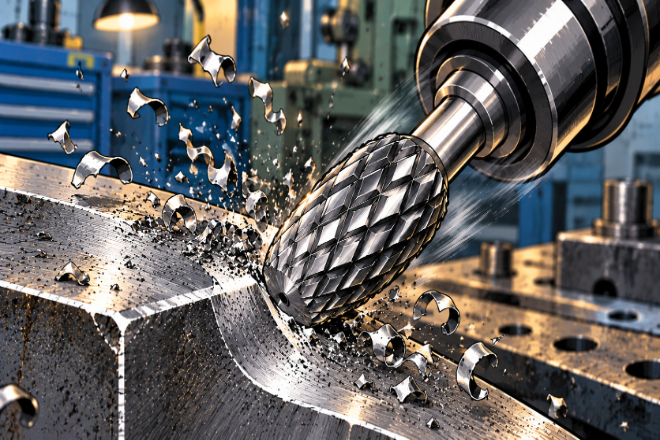
Watch a tungsten carbide burr at work and the process looks almost effortless. The burr spins, metal chips fly away, and a rough weld or sharp edge quickly disappears.
Behind that simple action are many tiny cutting edges.
Unlike a grinding wheel, which removes material mainly through abrasive contact, a carbide rotary burr has shaped cutting teeth. As the burr rotates, these teeth enter the workpiece one after another. Each tooth takes away a small chip.
One chip is tiny. Thousands of cutting actions happening at high speed are not.
That is where much of the burr’s material removal ability comes from.
Because the teeth actually cut rather than simply rub against the surface, carbide burrs can remove material quickly while giving the operator good control over where the metal is removed.
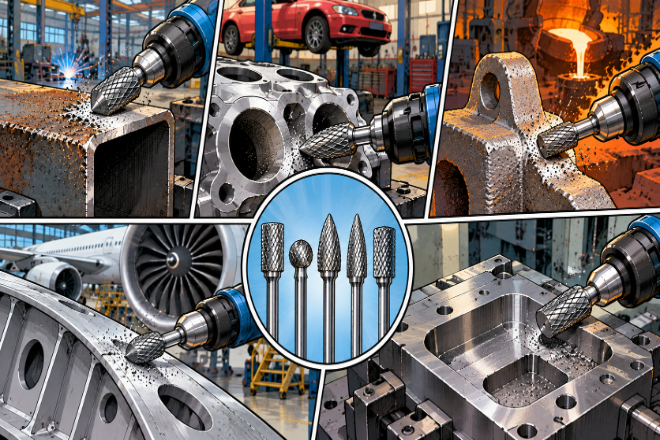
This makes them useful for jobs such as weld cleaning, deburring, shaping, hole enlargement, edge preparation, and removing excess material from cast parts.
2. Why Does Tungsten Carbide Make Such a Difference?
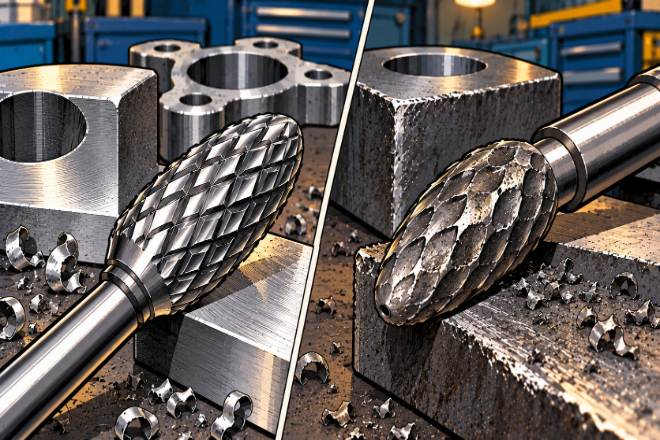
Give a cutting tool a difficult job long enough and one thing usually happens: the edge starts getting dull.
Once that happens, cutting becomes rubbing.
This is where tungsten carbide earns its place.
Cemented tungsten carbide combines very hard carbide grains with a metallic binder, commonly cobalt. The result is a material with much higher 내마모성 than conventional tool steels used for many rotary tools.
For a burr, that means the tiny cutting edges can stay useful for longer.
Imagine cleaning welds from ten steel components. Many tools can handle that. Now imagine doing the same job on hundreds of components every week. Tool wear suddenly becomes a production issue.
As cutting edges become dull, material removal slows. Operators may push harder. More heat appears. Surface quality can become less consistent.
A good tungsten carbide burr delays that problem by keeping its cutting geometry longer.
For production managers, that is important. Fast cutting is useful, but fast cutting that remains consistent throughout a production batch is much more valuable.
3. How Do the Flutes Turn Metal Into Chips?
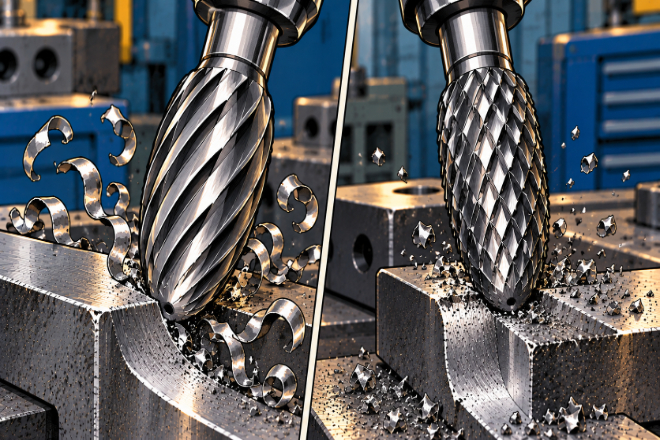
Those grooves covering the burr head are not there for decoration. They determine how the tool bites into the metal and what happens to the material afterward.
These grooves create the cutting flutes.
Two common designs are single cut and double cut.
A single-cut carbide burr uses flutes running in one main direction. It can provide strong material removal and often creates larger chips.
A double-cut carbide burr has a second set of flutes crossing the first.
This creates more cutting edges and breaks the removed material into smaller chips. The cutting action can feel easier to control, which is useful for deburring, weld cleaning, shaping, and general fabrication.
Think of the difference as two ways of attacking the same metal. One takes stronger, more direct bites. The other divides the work into smaller cuts.
Neither one wins every time.
The right choice depends on the metal, the amount of material being removed, and the finish you want afterward.
4. Why Does High-Speed Rotation Help So Much?
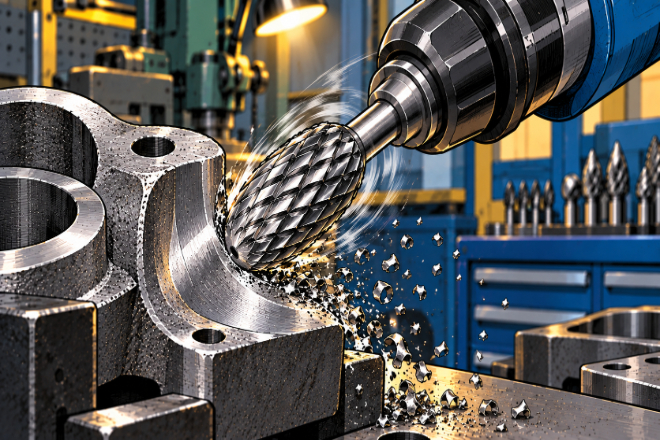
A carbide burr does not take one huge bite out of the workpiece. It takes many small bites very quickly.
That is why rotation speed matters.
At the correct speed, the cutting edges move through the metal cleanly. Material comes away as chips, and the burr can keep moving across the workpiece.
Run it too slowly and things can become less pleasant. Instead of a clean cutting action, the burr may chatter or bounce. The natural reaction is often to push harder—which can make the problem worse.
Does that mean faster is always better?
Not quite.
Excessive speed can create unnecessary heat and place more stress on the burr. The correct operating speed depends on burr diameter, workpiece material, rotary tool, and the specific burr design.
This is why manufacturers provide recommended operating ranges.
The goal is not to make the burr spin as fast as possible. The goal is to find the range where the teeth cut efficiently and the operator can keep good control.
5. Why Is Getting Chips Out of the Way Important?
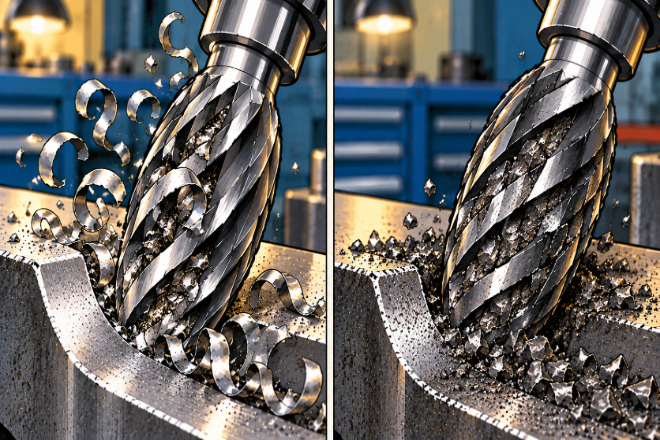
Cutting metal is only half the job. The removed metal also needs somewhere to go.
If chips become packed between the flutes, they can block the cutting edges. The burr then spends more time rubbing against trapped material instead of cutting fresh metal.
The result? More heat and less efficient material removal.
Good flute geometry helps create space for chips to leave the cutting zone.
This becomes particularly important with materials that can create sticky chips. Keeping the burr moving also helps prevent too much heat or chip buildup in one small area.
It is a little like digging a hole. Removing soil is easy until you leave all the loose dirt in the hole and try to keep digging through it.
Carbide burrs face the same basic problem—just at much higher speed and with much smaller chips.
Efficient chip removal keeps the cutting teeth exposed and ready for the next contact with the workpiece.
6. Does Burr Shape Change Material Removal Speed?
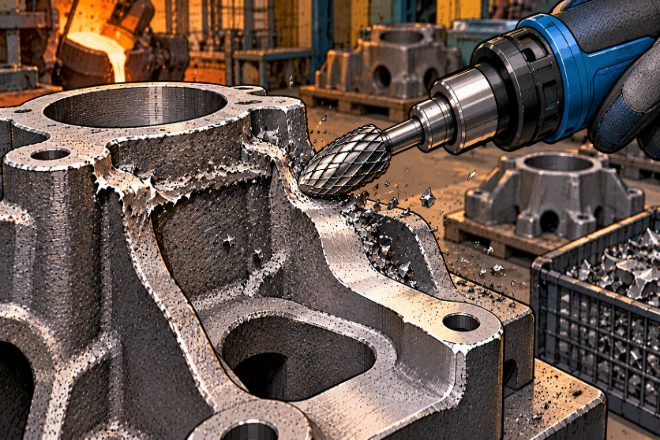
Absolutely.
A cylindrical burr is excellent at some jobs and awkward at others. Put that same burr into a narrow curved groove and suddenly it does not look quite so efficient.
That is why tungsten carbide burrs come in so many shapes.
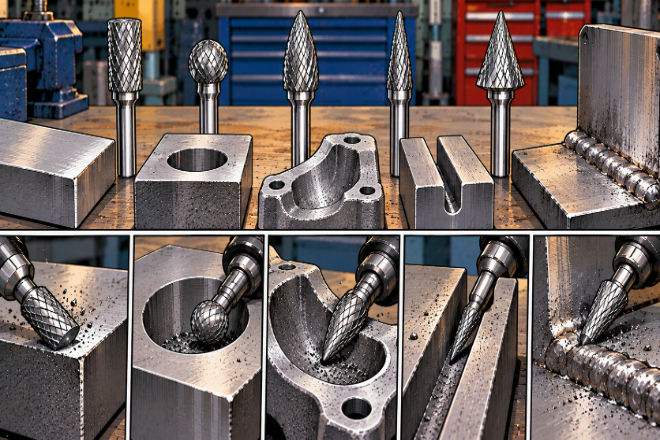
Cylindrical burrs are useful for flat areas, edges, and straight profiles. Ball-shaped burrs work naturally with curved surfaces and rounded openings.
Tree and flame shapes can reach contours and narrow spaces. Oval burrs are useful for smooth shaping across curved surfaces.
Choosing the correct shape allows more of the useful cutting area to contact the workpiece.
It also gives the operator better control.
Suppose a fabrication shop needs to remove excess metal from inside a curved steel component. Using the wrong burr shape may require constant angle changes and several passes.
A suitable shape can follow the profile more naturally and finish the same job with less effort.
For a purchasing team, burr shape may look like a small detail on a product page. On the factory floor, it can have a direct effect on processing time.
7. Why Doesn’t Pushing Harder Make Cutting Faster?
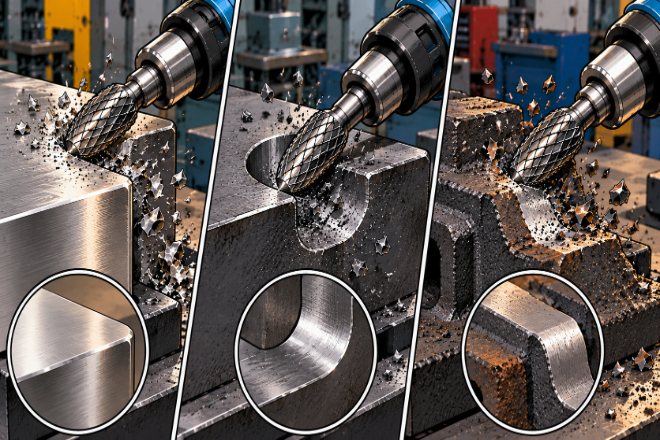
Push harder and the burr cuts faster. Sounds reasonable. With carbide burrs, it often works the other way around.
The cutting teeth are supposed to do the work. When an operator forces the burr heavily into the metal, several problems can appear at once.
The rotary tool may slow down. Vibration can increase. More heat can build at the contact point. The burr becomes harder to control.
There is also a risk to the carbide itself. Tungsten carbide is extremely hard and wear resistant, but it does not enjoy unnecessary impact or heavy side loading. Aggressive use can damage small cutting edges.
A better technique is controlled movement with moderate pressure.
Let the burr rotate freely and move it steadily across the workpiece. This allows many cutting teeth to share the work instead of forcing a small area to take all the load.
In other words, if the operator feels like they are wrestling with the burr, something probably needs adjusting.
8. What Jobs Benefit Most From Fast Material Removal?
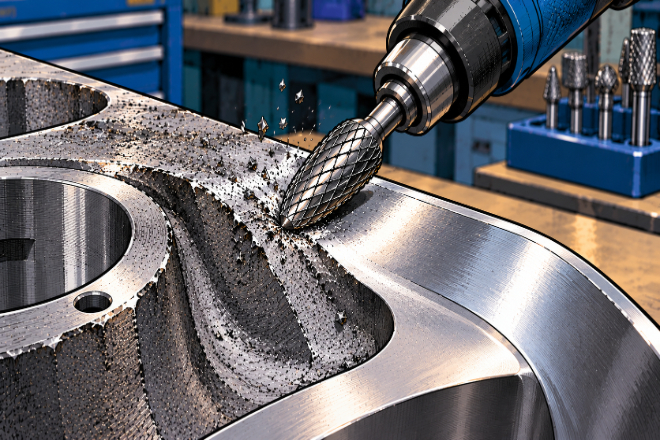
Carbide burrs shine when a job requires controlled removal in places where larger cutting or grinding tools are inconvenient.
Take weld cleaning. After two steel sections are welded, excess weld material may need to be blended or removed.
A carbide burr lets the operator work directly around the joint without taking away too much surrounding metal.
Then there is deburring. Machined holes and cut edges often have small sharp pieces of metal left behind. A suitable burr can remove them quickly and reach areas that are difficult for a larger grinder.
Foundries use carbide burrs to clean cast components and remove unwanted flash.
Tool and die shops use them for small corrections and detailed shaping. Maintenance teams use them when repairing worn or damaged machine parts.
They are also useful for opening holes, working inside curved profiles, preparing edges, and shaping hard metals such as stainless steel and cast iron.
The common theme is control.
Carbide burrs remove material quickly, but they can also put that cutting action exactly where it is needed.
9. Can Faster Cutting Actually Lower Production Costs?
This is where the conversation gets interesting for production and purchasing managers.
A burr does not become economical simply because its purchase price is low.
Suppose Burr A costs less but becomes dull after a short production run. Burr B costs more but keeps cutting through several runs.
The cheaper tool may suddenly become the expensive choice once tool changes, operator time, and slower cutting are included.
Material removal speed also affects labor.
If one burr takes four minutes to clean a component and another completes the same acceptable work in three, that one-minute difference becomes meaningful across hundreds or thousands of parts.
Then there is finishing.
An aggressive tool that removes metal quickly but leaves a poor surface may require another process afterward. That extra grinding or polishing also costs time.
For this reason, industrial buyers should look beyond price per burr.
Useful measures include parts completed per burr, average processing time, tool-change frequency, surface quality, and total labor time.
That gives a much better picture of the true cost of material removal.
10. How Can You Keep a Carbide Burr Cutting Efficiently?
Even a good carbide burr can perform badly if it is used incorrectly.
Start with the correct burr shape and cut style for the job. Match the operating speed to the burr diameter and material. Avoid excessive pressure, and keep the tool moving rather than holding it against one spot.
Pay attention to the sound and feel of the cut as well. Smooth cutting usually feels very different from chatter.
The rotary tool itself matters too. Poor bearings, excessive runout, or an unstable tool holder can create vibration that reduces cutting quality and burr life.
Burr condition should be checked regularly in production environments. Look for chipped teeth, unusual wear, damaged shanks, or material packed into the flutes.
Storage also matters. Carbide burrs should not simply be thrown together in a metal drawer. Contact between cutting heads can damage the teeth before the burr even reaches the workpiece.
Small habits like these help maintain the material removal performance that made the company choose carbide in the first place.
11. What Should Decision-Makers Measure Before Buying in Volume?
The best carbide burr is not necessarily the one with the most impressive description. It is the one that performs reliably in your actual process.
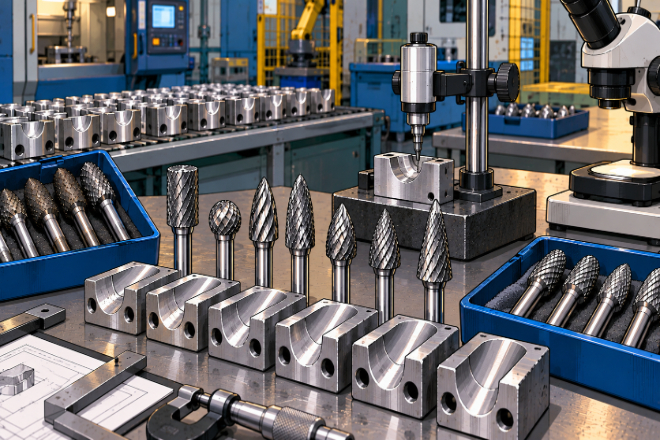
Before placing a large order, run a controlled production test.
Use the same workpiece material, rotary equipment, operators, and finishing requirements. Then compare how different burrs behave.
How quickly does each one remove the required material? How many parts can it complete before cutting performance drops? Does it create chatter? Does it leave a surface that requires extra finishing?
Operator feedback is useful too. A burr that looks good on paper but is difficult to control can reduce real production efficiency.
Finally, check consistency between batches. Industrial users need the hundredth burr to behave much like the first one.
That is where manufacturing quality becomes just as important as carbide 경도.
For decision-makers, the goal should be simple: find the burr that produces acceptable parts with the least total processing time and the most predictable tool life.
 English
  Español
  简体中文
简体中文  Français
  日本語
日本語  한국어
한국어  العربية
  Tiếng Việt