
1. Why Do Carbide Burrs Clog on Aluminum?
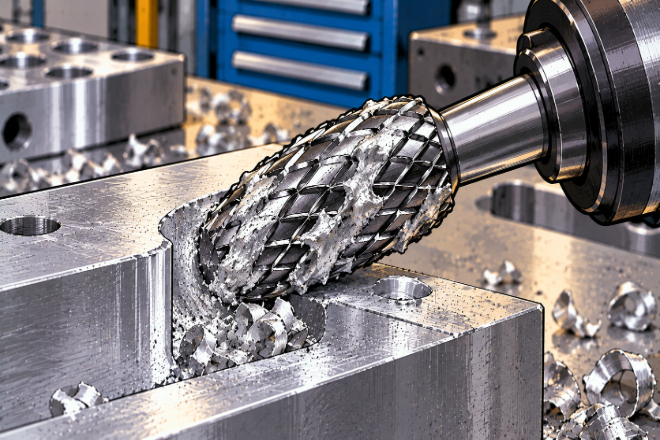
The main reason is simple: aluminum is soft and can be sticky during cutting.
When a carbide burr cuts aluminum, small pieces of material are removed from the surface. Instead of breaking into short, hard chips, aluminum can form softer chips that bend, smear, or stick to the cutting edges.
Once a small amount of aluminum sticks inside the flutes, more material can attach to it.Then more. Then even more.
Before long, the sharp cutting pattern starts looking like someone filled it with silver-colored glue.
This changes how the burr works.
The cutting edges can no longer reach the workpiece properly. Instead of cutting cleanly, the burr begins rubbing against the surface. Heat increases, cutting becomes slower, and the operator often responds by pushing harder.
That usually makes the situation worse. More pressure creates more heat. More heat can make aluminum even more likely to stick.
This is why clogging is not only a cleaning problem. It is a cutting-condition problem.
For production teams, repeated loading can cause:
slower material removal
poor surface finish
more tool cleaning
operator frustration
shorter useful tool life
longer cycle time
If aluminum is a regular material in your factory, preventing chip loading should be part of the process from the beginning.
2. Use a Carbide Burr Made for Aluminum
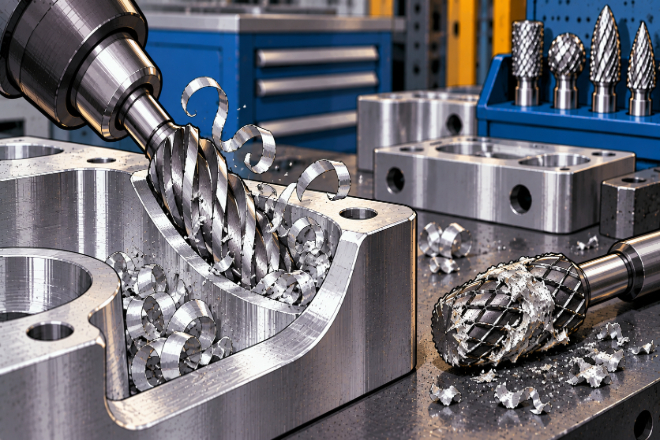
One of the easiest ways to reduce clogging is to stop treating every carbide burr as the same tool. A burr designed for steel may have a tighter cutting pattern.
That can work very well on hard metals because the chips are often smaller and easier to break. Aluminum behaves differently.
For aluminum, carbide burrs with wide, open flutes are usually a better choice.
The larger space between the teeth gives aluminum chips more room to leave the cutting area before they become packed inside the burr.
This matters more than many buyers first expect. A burr may be made from excellent tungsten carbide and still perform badly on aluminum if the tooth design is too tight.
For aluminum work, look for burrs described as suitable for:
aluminum
non-ferrous metals
soft metals
fast chip removal
open flute cutting
These burrs often have fewer, deeper, and more widely spaced cutting teeth. The idea is not complicated. Give the chip somewhere to go. That alone can make a major difference.
A burr designed for aluminum may look less “fine” than a standard double cut burr, but that open geometry is doing an important job.
It is creating space. And when aluminum chips have space to escape, they are much less likely to become permanent residents inside the tool.
3. Control Speed and Pressure Instead of Forcing the Burr
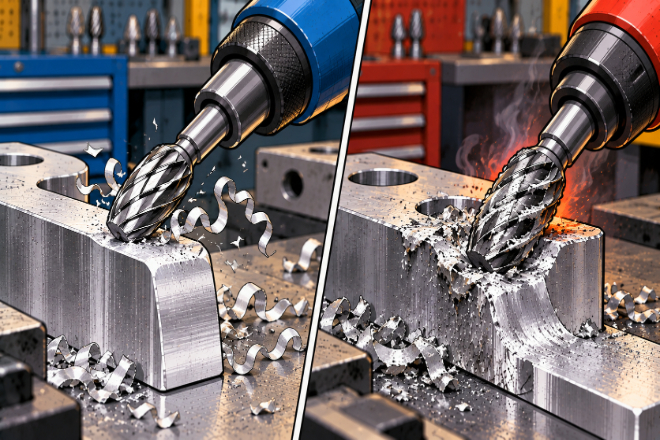
When a burr starts cutting poorly, the natural reaction is often to push harder. That feels logical. It is also one of the fastest ways to create more clogging.
에이 tungsten carbide burr should cut with its teeth, not with brute force.
If the operator presses too hard into aluminum, the cutting edges take larger bites and generate more friction. Soft aluminum can then smear across the burr head instead of leaving cleanly as chips.
The result is a loaded burr. Correct speed also matters.
The suitable operating speed depends on burr diameter, tool design, workpiece material, and the manufacturer’s guidance. A small burr and a large burr should not automatically run at the same speed.
Too little speed can make the burr grab and cut unevenly. Too much speed combined with heavy pressure can create extra heat.
The best setup allows the burr to cut freely while the chips leave the flute area quickly. Operators should also keep the tool moving.
Holding the burr against one small area for too long creates heat and encourages aluminum to build up on the teeth. A smooth movement across the workpiece usually works better.
Think of it this way:
If the operator has to wrestle with the burr, something is probably wrong.
Good aluminum cutting should feel controlled, not like a strength test.
Here is a simple summary:
4. Use the Right Lubrication and Keep the Cutting Area Clean
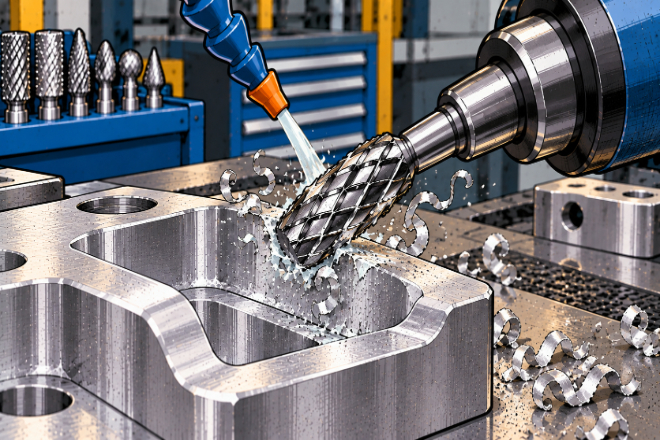
Lubrication can also help reduce aluminum sticking to carbide burrs. The goal is simple: reduce the chance that chips weld or smear onto the cutting edges.
Depending on the application, shops may use a suitable cutting lubricant or anti-loading product made for aluminum machining.
The product should match the work environment and the manufacturer’s recommendations. Do not just grab any liquid from the maintenance cabinet.
Some production areas have rules related to painting, welding, cleaning, food equipment, or later surface treatment. A lubricant that helps during cutting may create trouble at the next process if it leaves the wrong residue.
This is where production planning matters. The best lubricant is not simply the one that makes the burr feel slippery. It is the one that works with the whole process.
Cleaning the cutting area is also important. If loose chips stay around the tool, they can return to the cutting zone and increase loading.
Good chip removal helps keep the burr cutting cleanly. For repeated aluminum work, the factory should treat chip control as part of the setup rather than something operators handle only after the burr is already clogged.
A clean cutting area helps the burr do what it was designed to do. Cut metal. Not carry it around.
5. Clean a Loaded Burr Before It Gets Worse
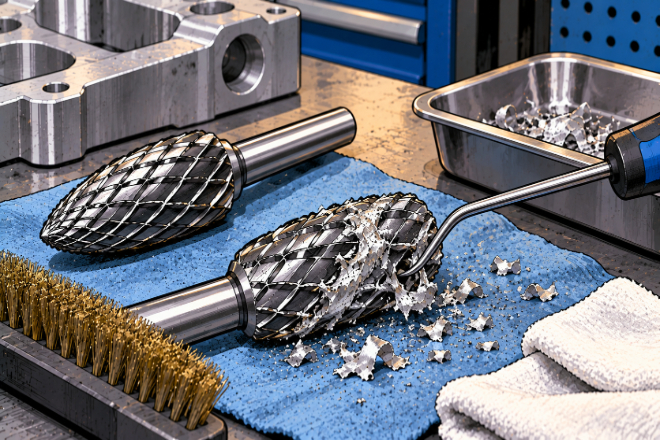
Even with good setup, some aluminum may eventually collect inside the flutes. The mistake is waiting until the burr is completely packed.
Once the cutting teeth are badly covered, performance can drop quickly. The operator pushes harder.
The tool gets hotter. The surface finish gets worse. And everyone starts blaming the burr.
It is better to clean the tool early. The burr should be stopped and removed from the rotary tool before cleaning.
Safe cleaning methods should follow the tool supplier’s guidance and the company’s workshop rules.
The key point is to remove packed aluminum without damaging the carbide cutting edges.
Do not treat the burr like a piece of scrap steel. Tungsten carbide is extremely hard, but it can be brittle.
Heavy impacts or careless contact with hard objects can chip the cutting teeth.
Compressed air may help remove loose chips where workshop safety rules allow it, but tightly packed aluminum may need a more suitable cleaning method.
Some shops use dedicated burr-cleaning tools or approved chemical methods depending on their process.
Whatever method is chosen, cleaning should be controlled and repeatable.
If one operator cleans a burr carefully while another attacks it with whatever metal object is nearby, tool life will be difficult to predict.
That is not really a tooling problem. That is a process problem wearing a tooling costume.
6. Match Burr Shape and Size to the Aluminum Part
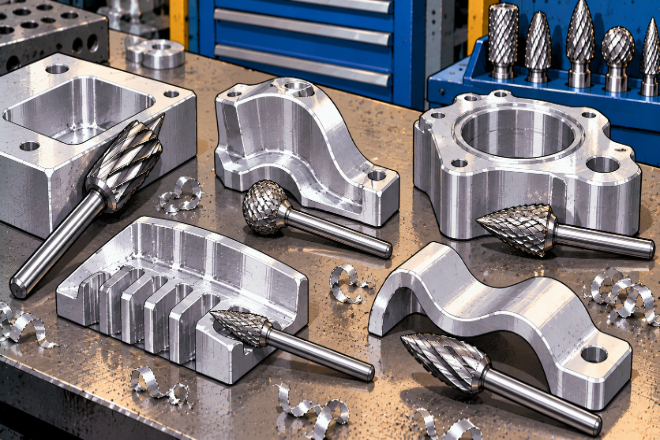
Clogging is not only about flute design. Burr shape also changes how much of the tool touches the workpiece.
A large burr working inside a small corner may have too much contact with the metal. This can increase heat and make chip evacuation harder.
A smaller, better-matched burr may cut more freely. The same idea applies to shape. A cylindrical burr works well on flatter surfaces. A ball burr follows rounded cavities.
Tree and flame shapes can handle changing contours. Cone and pointed burrs can reach tighter areas.
If the operator uses the wrong shape, the tool may spend too much time rubbing instead of cutting.
That extra contact creates heat. And heat is not your friend when aluminum already wants to stick.
The size of the burr also affects cutting conditions. Larger cutting heads create a different contact area and usually require different operating conditions than small burrs.
This is why companies should avoid choosing carbide burrs by flute type alone.
A good aluminum setup combines:
open cutting geometry
suitable burr shape
correct head size
stable rotary tool
proper operating speed
light controlled pressure
When those elements work together, clogging becomes much easier to control.
7. How Can Production Teams Reduce Clogging Over the Long Term?
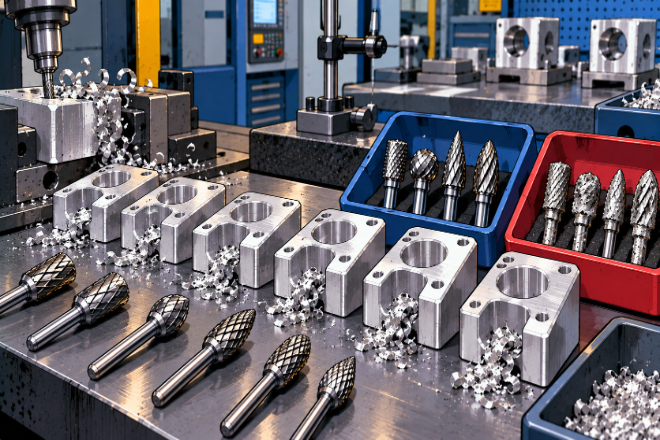
If aluminum is only cut once a month, operators may solve clogging job by job.
If aluminum is cut every day, that approach becomes expensive. The better solution is to standardize the process.
Start by identifying the aluminum jobs that cause the most loading.
Which components?
Which burr sizes?
Which operators?
Which rotary tools?
Which cutting conditions?
Then test a few burr designs made specifically for aluminum and compare them under similar conditions. Do not look only at how long the burr lasts.
Measure the things that clogging actually affects:
How often does the operator stop to clean the burr?
How long does each component take?
Does the surface finish stay consistent?
Does cutting speed fall after several parts?
How often is a burr replaced even though the carbide itself is not badly worn?
These questions can reveal a lot. One burr may cost slightly more but stay clear for far longer. Another may be cheaper but need constant cleaning.
On a purchasing sheet, the cheaper one wins. On the production floor, it may lose badly.
For companies buying carbide burrs for aluminum in volume, chip-loading resistance should be part of supplier testing.
A good burr should not only be sharp when it comes out of the box. It should continue cutting cleanly under real production conditions.
 English
  Español
  简体中文
简体中文  Français
  日本語
日本語  한국어
한국어  العربية
  Tiếng Việt