
1. Why Is Titanium Difficult to Finish?
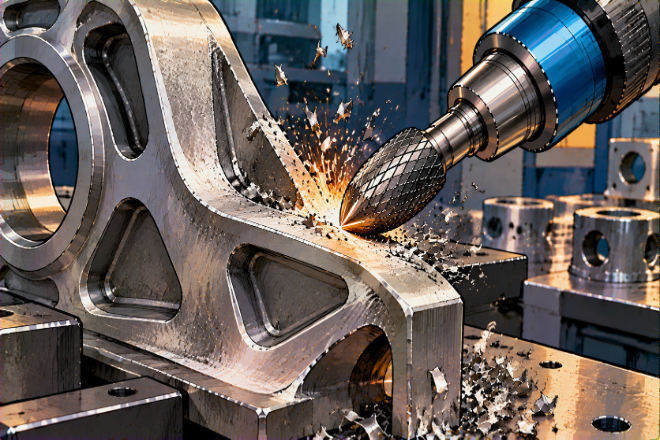
Titanium is a unique metal with a strong combination of performance and durability. While these features make it useful, they also create challenges during finishing operations.
One major challenge is heat control.
Titanium has low thermal conductivity. This means heat produced during cutting does not move away quickly. Instead, heat stays close to the cutting area, increasing stress on the tool.
If a finishing tool generates too much friction, the cutting edge can wear faster. Another problem is titanium’s chemical activity.
At high temperatures, titanium can react with some tool materials. This may cause material to stick to the cutting edge, reducing cutting performance.
Titanium also has a strong tendency to spring back during machining. After the tool passes, the material may slightly return to its original shape. This can make precise finishing more difficult.
Common finishing challenges include:
Rough edges after machining
Excess material around holes or corners
Surface marks
공구 마모
Difficult access areas
Complex titanium components create even more challenges.
Many titanium parts contain curved surfaces, thin walls, narrow channels, and detailed profiles. These areas require a tool that can remove material carefully without damaging the original design.
This is why tungsten carbide burrs are often selected for titanium finishing.
Carbide provides high 경도 and strong 내마모성. It can maintain cutting performance even when working with difficult materials.
However, choosing the wrong burr can create poor results. A burr that removes material too aggressively may create excessive heat. A burr that is too fine may reduce productivity.
The best finishing process requires the correct balance between cutting ability, tool life, and surface quality.
2. How Do Tungsten Carbide Burrs Improve Titanium Finishing?
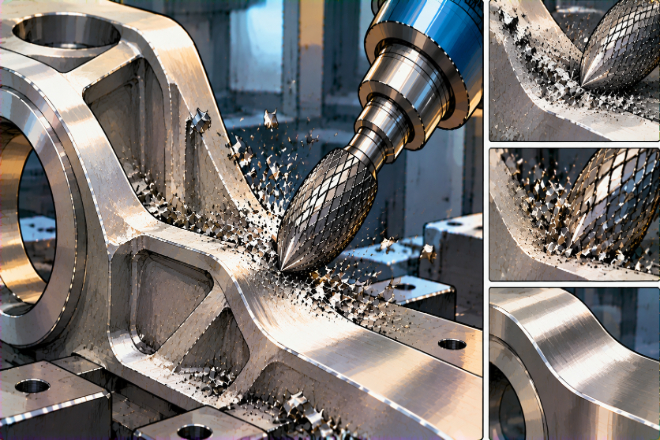
텅스텐 카바이드 버 work by using sharp cutting teeth to remove small amounts of material from the surface.
Unlike abrasive tools that mainly grind the surface, carbide burrs perform a cutting action. This provides several advantages when finishing titanium components.
1). Better Material Removal Control
Titanium parts often require careful finishing rather than heavy cutting. Carbide burrs allow operators to remove unwanted material in controlled amounts.
This is useful for:
Edge cleanup
Weld finishing
Removing machining marks
Adjusting openings
Blending surfaces
The operator can focus on specific areas without affecting the entire component.
2). High 내마모성
Titanium is harder to process than many common metals. A softer tool may lose its cutting ability quickly.
Tungsten carbide offers excellent 경도, allowing the burr to maintain its cutting shape for longer periods.
This helps reduce:
Tool replacement frequency
Production interruptions
Finishing costs
3). Better Access to Complex Shapes
Many titanium components have difficult geometries. Large cutting tools may not reach small corners or curved areas.
Carbide burrs are available in many shapes, allowing manufacturers to select tools for different finishing tasks.
예를 들어:
Ball burrs for curved surfaces
Flame burrs for complex profiles
Cylindrical burrs for edges
Cone burrs for narrow areas
This flexibility makes carbide burrs useful for both repair work and production finishing.
4. How Can Manufacturers Control Heat When Finishing Titanium?
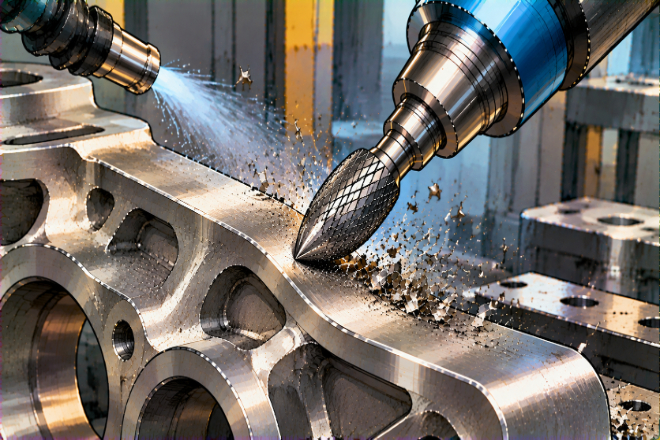
Heat management is one of the most important factors when using carbide burrs on titanium.
Because titanium does not transfer heat quickly, excessive friction can damage both the tool and the surface.
The first step is choosing the correct speed. Very high rotation speed may create unnecessary heat.
The best speed depends on:
Burr diameter
Titanium grade
Cutting depth
Finishing purpose
Pressure control is also important. Many operators try to increase cutting speed by pushing harder. However, excessive pressure often creates more friction instead of better performance.
The burr should cut through the material naturally. Another important factor is keeping the tool moving.
Holding the burr in one area for too long can create heat concentration. Smooth movement helps distribute cutting forces.
Chip removal also matters. Titanium chips can collect around the cutting area and increase friction. Keeping the working area clean helps maintain stable performance.
A controlled process usually follows this approach: Select the right burr → Set suitable speed → Apply steady pressure → Maintain movement → Inspect the finish
This helps improve tool life and surface quality.
5. How Do You Prevent Damage When Finishing Titanium Components?
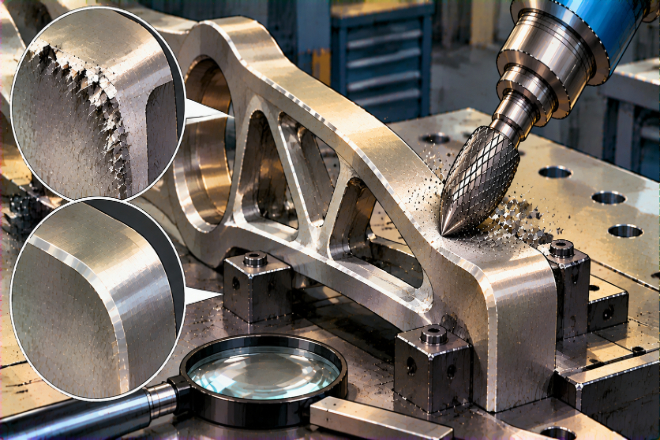
Titanium components are often expensive and difficult to replace. Preventing damage during finishing is therefore very important. The first step is selecting the correct tool.
A burr designed for aggressive material removal may not be suitable for delicate finishing work. The burr size should also match the component.
A large burr can remove too much material from thin titanium sections. A smaller burr may provide better control in detailed areas. Tool stability is another key factor.
Vibration can create:
- Uneven surfaces
- Tool damage
- Poor edge quality
A secure tool holder and stable workpiece setup help reduce these problems. Operators should also inspect burr condition regularly.
A worn burr requires more force, which increases heat and reduces finishing quality.
Important inspection points include:
Cutting edge condition
Surface appearance
Material removal consistency
Tool performance
For production environments, standard finishing procedures help maintain consistent results.
These procedures should define:
Burr selection
Operating speed
Cutting method
Inspection steps
교체 시기
A stable process reduces mistakes and improves efficiency.
6. When Should Manufacturers Use Tungsten Carbide Burrs for Titanium Finishing?
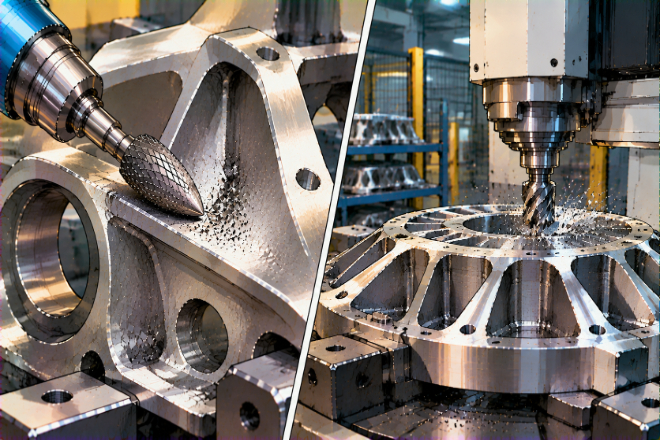
텅스텐 카바이드 버 are especially useful when titanium components require flexible and controlled finishing.
Typical applications include:
Edge rounding
Surface blending
Weld cleanup
Removing machining marks
Repair finishing
Complex shape adjustment
They are valuable when manufacturers need to correct local areas without repeating the entire machining process.
For example, a titanium component may have a small rough edge after cutting. A carbide burr can remove the problem area quickly.
However, carbide burrs are not always the best choice.
For large production runs with extremely strict dimensions, specialized machining systems may provide better automation and repeatability.
The decision should consider:
Required accuracy
Production volume
Surface requirements
Tool accessibility
Total cost
Carbide burrs provide the greatest value when flexibility and controlled finishing are important.
 English
  Español
  简体中文
简体中文  Français
  日本語
日本語  한국어
한국어  العربية
  Tiếng Việt