
1. Why Is Component Finishing Important in Automotive Manufacturing?
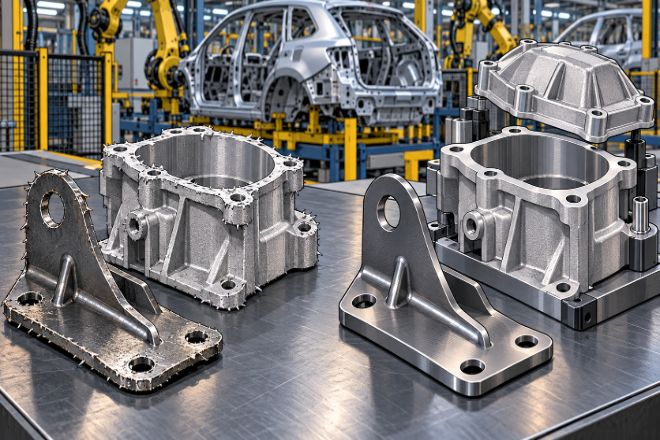
Automotive production involves many steps, from casting and molding to cutting and CNC machining.
Even when the main shape of a component is correct, its edges may still need additional work before the part is ready for assembly.
Common problems include sharp corners, machining burrs, excess material, and uneven edges.
These defects may seem minor, but they can cause delays when components need to fit together precisely.
For example, a small burr around a mounting hole may prevent two parts from sitting flat against each other.
Excess plastic around a connector housing may affect its fit. A rough edge on a metal bracket may also create problems during handling or assembly.
This is why automotive component finishing is more than a cosmetic step. It helps ensure that parts meet their design and quality requirements.
A good finishing process can help manufacturers:
Improve the fit between connected components.
Remove unwanted material before assembly.
Reduce manual correction and rework.
Maintain consistent quality across production batches.
Prepare parts for later processes, such as coating or sealing.
Carbide trimming tools are useful for these tasks because they can remove small amounts of material with controlled cutting action.
When the tool geometry matches the workpiece, manufacturers can achieve clean edges without unnecessarily changing the part’s original shape.
The required finishing method depends on the component. A cast metal housing, a thin plastic connector, and a precision-machined bracket may all need different tool designs and cutting conditions.
2. How Do Carbide Trimming Tools Improve Automotive Edge Quality?
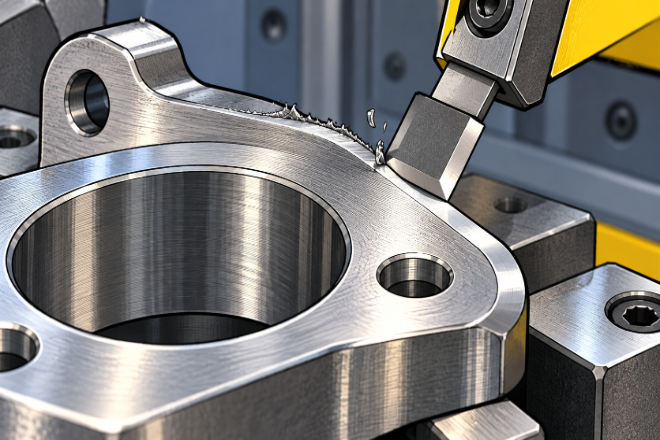
The main purpose of a carbide trimming tool is to remove unwanted material while keeping the required shape and dimensions of the component.
Its cutting edge is made from tungsten carbide, a hard material with good khả năng chống mài mòn. This helps the tool maintain its cutting ability during repeated finishing operations.
Removing Burrs and Sharp Edges
Burrs can form during milling, drilling, casting, and other manufacturing processes.
If they remain on a finished component, they may interfere with assembly or affect the quality of the next production step.
Carbide trimming tools cut away these unwanted areas. With suitable tool geometry and machining settings, they can help create smoother edges and reduce the need for repeated manual finishing.
Improving Dimensional Consistency
Ô tô components are often produced in large batches. Each part must meet the same drawing and inspection requirements.
A properly selected trimming tool can follow a repeatable cutting path and remove material from the intended area. This helps reduce variation between components.
However, tool material alone does not guarantee accuracy. Machine runout, fixture stability, tool wear, and cutting settings also affect the final result.
Finishing Small and Complex Features
Some automotive parts contain narrow slots, small openings, and curved edges that are difficult to reach with larger tools.
Small-diameter carbide trimming tools and custom cutting profiles can help reach these areas. This is especially useful when the finishing operation must avoid nearby surfaces or delicate features.
The goal is simple: remove the defect without creating a new one.
3. Where Are Carbide Trimming Tools Used in Automotive Component Finishing?
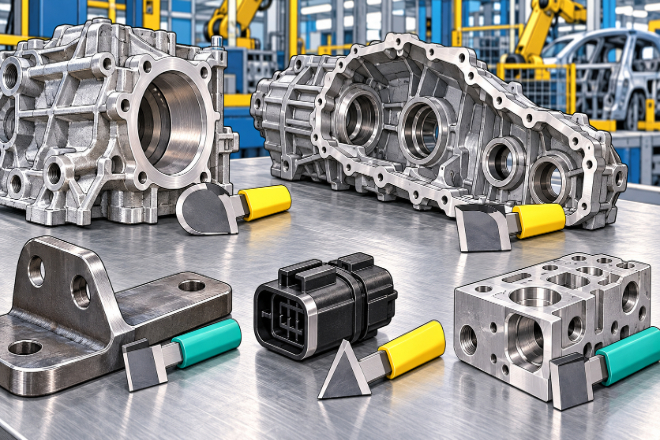
Carbide trimming tools can be used on different automotive components, depending on the material, tool design, and finishing requirements.
Engine and Transmission Housings
Aluminum housings may develop burrs around drilled holes, milled openings, and machined edges.
These areas often need finishing before other components are installed.
A suitable carbide trimming tool can remove unwanted material around these features while helping preserve the required dimensions.
Metal Brackets and Structural Components
Mounting brackets, support parts, and other metal components may have sharp edges after cutting or machining.
Carbide trimming tools can help clean these edges and prepare the parts for assembly.
For components with strict dimensional requirements, the amount of material removed must be carefully controlled.
Plastic Connectors and Molded Parts
Ô tô electrical connectors, clips, and interior components are often made from molded plastics. Injection molding can leave thin flash around parting lines or openings.
A suitable trimming tool can remove this excess material and improve the fit and appearance of the part.
Plastic requires special attention because excessive heat or cutting pressure can cause melting, scratches, or deformation.
Tool geometry and cutting conditions should match the plastic grade and component design.
Precision Machined Components
Smaller automotive parts may contain narrow channels, fine edges, and complex contours.
Carbide trimming tools can help remove small burrs and finish selected features before inspection or assembly.
The correct tool depends on the material, the size of the defect, and the final edge requirements.
4. Why Does Tungsten Carbide Matter in Automotive Finishing?
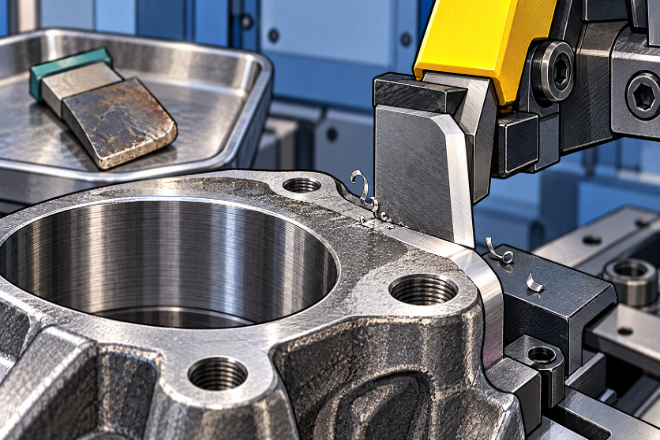
Ô tô production often involves repeated finishing operations, so tool wear can have a direct effect on output and quality.
Tungsten carbide offers high độ cứng and good khả năng chống mài mòn. These properties help the cutting edge resist wear during repeated contact with the workpiece.
For automotive manufacturers, this can provide several practical benefits.
Longer tool life: A suitable carbide tool may remain effective for more parts before replacement.
Stable cutting performance: A cutting edge that retains its shape helps maintain consistent finishing results.
Less downtime: Fewer tool changes can reduce production interruptions.
Support for automated processes: Stable tool performance can make it easier to maintain repeatable CNC or robotic finishing operations.
The actual tool life depends on the carbide grade, cutting geometry, workpiece material, machine setup, and operating conditions.
Carbide is hard, but it can chip or break if subjected to excessive force, vibration, or impact.
Manufacturers should therefore consider both wear resistance and resistance to edge damage when selecting a tool.
5. How Do Carbide Trimming Tools Support High-Volume Production?
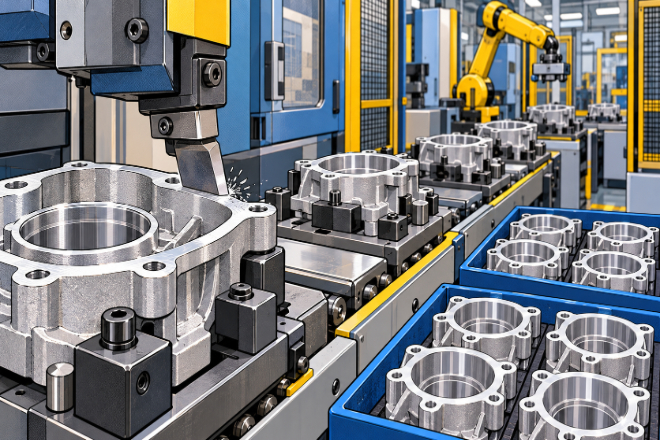
Automotive factories often need to process large numbers of similar components within tight production schedules.
A finishing method that works well for a few parts may become too slow or inconsistent when used for thousands.
Carbide trimming tools can support high-volume production when they are combined with a stable machining process.
Reducing Manual Finishing
Manual deburring can be useful for prototypes, repairs, or parts with unusual shapes.
However, it may produce different results depending on the operator and the amount of pressure applied.
A suitable carbide trimming tool used in a repeatable CNC process can reduce some of this manual work. Workers can then spend more time on setup, inspection, and process control.
Improving Cycle-Time Control
A well-matched tool can remove unwanted material without unnecessary passes.
This may shorten the finishing stage and help the production line maintain a more predictable cycle time.
Cutting speed should not be increased without testing. Excessive speed or feed may cause heat buildup, poor surface quality, or early tool failure.
- Supporting Consistent Quality Checks
Stable finishing results make it easier for quality teams to check parts against defined requirements.
Manufacturers can monitor burr size, edge shape, tool wear, and the number of acceptable parts produced between tool changes.
These measures help identify problems before they affect a large batch.
6. How Can Better Edge Finishing Reduce Automotive Production Costs?
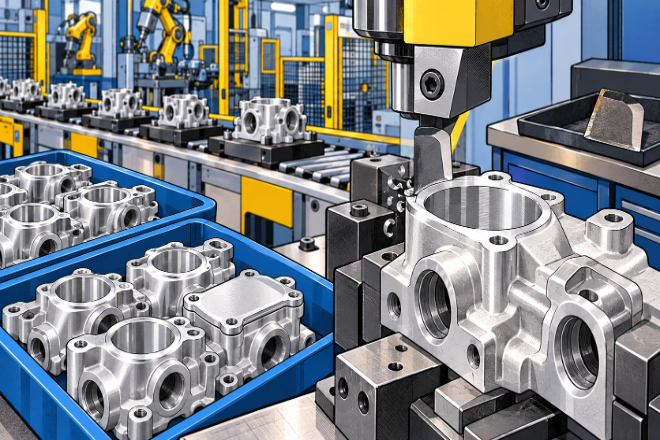
The cost of finishing includes more than the tool itself. Manufacturers also need to consider machine time, labor, replacement frequency, inspection, and rejected parts.
Poor edge finishing can lead to repeated work. A component may need another pass, manual correction, or additional inspection before it can move to assembly.
Carbide trimming tools can help control these costs when they deliver consistent results under suitable working conditions.
For example, if a trimming tool removes burrs reliably during a CNC operation, workers may spend less time correcting parts by hand.
If the tool also lasts longer between changes, the production line may experience fewer interruptions.
To judge the result, manufacturers should track:
Cycle time per finished component.
Number of acceptable parts produced per tool.
Tool replacement and setup time.
Rework and rejection rates.
Labor required for additional finishing.
Total cost per acceptable component.
These measurements help production and purchasing teams understand whether a tool improves the full process, rather than only one step.
 English
 Español
 简体中文
 Français
 日本語
 한국어
 العربية
 Tiếng Việt