
1. Why Is Fiberglass Difficult to Trim?
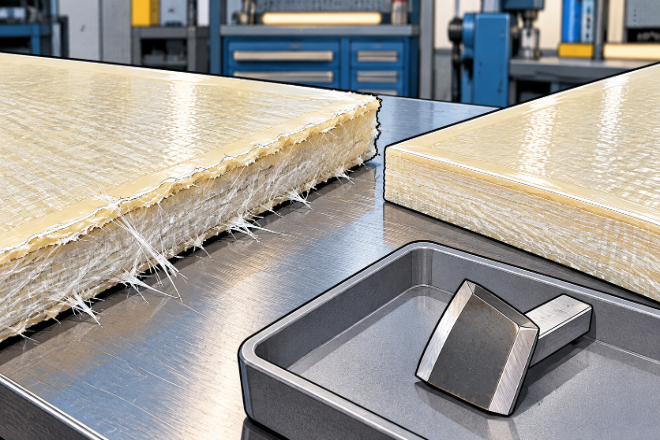
Fiberglass, also known as glass fiber-reinforced plastic (GFRP), combines glass fibers with a resin matrix. The fibers provide strength, while the resin holds them together and gives the part its shape.
This combination makes fiberglass useful for industrial housings, vehicle parts, boat components, wind turbine structures, pipes, and electrical enclosures. However, the same structure creates several challenges during trimming.
Glass fibers are abrasive. Although the resin may be relatively soft, the glass fibers can wear down a cutting edge over time.
A tool that works well on ordinary plastic may lose its cutting ability much faster when used on fiberglass.
The edge can become rough. If the tool pushes or pulls the fibers instead of cutting them cleanly, the finished edge may contain loose strands, broken fibers, or uneven areas.
The resin can suffer heat damage. Excessive heat may soften or damage the resin near the cutting area. This can affect the surface and reduce the quality of the finished part.
Fine dust is a serious concern. Trimming fiberglass creates small particles that can irritate the skin, eyes, and respiratory system.
Suitable dust extraction and personal protective equipment are important parts of the process.
These problems can increase production time. A part may need extra sanding, another trimming pass, or additional inspection before it can move to assembly.
For manufacturers, the goal is simple: remove unwanted material without damaging the fibers, weakening the edge, or creating unnecessary finishing work.
2. How Do Carbide Trimming Tools Handle Abrasive Glass Fibers?
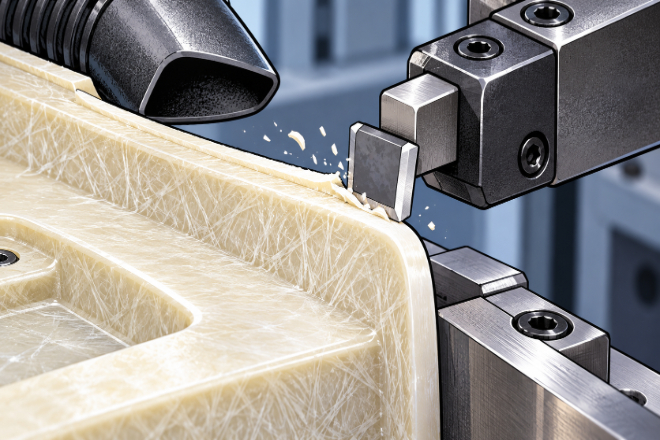
The main advantage of carbide trimming tools is their combination of hardness and wear resistance.
Tungsten carbide is much harder than ordinary tool steel, which helps a suitable cutting edge resist wear when working against abrasive materials.
This is especially useful for fiberglass, where the cutting edge comes into repeated contact with hard glass fibers.
Better Resistance to Abrasive Wear
When a tool trims fiberglass, the glass fibers gradually wear the cutting edge. As the edge becomes dull, the tool may need more force to remove material and may leave a rougher finish.
A suitable carbide trimming tool can resist this wear and maintain its cutting shape for longer than many conventional steel tools under comparable conditions.
The benefit is not just a longer tool life. A cutting edge that remains in good condition can also help keep the finishing process more consistent.
Controlled Material Removal
Fiberglass parts often have curved edges, narrow openings, or detailed contours. These features may require a tool that can remove small amounts of material without damaging nearby areas.
Carbide trimming tools are available in different diameters and cutting profiles. Manufacturers can select a design that fits the part geometry and the amount of material to be removed.
However, carbide is not unbreakable. Excessive force, vibration, or poor tool support can cause chipping. The tool grade and geometry must match the cutting load.
More Consistent Finishing
A worn tool may leave loose fibers or rough patches even when the machine follows the same programmed path.
By maintaining its cutting edge for longer, a suitable carbide tool can help reduce changes in edge quality during repeated operations. Regular inspection is still necessary, particularly in high-volume production.
3. Which Carbide Trimming Tool Designs Work Best for Fiberglass?
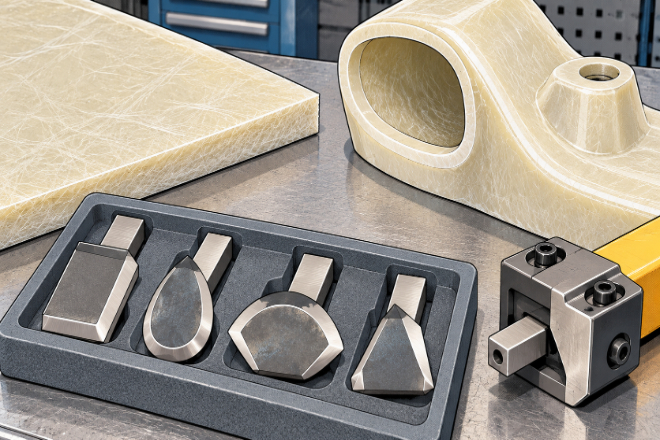
There is no single carbide trimming tool that suits every fiberglass component.
The right design depends on the part shape, laminate thickness, resin type, cutting direction, and required edge quality.
Three features deserve particular attention.
Cutting edge geometry:
A sharp, suitable cutting edge helps separate fibers cleanly instead of pushing them away from the resin. The edge must also be strong enough to withstand the expected cutting forces.
Flute design:
Flutes create space for cut material to leave the cutting area. Their design can affect cutting force, heat, and how smoothly the tool works through the material.
Tool diameter and reach:
Small-diameter tools can reach narrow openings and detailed contours. However, a long, thin tool may vibrate or break if it is poorly supported or used under excessive load.
The best choice depends on the actual job. A tool designed for light edge cleanup may not be suitable for removing large amounts of material from a thick fiberglass panel.
For demanding production, manufacturers should test different tool designs on representative parts before committing to a full production run.
4. Where Are Carbide Trimming Tools Used in Fiberglass Manufacturing?
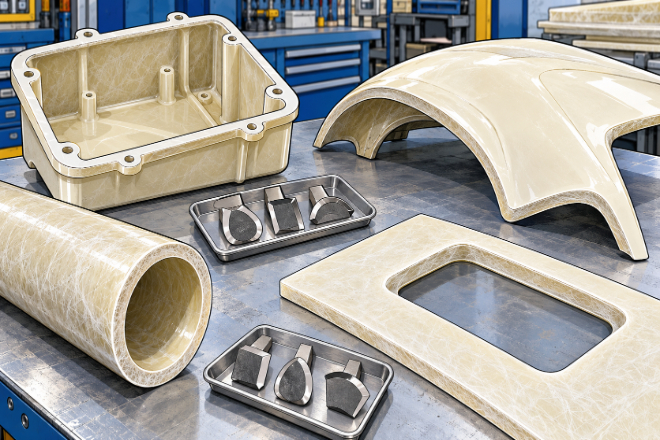
Carbide trimming tools can support several finishing operations across fiberglass production. Their suitability depends on the material structure and the result required.
Trimming Fiberglass Panels
Fiberglass panels may need their outer edges trimmed after molding or cutting.
A suitable carbide tool can remove excess material and help bring the panel to its required size.
This is useful for equipment covers, vehicle panels, industrial enclosures, and other molded parts.
The cutting path must be controlled carefully to avoid rough edges or damage to the surrounding surface.
Finishing Holes and Openings
Fiberglass components often contain openings for fasteners, cables, connectors, and mounting parts.
A suitable trimming tool can clean the edges around these features and remove small defects left by earlier operations. Small tools may be useful where access is limited, provided their diameter and reach are appropriate.
Trimming Pipes and Molded Components
Fiberglass-reinforced pipes and molded components may require edge cleanup after cutting or forming.
Carbide trimming tools can help remove small amounts of unwanted material around selected edges and openings.
For thicker sections or heavy material removal, manufacturers should confirm that the selected tool is designed for the required cutting load.
A light finishing tool should not be expected to perform like a heavy-duty cutting tool.
Finishing Complex Shapes
Some fiberglass parts have curved surfaces, angled edges, or changes in thickness. These features can make manual finishing slow and difficult to repeat.
A suitable carbide trimming tool used in a stable machining setup can help follow the required contour more consistently.
The result still depends on fixture design, tool reach, and the programmed cutting path.
5. How Can Manufacturers Prevent Rough Edges and Fiber Damage?
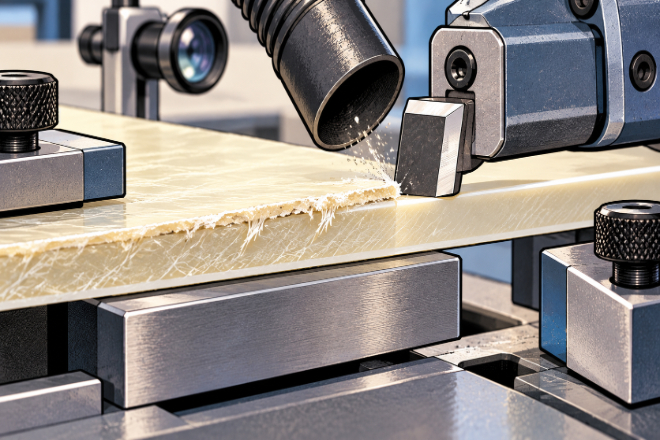
A carbide trimming tool can help produce a clean edge, but the tool material alone cannot prevent every defect. Cutting settings, tool geometry, and workpiece support all affect the final result.
Keep the Cutting Edge in Good Condition
A worn or chipped tool may tear fibers instead of cutting them cleanly. Inspect the cutting edge regularly and replace the tool when wear begins to affect the finished part.
Do not wait until the tool fails completely. By then, several parts may already have developed edge defects.
Control Heat and Cutting Forces
Excessive heat can damage the resin, while high cutting forces may pull fibers out of the material.
Use cutting settings recommended for the tool and workpiece, then confirm them through controlled trials.
The best speed and feed depend on the tool geometry, machine, fiberglass structure, and cutting operation.
Support the Workpiece Properly
Thin fiberglass panels can flex or vibrate during trimming. This movement can lead to uneven edges and make the tool harder to control.
A stable fixture helps keep the part in position. For thin or complex components, support near the cutting area may be especially important.
Use Suitable Dust Extraction
Fiberglass trimming creates fine dust that should not be allowed to build up around the machine or work area.
Use suitable dust extraction and follow the site’s safety procedures for cleaning and handling fiberglass dust.
Select personal protective equipment based on the material’s safety information and the workplace risk assessment.
Avoid using compressed air to spread dust around the work area. Effective extraction protects workers and helps keep the machining area cleaner.
6. How Can Carbide Trimming Tools Reduce Fiberglass Production Costs?
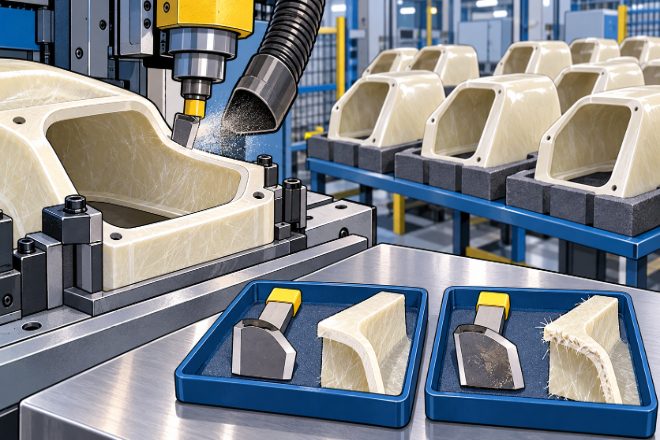
Fiberglass components are often produced in batches, and even a small finishing problem can add up across hundreds of parts.
A worn tool may leave rough edges. Operators may need extra sanding or trimming. Inspection may take longer, and rejected parts can waste material and machine time.
A suitable carbide trimming tool can help control these costs when it delivers consistent results and acceptable tool life.
Manufacturers should track four key measures:
Tool life: How many parts can be finished before wear affects quality?
Cycle time: How long does each trimming operation take, including extra finishing passes?
Rework rate: How often do parts need additional trimming or sanding?
Cost per accepted part: What is the full cost of producing a component that meets the required standard?
A low-cost tool may work well for occasional finishing, while a more wear-resistant option may provide better value for long production runs.
The important point is to compare the full cost of producing acceptable parts, not just the price of one cutting tool.
 English
 Español
 简体中文
 Français
 日本語
 한국어
 العربية
 Tiếng Việt