
What Is Silicon Carbide?
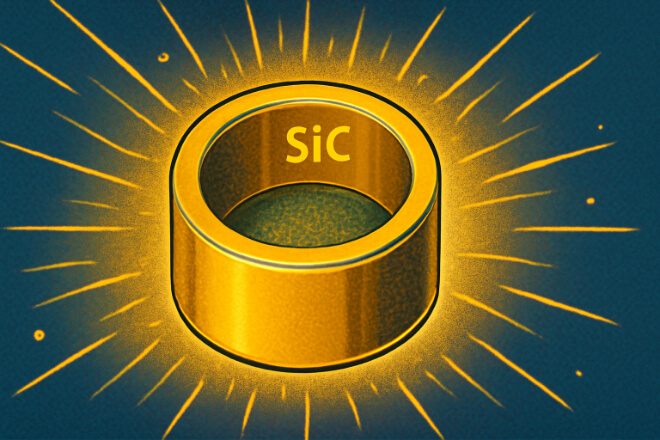
Silicon carbide (SiC) is a highly durable material made from silicon and carbon.
It is known for its excellent hardness, high thermal conductivity, and chemical resistance.
SiC is often used in environments where 耐磨性 and heat resistance are crucial.
Key benefits of silicon carbide:
Extremely hard: SiC has a 硬度 close to that of diamond, making it highly resistant to abrasion.
耐腐蚀: Silicon carbide is highly resistant to corrosion, even when exposed to harsh chemicals.
Thermal stability: SiC can withstand high temperatures without significant degradation.
Silicon carbide is widely used in applications such as slurry pumps, high-temperature systems, and chemical processing due to these properties.
什么是碳化钨?
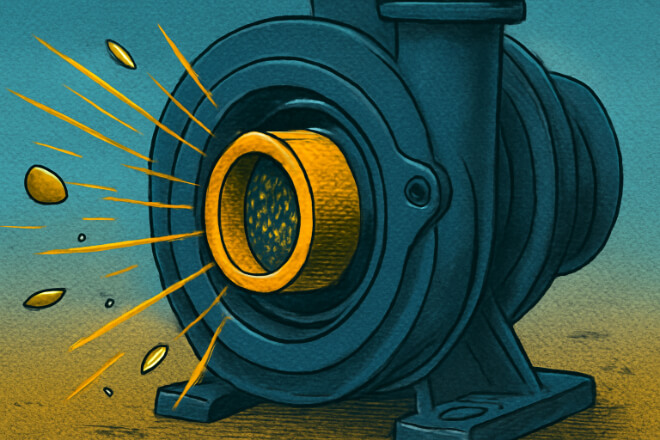
Tungsten carbide (WC) is another extremely hard material, composed of tungsten and carbon.
Tungsten carbide is widely known for its superior wear resistance, high hardness, and toughness, making it ideal for high-stress applications.
Key benefits of tungsten carbide:
高的 耐磨性: Tungsten carbide is incredibly durable and can withstand continuous friction and abrasive forces.
韧性: While extremely hard, tungsten carbide is also tough, making it less prone to cracking than other materials.
耐腐蚀: Tungsten carbide also resists corrosion, although to a lesser extent than silicon carbide in highly aggressive chemical environments.
Tungsten carbide is commonly used in mining, oil and gas, and wastewater treatment industries for applications involving abrasive slurries and high pressure.
Choosing Between Silicon Carbide and Tungsten Carbide Bushings

The choice between silicon carbide and tungsten carbide bushings depends on the specific needs of your application.
Each material offers distinct advantages, so the ideal choice will depend on factors like wear conditions, exposure to chemicals, and the severity of impact and pressure.
1). When to Choose Silicon Carbide Bushings:
Extremely abrasive slurries: SiC excels in environments where abrasion from particles like sand or silt is a concern.
High corrosion environments: SiC is the material of choice for chemical processing, seawater, and other corrosive fluids.
High-temperature applications: SiC offers superior performance at high temperatures, making it ideal for heat-intensive applications.
2). When to Choose Tungsten Carbide Bushings:
Impact-heavy environments: If your equipment is subject to mechanical shock or vibrations, tungsten carbide’s toughness makes it a better choice.
General abrasive environments: Tungsten carbide offers excellent 耐磨性 and is suitable for a wide range of abrasive slurry applications.
Longer-lasting durability: Tungsten carbide typically outperforms silicon carbide in terms of overall 韧性, making it ideal for long-term, heavy-duty applications.
Maintenance and Performance Monitoring
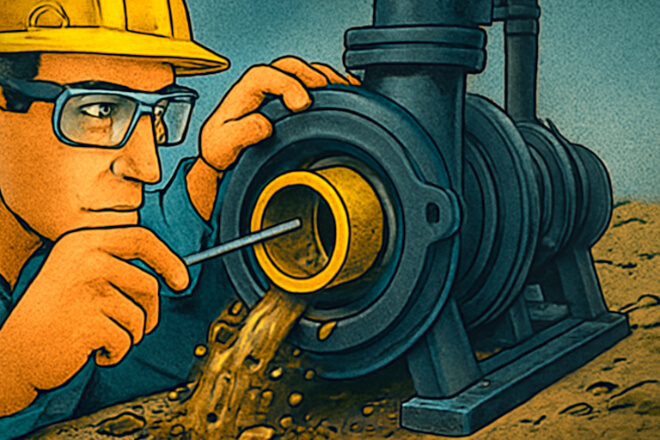
Regardless of whether you choose silicon carbide or tungsten carbide, regular maintenance and performance monitoring are critical to extending the life of the bushings and ensuring optimal operation.
Here are some best practices for maintaining slurry pumps and valves:
Maintenance tips:
Inspect for wear: Regularly check bushings for signs of wear, cracking, or corrosion.
Monitor alignment: Ensure proper alignment of the pump shaft to avoid uneven wear on the bushings.
Check slurry composition: Keep track of the slurry composition to identify any changes that might affect bushing performance.
 English
  Español
  简体中文
简体中文  Français
  日本語
日本語  한국어
한국어  العربية
  Tiếng Việt