
1. Why Does Aerospace Manufacturing Need Reliable Trimming Tools?
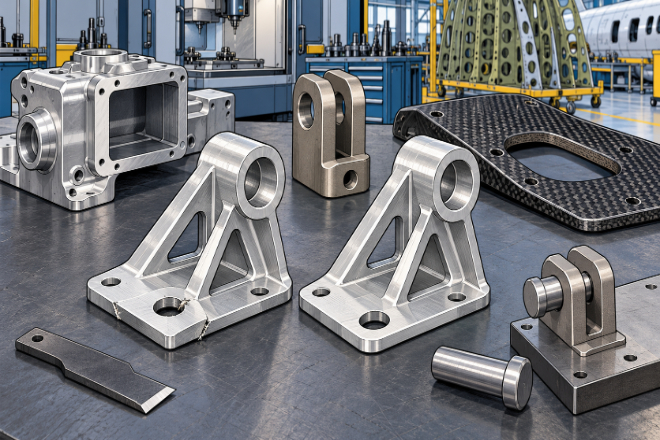
航天 parts are designed to work under demanding conditions. They may face heavy loads, vibration, temperature changes, and long service periods.
To meet these needs, manufacturers use materials such as titanium alloys, high-strength steel, aluminum alloys, and carbon-fiber composites.
These materials perform well in service, but they can create very different problems during finishing.
Titanium can keep heat near the cutting edge. Hardened steel can wear down an unsuitable tool. Carbon-fiber composites can damage cutting edges through abrasion and may develop rough fibers if trimmed poorly.
Meanwhile, the components themselves often have complex shapes. A bracket may contain narrow slots, a housing may have several small openings, and a composite panel may need a clean edge without damage to its layers.
This leaves manufacturers with a practical challenge: how can they remove unwanted material without creating another problem?
Reliable trimming tools help address this challenge by making edge finishing more controlled and repeatable.
For aerospace production teams, the goal is not simply to cut faster. It is to produce components that meet their engineering requirements without unnecessary tool changes, manual correction, or rejected parts.
2. What Makes Carbide Trimming Tools a Good Choice for Aerospace Parts?
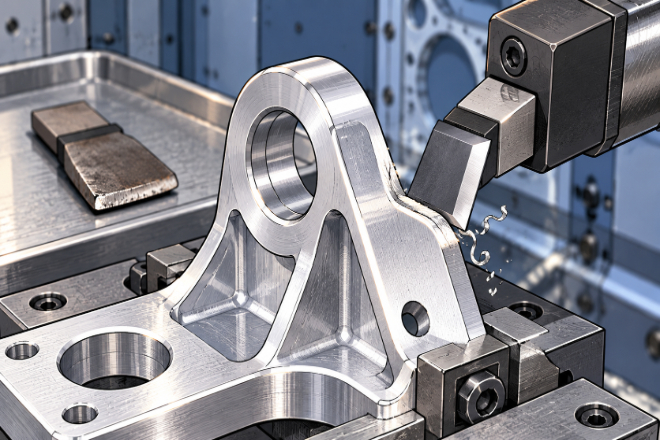
The main reason is the material used to make the cutting tool.
Tungsten carbide combines high 硬度 with good 耐磨性, allowing a suitable tool to retain its cutting edge during repeated operations.
Compared with many conventional steel tools, carbide trimming tools can offer better wear resistance in demanding applications.
This is useful when finishing hard metals or working with abrasive materials.
They Resist Wear During Repeated Operations
A cutting edge does not stay sharp forever. Every operation gradually changes its shape, and abrasive materials can speed up this process.
As the edge wears, the tool may leave rougher surfaces or require more force to remove material. The finishing result can become less consistent, even if the machine program remains unchanged.
A suitable 硬质合金修边工具 helps slow this wear process. For manufacturers running repeated finishing operations, that can mean fewer tool changes and more stable results.
Of course, carbide grade matters. A tool with high hardness but insufficient toughness may chip under impact or vibration. The right balance depends on the material and cutting conditions.
They Support Precise Edge Finishing
Aerospace components often include small features where excessive material removal is not acceptable.
Carbide trimming tools are available in different sizes and cutting profiles, allowing manufacturers to match the tool to the required edge shape.
When used with a stable machine setup, they can help remove burrs and clean contours without unnecessary contact with nearby surfaces.
The tool alone does not guarantee accuracy. Tool runout, fixture stability, and cutting settings all affect the result.
However, a suitable carbide tool gives manufacturers a useful starting point for a controlled process.
They Can Reduce Repeated Finishing Work
Nobody wants to finish the same edge twice because the first pass left burrs behind.
When the tool geometry and process settings are correct, carbide trimming tools can help produce more consistent edges. This may reduce extra passes and manual correction.
For production managers, the value is straightforward: less time spent correcting avoidable defects means more time available for useful production.
3. How Do Carbide Trimming Tools Handle Different Aerospace Materials?
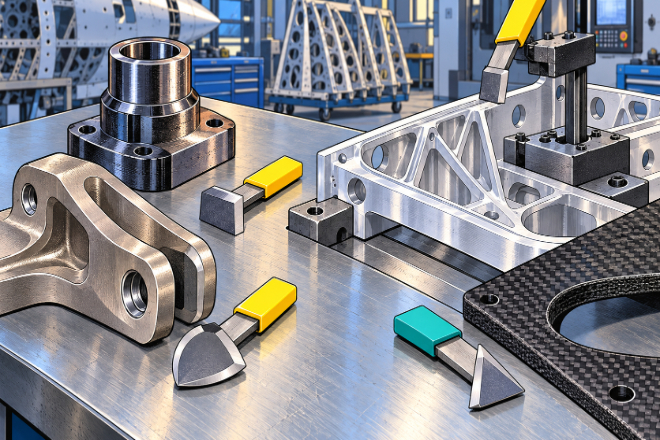
Aerospace manufacturers work with several material groups, and each one places different demands on a trimming tool. Choosing the correct tool begins with understanding those differences.
Titanium Alloys
Titanium alloys offer a useful balance of strength and low weight, but they can be difficult to machine because heat tends to remain near the cutting area.
A suitable 硬质合金修边工具 can finish selected edges and small features. However, excessive cutting speed, poor tool holding, or unsuitable geometry may cause early wear or damage.
Manufacturers should test the tool under realistic conditions and check both the finished edge and tool life before using it in regular production.
High-Strength Steel
High-strength and hardened steel components can place heavy loads on the cutting edge. If the tool is not suited to the material, it may wear or chip quickly.
Carbide trimming tools can be useful for removing burrs and finishing selected edges after machining.
The carbide grade must balance hardness with enough toughness to handle the expected cutting load.
Aluminum Alloys
Aluminum is generally easier to cut than titanium or hardened steel, but aerospace-grade aluminum can still create finishing problems.
Material may stick to the cutting edge, and poor chip removal can affect surface quality.
A suitable tool geometry can help remove material cleanly. In some aluminum applications, a sharp, polished cutting edge may be more useful than simply choosing a tool with the highest hardness.
Carbon-Fiber Composites
Carbon-fiber-reinforced polymer (CFRP) is lightweight and strong, but its fibers are highly abrasive.
Carbide trimming tools can suit selected composite finishing tasks, particularly when the production volume and required edge quality match the tool’s capabilities.
For demanding, high-volume CFRP production, diamond-coated carbide or polycrystalline diamond (PCD) tools may provide better wear life.
The best tool depends on the material, cutting path, edge quality, and expected production volume. There is no single solution for every aerospace component.
4. How Do Carbide Trimming Tools Improve Production Efficiency?
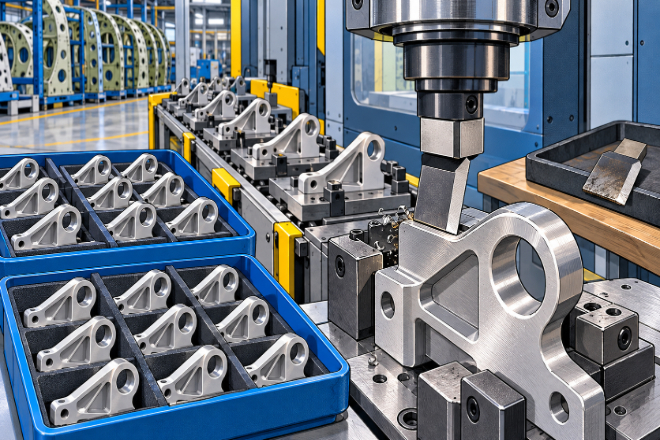
A trimming tool may look like a small part of a large aerospace production line, but its performance can affect the entire workflow.
If a tool wears quickly, operators need to replace it more often. If it leaves rough edges, parts may need another finishing pass.
If the cutting process is unstable, inspection may uncover defects that delay delivery.
A well-matched carbide trimming tool can help reduce these interruptions.
减少工具更换次数
Longer useful tool life can reduce the time spent stopping a machine to replace cutting tools.
The actual benefit depends on the material, carbide grade, tool geometry, and cutting conditions.
Manufacturers should measure how many acceptable parts each tool can finish rather than relying on general tool-life claims.
More Predictable Production
When a trimming process produces consistent results, cycle times become easier to plan. Production teams can also identify unusual changes in tool wear or edge quality before they affect a large batch.
This is particularly useful when multiple components must pass through the same finishing stage.
Less Manual Rework
A suitable tool can reduce the need for repeated deburring or edge correction.
Manual work may still be necessary for complex features, but avoidable rework can often be reduced through better tool selection and process control.
The important point is that faster cutting is not always faster production. A slightly slower operation that produces acceptable parts consistently may be more efficient than a fast process that creates defects.
5. How Can Carbide Trimming Tools Help Control Manufacturing Costs?
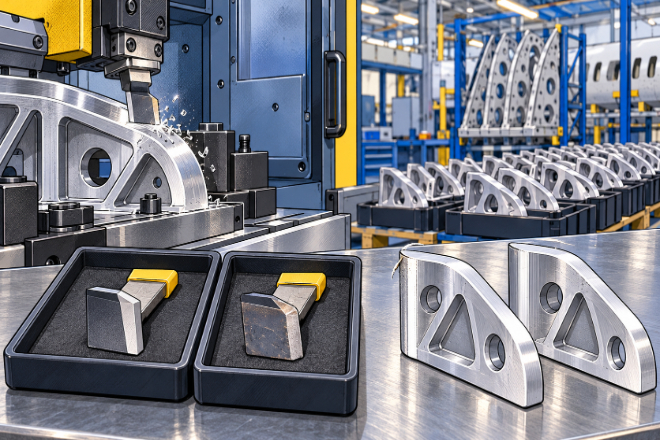
Aerospace components can involve expensive materials, long machining cycles, and detailed inspection. When finishing goes wrong, the cost is rarely limited to the trimming tool.
A damaged edge may require rework. A worn tool may slow production. A rejected part may waste material and machine time that cannot easily be recovered.
A suitable 硬质合金修边工具 can help control these costs by supporting stable finishing and reducing avoidable interruptions.
Manufacturers should track:
Tool life: How many parts can be finished before tool performance drops?
Cycle time: How long does each trimming operation take?
Tool changes: How much production time is lost during replacement?
Rework rate: How often do parts need another finishing pass?
Inspection results: Does the process meet the required quality limits?
Cost per accepted part: What does it cost to produce a part that passes inspection?
A tool with a higher purchase price may offer better value if it lasts longer and produces more acceptable parts. On the other hand, an expensive tool may not be worthwhile for a short production run.
The most useful comparison is not simply the price of one tool. It is the total cost of achieving the required finishing quality.
6. How Can Manufacturers Get Better Results from Carbide Trimming Tools?
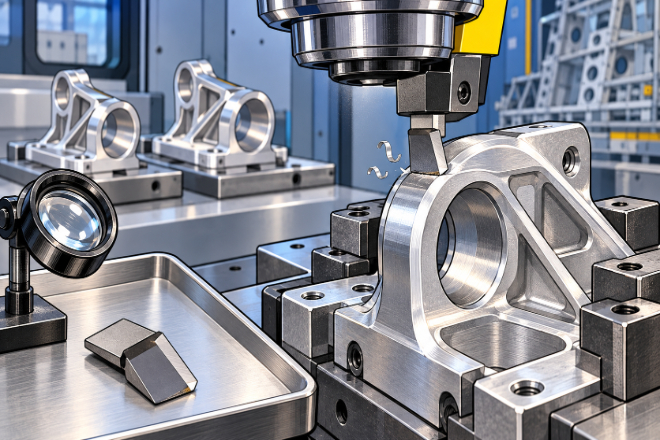
Even a good tool can perform poorly in the wrong setup. A few practical checks can help manufacturers get more value from carbide trimming tools.
Use suitable cutting settings. Match speed and feed to the workpiece material, tool design, and machine. Higher speed is not automatically better.
Keep the workpiece secure. Poor clamping can cause vibration and uneven material removal. Thin components may need additional support.
Check tool runout. Incorrect alignment can place too much load on one part of the cutting edge and shorten tool life.
Inspect the cutting edge. Watch for wear, chipping, or changes in the finished surface. Replace tools before wear begins to affect part quality.
Review the results. Record tool life, cycle time, and inspection findings. These records help teams decide whether a different tool geometry or carbide grade would improve performance.
For critical aerospace components, the final process must follow the applicable engineering drawings and quality procedures. Tool selection should support those requirements, not replace inspection.
 English
 Español
 简体中文
 Français
 日本語
 한국어
 العربية
 Tiếng Việt