
1. Why Does Tool Durability Matter in Manufacturing?
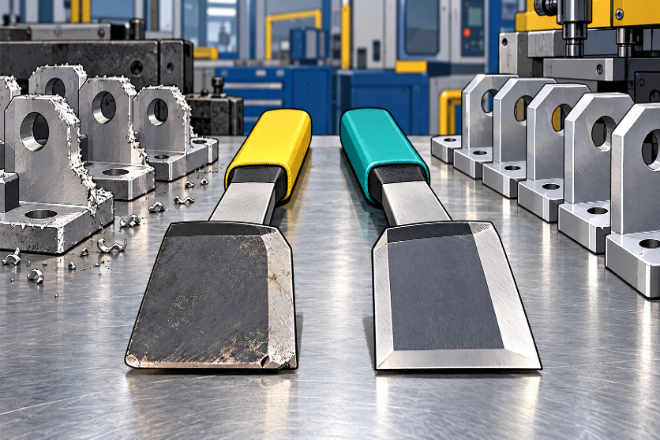
In manufacturing, tools are not only responsible for cutting materials. They also affect production speed, product quality, and overall cost.
During trimming and edge finishing processes, tools experience continuous stress from:
cutting force
friction
heat
repeated contact with materials
Over time, these conditions can damage the cutting edge. When a tool becomes worn, manufacturers may notice:
rougher edge finishing
inconsistent part quality
slower machining speed
more frequent tool replacement
For high-volume production, these problems can quickly increase costs.
A durable tool helps manufacturers maintain stable machining performance for a longer time.
This means fewer production interruptions and better control of final product quality.
This is one reason many industries choose tungsten carbide trimming tools for precision finishing operations.
These tools are designed for applications that require accurate edge removal, deburring, and long-term cutting performance.
2. What Makes Carbide Trimming Tools More Durable Than Steel Tools?
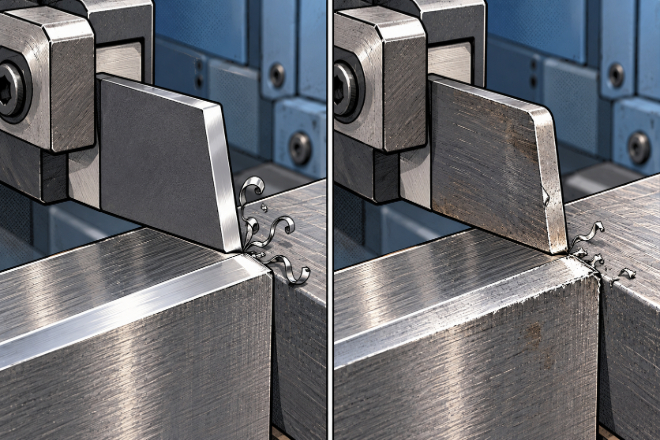
The durability difference between carbide trimming tools and steel tools mainly comes from their material structure.
Steel tools have been widely used because they are affordable, strong, and easy to manufacture.
However, when they are used for continuous trimming operations or harder materials, their cutting edges can wear faster.
Carbide trimming tools use tungsten carbide as the main cutting material.
Tungsten carbide has a unique combination of hardness, strength, and wear resistance, which allows the tool to maintain performance under demanding conditions.
Several key factors make carbide trimming tools more durable.
1). より高い 硬度 Helps Resist Wear
Hardness is one of the biggest reasons why carbide trimming tools have longer service life.
During edge finishing, the cutting edge constantly contacts the workpiece.
This repeated contact creates friction and slowly removes material from the tool surface.
When the tool material is not hard enough, the cutting edge can become:
rounded
damaged
less sharp
A worn cutting edge usually creates more cutting resistance and reduces finishing quality.
Tungsten carbide has much higher hardness than traditional steel materials. This allows carbide trimming tools to resist wear caused by continuous cutting.
As a result, manufacturers can achieve:
longer tool life
fewer tool changes
more stable finishing results
For companies running CNC machining operations, this stability is especially valuable because production quality depends on repeatable tool performance.
2). Carbide Keeps a Sharp Cutting Edge Longer
For trimming applications, edge sharpness is extremely important.
Unlike rough machining operations that remove large amounts of material, trimming focuses on accuracy.
The tool needs to remove small amounts of unwanted material while keeping the original shape of the part.
When a steel tool becomes dull, several issues may appear:
increased cutting pressure
poor surface finish
more burr formation
inaccurate edge dimensions
Because carbide has better edge retention, carbide edge finishing tools can continue producing clean and accurate results for a longer period.
This advantage is especially useful in industries that require:
precision components
small parts
complex shapes
repeated production
A stable cutting edge also reduces quality differences between early and later production cycles.
3). Better Heat Resistance Improves Tool Life
Heat is another major factor that affects tool durability.
During high-speed machining, friction between the tool and workpiece creates heat. If a tool cannot handle this heat, the cutting edge may lose strength and wear faster.
Steel tools can experience faster performance changes when exposed to high temperatures for long periods.
Tungsten carbide provides better thermal stability, allowing carbide trimming tools to maintain their cutting ability during demanding operations.
This makes them suitable for:
high-speed CNC machining
automated production lines
continuous trimming processes
Better heat resistance helps reduce unexpected tool failure and improves production reliability.
4). Stronger 耐摩耗性 Reduces Tool Replacement
Tool replacement is a common cost in manufacturing.
A tool that wears quickly requires:
more machine stops
more operator attention
more inventory management
additional purchasing costs
The strong wear resistance of carbide trimming tools allows them to operate longer before replacement is needed.
For manufacturers, this creates several benefits:
3. Carbide vs Steel Tools: Which One Is Better for Trimming Applications?
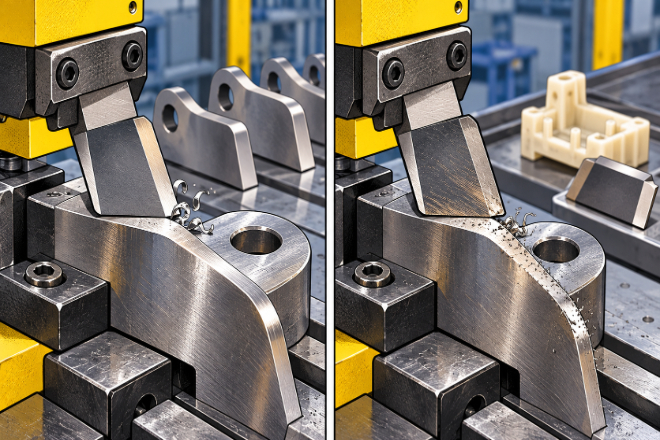
The answer depends on the application.
Steel tools can still be useful for simple jobs where:
cutting speed is low
material is soft
production volume is small
However, when manufacturers need reliable performance for repeated edge finishing, 超硬トリミングツール usually provide stronger advantages.
The main differences include:
4. How Does Carbide Material Improve Trimming Performance?
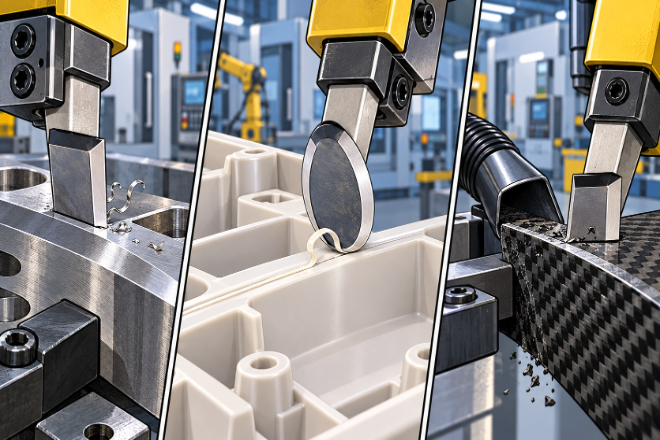
The performance of 超硬トリミングツール comes from the combination of tungsten carbide particles and bonding materials.
This structure provides a balance between:
強さ
cutting ability
耐摩耗性
A good carbide tool can maintain its cutting shape while handling repeated machining pressure.
This is important because trimming operations often require controlled material removal instead of aggressive cutting.
For example, when processing:
aluminum parts
plastic molded components
precision metal parts
composite materials
the tool must remove unwanted edges without damaging the main surface.
The stable cutting performance of carbide helps manufacturers achieve cleaner results with fewer process adjustments.
5. When Should Manufacturers Choose Carbide Trimming Tools?
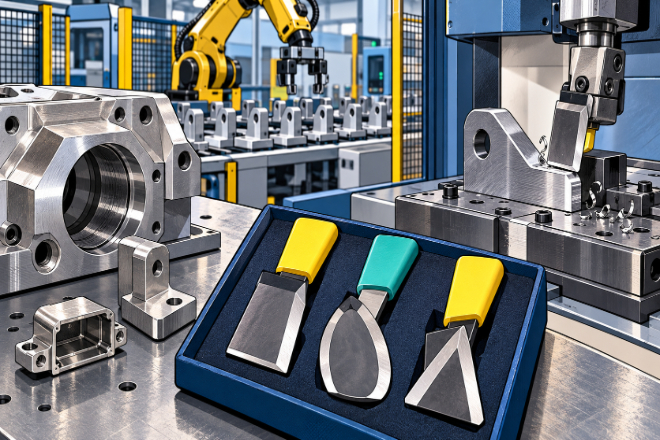
Manufacturers should consider 超硬トリミングツール when production requires:
1). High Production Volume
If hundreds or thousands of parts are processed regularly, tool life becomes a major factor. Long-lasting carbide tools can reduce downtime and improve workflow.
2). Higher Precision Requirements
For parts requiring accurate edges and smooth surfaces, carbide tools provide better stability.
This is especially important for:
electronic components
precision mechanical parts
molded products
3). Harder Materials
When working with materials that quickly wear steel tools, carbide provides stronger cutting performance.
Examples include:
stainless steel
hardened metals
composite materials
4). Automated Machining
Automation requires predictable tool performance. A tool that changes performance quickly can affect the entire production process.
Carbide trimming tools provide more consistent results, making them suitable for automated manufacturing systems.
6. How Does Longer Tool Life Reduce Manufacturing Costs?
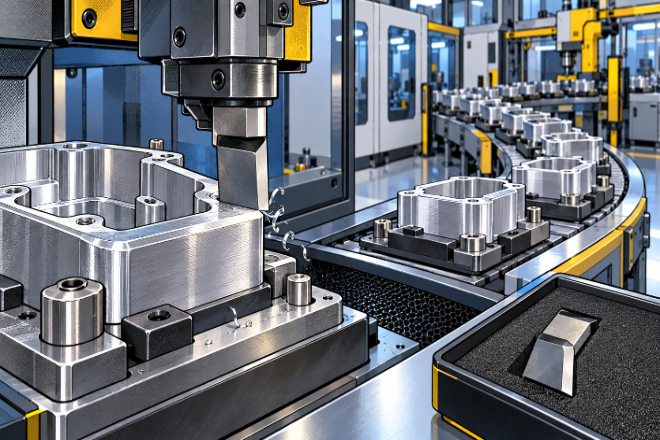
Many manufacturers focus only on the purchase price of a tool. However, the real cost includes:
replacement frequency
machine downtime
labor time
production efficiency
rejected parts
A durable tool can reduce these hidden costs.
例えば、 超硬トリミングツール that lasts much longer than a steel tool may reduce the number of replacements required during production.
This helps manufacturers achieve:
lower operating costs
better production planning
fewer interruptions
improved product consistency
In many cases, the value of a tool is determined by how much production it supports, not just its original price.
7. Why Are Carbide Trimming Tools a Better Choice for Modern Manufacturing?
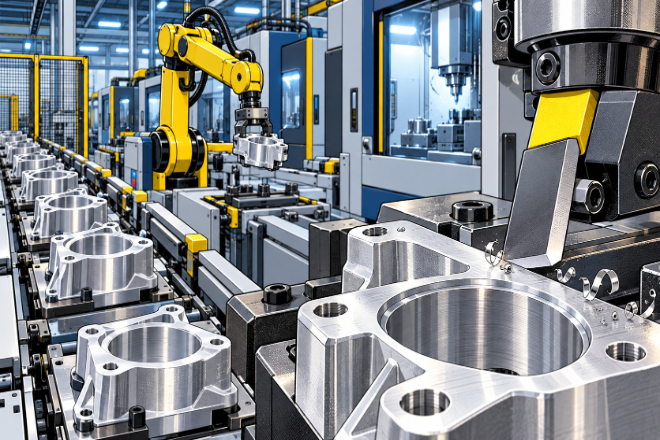
Modern manufacturing requires tools that can handle higher speeds, tighter tolerances, and more advanced materials.
Traditional steel tools still have their place, but they may not provide enough durability for demanding applications.
Carbide trimming tools offer several advantages:
longer tool life
stronger 耐摩耗性
better heat performance
stable edge quality
improved production efficiency
For manufacturers looking to improve machining reliability, tungsten carbide trimming tools provide a practical solution for modern edge finishing requirements.
 English
 Español
 简体中文
 Français
 日本語
 한국어
 العربية
 Tiếng Việt