
1. What Makes Groove Machining Different from General Metal Cutting?
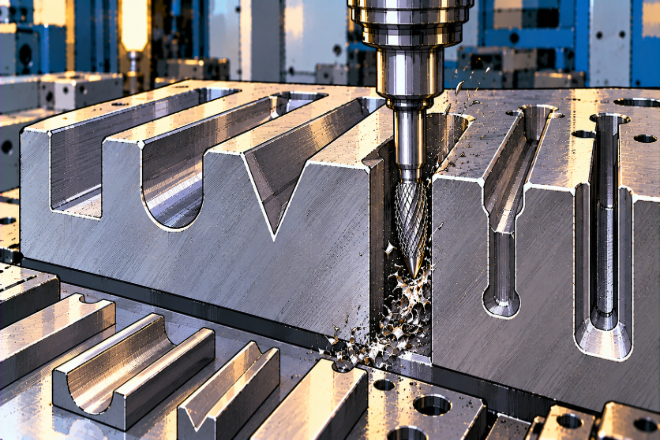
Groove machining involves removing material from a narrow area to create or improve a channel in a metal component.
These grooves can have different shapes. Some have straight walls and flat bottoms, while others have rounded, V-shaped, or irregular profiles.
They may be used for clearance, assembly, welding preparation, fluid flow, or other industrial functions.
The challenge is that a groove limits the movement of the cutting tool.
When machining an open surface, the tool has plenty of space to move and release chips. Inside a narrow groove, the cutting head may contact both walls if its size or position is incorrect.
This can increase cutting pressure and make the operation harder to control.
Groove depth also matters. A shallow groove is usually easier to reach, while a deeper channel may require a smaller head or longer tool reach.
For example, a maintenance technician may need to clean a damaged groove inside a large steel casting. A standard milling cutter might not reach the area without removing the component from the machine.
あ tungsten carbide burr can be useful in this situation because different head shapes allow controlled local material removal.
However, groove machining and precision slot milling are not always the same job.
If the groove needs an exact width, depth, straightness, or surface finish, a dedicated end mill, slot cutter, or form tool is usually the better choice.
Carbide burrs are particularly useful for groove correction, local shaping, and finishing work where flexibility matters more than strict dimensional control.
For production managers, understanding this difference prevents unnecessary tool changes, poor surface quality, and expensive rework.
2. Which Tungsten Carbide Burr Shapes Are Best for Different Grooves?
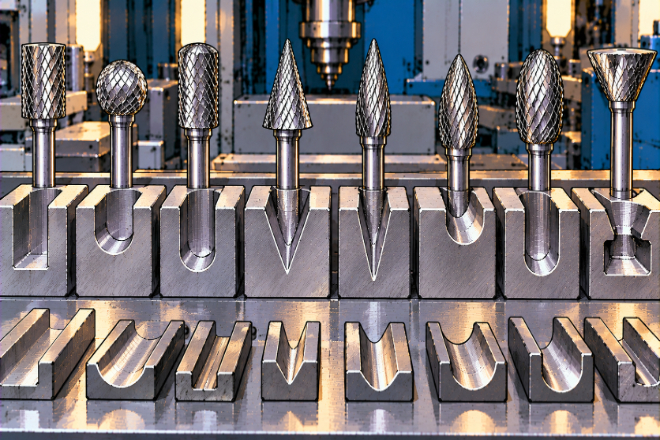
The most important factor in choosing a tungsten carbide burr for groove machining is the groove profile.
A burr that works well in a straight channel may be unsuitable for a rounded or angled groove.
Cylindrical carbide burrs
Cylindrical burrs are useful for straight groove walls, open channels, and flat areas.
Their parallel cutting sides make them suitable for removing material along a relatively straight surface.
A cylindrical burr with cutting teeth on its end can also work on accessible groove bottoms. However, a cylindrical burr without end-cutting teeth should not be used for plunge cutting.
Ball-shaped carbide burrs
Ball burrs are useful for rounded grooves, curved channels, and internal radius work.
Their spherical cutting heads can help create or refine a concave surface.
They are especially useful when the groove does not require a flat bottom.
Radius-end cylindrical burrs
These burrs combine straight cutting sides with a rounded end.
They are useful for grooves that have straight walls but require a smoother transition near the bottom.
The rounded end can also help reduce unwanted sharp corners during local blending.
Cone and pointed-tree carbide burrs
Cone-shaped and pointed-tree burrs are useful for V-shaped grooves, angled surfaces, and narrow areas.
Their tapered profiles allow the cutting head to enter spaces that may be too narrow for a cylindrical burr.
However, the actual groove angle depends on the tool geometry and how it is used. A standard cone burr should not be expected to create a precise V-groove without suitable guidance and measurement.
Flame and oval carbide burrs
Flame and oval burrs are useful for curved grooves and irregular transitions.
They are often suitable for blending areas where the groove shape changes gradually.
Inverted-cone carbide burrs
An inverted-cone burr can be useful for certain undercuts, rear-facing edges, and special groove profiles.
It requires enough clearance for safe tool entry and movement.
The following table provides a practical comparison.
3. How Does Workpiece Material Affect Carbide Burr Selection?
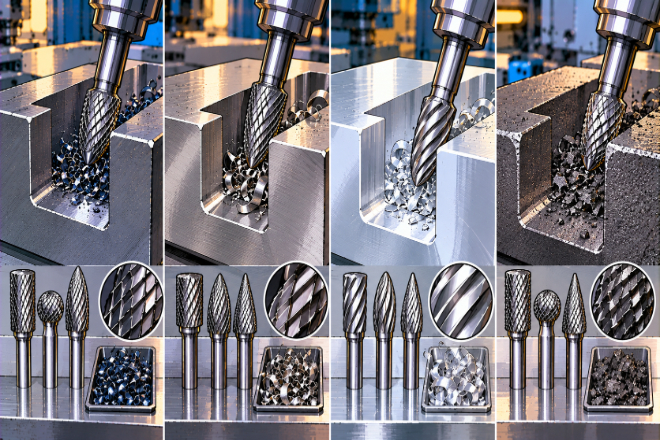
Groove shape is important, but material selection can be just as important.
A carbide burr that performs well on steel may behave very differently on aluminum.
For carbon steel, a suitable steel-cut burr can provide effective material removal during groove correction and cleanup.
When removing a large amount of material, a more aggressive cutting pattern may be useful. For smaller finishing operations, a finer cutting pattern may provide better control.
Stainless steel creates a different challenge.
Some stainless grades can be difficult to machine because they tend to work-harden and produce heat during cutting.
A suitable stainless-specific carbide burr can help improve cutting performance, provided the speed, pressure, and tool movement are correct.
Aluminum requires another approach.
Because aluminum is relatively soft and can be sticky during machining, chips may collect between closely spaced cutting teeth.
This is called chip loading.
For aluminum groove machining, carbide burrs with wider, more open flutes are often a better starting point. They provide more space for chips to escape and can reduce clogging.
Cast iron is another common material.
Carbide burrs designed for cast iron can be useful for cleaning casting grooves, removing local flash, and correcting rough channels.
However, cast iron dust and chips require suitable collection and workplace protection.
For manufacturers handling several materials, one general-purpose burr may be convenient, but it will not always provide the best cutting performance.
A better approach is to match the burr cut to the material used most often.
This can improve tool life, reduce unnecessary finishing work, and make production results more predictable.
4. How Do Groove Width and Depth Affect Burr Performance?
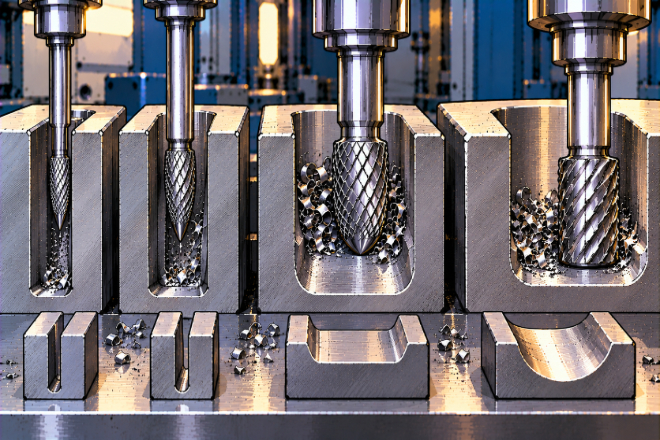
A groove can be easy to reach but difficult to machine if the burr size is wrong.
Groove width is the first consideration.
If the burr head is almost as wide as the groove, it may contact both walls at once. This can increase cutting forces and make the tool difficult to control.
A smaller burr provides more clearance, allowing the operator to work on one area at a time.
However, a very small burr may require more passes to remove the same amount of material.
The correct diameter depends on the groove width, available working space, and amount of metal that needs to be removed.
Depth is another important factor. A shallow groove may allow a short, rigid tool to reach the entire cutting area.
A deep groove may require a longer cutting head or additional tool reach.
This creates a trade-off. Longer tool reach can improve access, but it can also reduce stiffness and increase vibration.
For this reason, manufacturers should use the shortest suitable tool setup that can safely reach the working area.
Groove length also affects the process. A short groove may require only a few controlled passes.
A long channel needs consistent tool movement to avoid creating uneven areas.
This is especially important when the groove is used for assembly or part clearance.
Another issue is chip removal.
Metal chips can become trapped inside deep or narrow grooves. If they remain between the burr and the workpiece, they may affect the finish or interfere with cutting.
Keeping the groove clear during machining can improve visibility and reduce unnecessary tool contact.
For decision-makers, groove size should therefore be included in the tooling specification.
Instead of simply ordering a carbide burr by head shape, it is better to provide the groove width, depth, material, and required finish.
These details make tool selection much more reliable.
5. How Can You Improve Groove Machining Accuracy and Surface Finish?
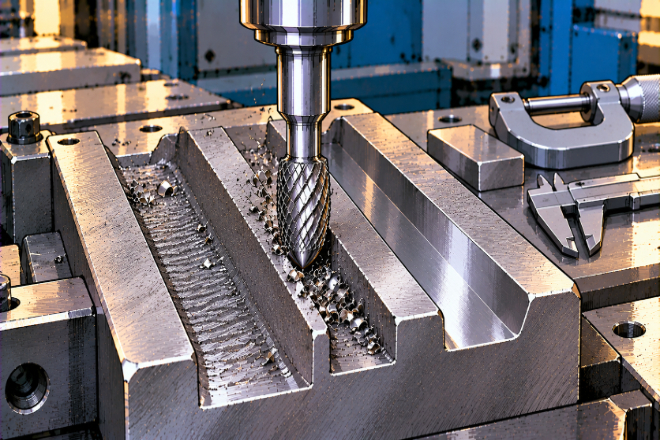
A good carbide burr can remove metal efficiently, but the final groove quality depends heavily on how it is used.
The first step is to inspect the groove.
Determine whether the task involves creating a small local channel, widening an existing groove, removing burrs, or improving a rough surface.
These operations require different levels of material removal.
For example, a groove with a small raised edge may only need light finishing. Using an aggressive burr could remove too much material and change the groove profile.
Tool speed also matters.
The correct RPM depends on burr diameter, cutting pattern, workpiece material, and the type of operation.
There is no universal speed suitable for every carbide burr. Using excessive pressure is another common mistake.
A carbide burr should cut through its teeth rather than being forced into the workpiece.
Heavy pressure can increase vibration, damage the cutting edges, and make it harder to maintain a consistent groove shape.
Tool movement should also remain steady.
Holding the burr in one position for too long may create a local depression. Moving too quickly may leave unwanted material behind.
For groove finishing, several light passes are often easier to control than one heavy cut.
A useful process is: Inspect the groove → Select the burr → Remove material gradually → Check the profile → Finish the surface
For CNC applications, stable tool holding and a suitable programmed path are essential.
The machine should keep the burr within its approved operating conditions and avoid sudden heavy contact with the groove walls.
For manual applications, the workpiece should be firmly secured and the operator should maintain controlled tool movement.
Finally, inspect the groove after machining.
If the groove has a specified width, depth, or radius, use an appropriate measuring method rather than judging the result only by appearance.
A groove that looks smooth is not necessarily dimensionally correct.
6. When Should Manufacturers Use Carbide Burrs Instead of Groove Milling Cutters?
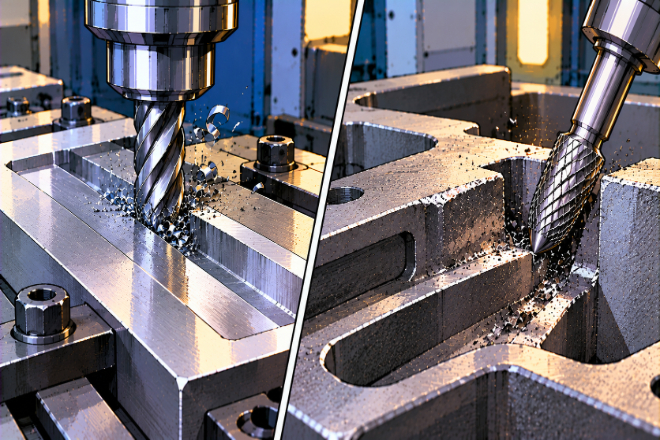
タングステンカーバイドバー are useful for groove machining, but they are not a replacement for every type of groove-cutting tool.
The main difference is the level of dimensional control required.
A dedicated groove milling cutter is generally better when a manufacturer needs to produce a groove with a precise width, depth, or profile.
For example, a sealing groove may require a controlled diameter, width, and surface finish to work correctly.
Using a general-purpose carbide burr for the entire operation could make it difficult to maintain these dimensions.
A suitable end mill or form cutter would usually provide better control.
However, carbide burrs become valuable when the work is less standardized.
Consider a large casting with a rough groove left by the casting process.
The groove may already have its basic shape, but several areas contain excess material.
Instead of machining the entire groove again, a carbide burr may remove the local defects.
The same idea applies to repair work.
A damaged groove inside industrial equipment may require a small correction rather than complete remachining.
Carbide burrs can also be useful when the groove is curved, irregular, or difficult to reach with a conventional milling cutter.
For production companies, the decision should consider more than the initial tool price.
The important factors include machining time, tool life, setup requirements, inspection, and the risk of damaging an expensive component.
For high-volume production, a dedicated groove cutter may provide better consistency and lower cost per finished part.
For maintenance, small batches, and local corrections, a carbide burr may offer greater flexibility.
A practical rule is simple: Use a dedicated cutter to produce an accurate groove. Use a suitable carbide burr when the job calls for flexible local shaping, cleanup, or correction.
Choosing between these tools based on the actual work requirement helps manufacturers avoid unnecessary machining time and rework.
 English
  Español
  简体中文
简体中文  Français
  日本語
日本語  한국어
한국어  العربية
  Tiếng Việt